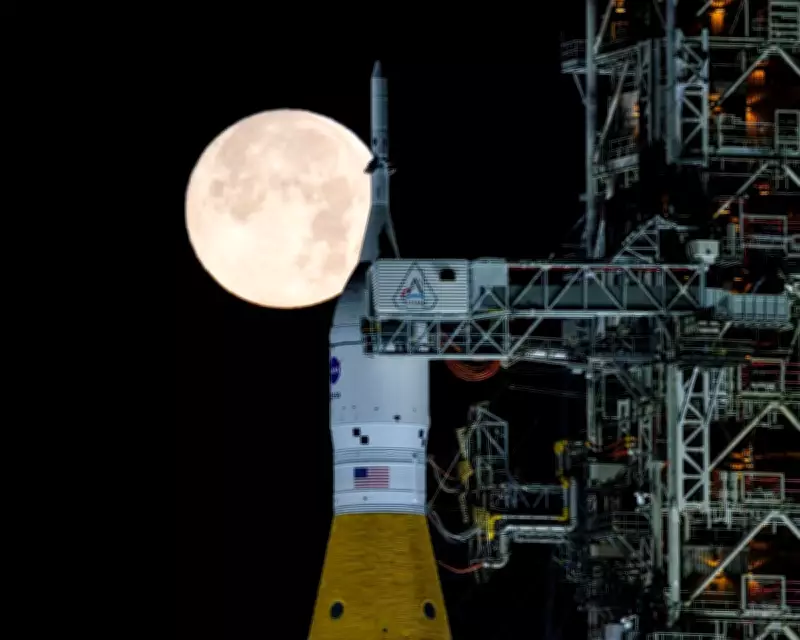
Nasa has announced a significant delay to its highly anticipated Artemis II mission, pushing the launch back to March following the discovery of technical issues during a crucial pre-flight test. The decision comes after engineers detected leaking hydrogen from the Space Launch System (SLS) rocket and encountered a problem with a valve on the Orion capsule, where four astronauts are set to reside during their journey.
Setback for Lunar Ambitions
The US space agency had originally targeted a launch as early as next week from Kennedy Space Center in Florida, but overnight reports confirmed the postponement. During an elaborate wet dress rehearsal, which simulates launch-day procedures, teams faced multiple challenges over a two-day period. Nasa stated that engineers will now conduct a thorough review of the data collected from the test of the 98-metre-tall rocket, which stands taller than the Statue of Liberty.
Impact on Astronaut Crew
This delay represents a frustrating setback for the Artemis II crew, who have already spent nearly two weeks in quarantine to prevent illness before the mission. The astronauts, including commander Reid Wiseman and Canadian physicist Jeremy Hansen, will need to re-enter quarantine approximately two weeks before the new launch window. Nasa has indicated several potential launch dates between February and the end of April, but a specific date in March has not yet been finalised.

Historic Mission Details
Artemis II is poised to be a landmark event, marking the first return of humans to the vicinity of the moon in over 50 years. The mission will see Christina Koch become the first woman and Victor Glover the first person of colour to travel beyond low Earth orbit. Although the astronauts will not enter lunar orbit, they will undertake a 685,000-mile round trip around the moon, a feat not accomplished since the Apollo 17 mission in 1972.
Technical Challenges and Future Plans
This is the second flight of Nasa's SLS rocket, following the uncrewed Artemis I mission in 2022, which also experienced temporary hydrogen leaks during testing. The recent test involved pumping more than 2.6 million litres of super-cold liquid hydrogen and liquid oxygen into the rocket's tanks, mimicking the final stages of a real countdown. Success in Artemis II is critical as it paves the way for Artemis III, which aims to land astronauts near the lunar south pole and eventually establish a permanent presence on the moon under the Artemis programme.
If the mission proceeds successfully, Jeremy Hansen will achieve the distinction of becoming the first non-US astronaut to venture beyond low Earth orbit. Nasa remains committed to advancing its lunar exploration goals, named after the Greek goddess of the moon, despite these technical hurdles.