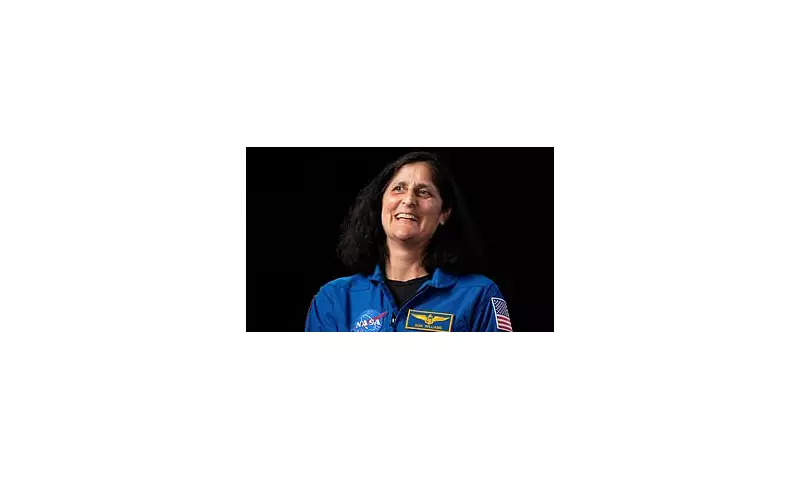
NASA Astronaut Suni Williams Announces Retirement Following Extended Space Mission
NASA astronaut Suni Williams, who became internationally known after spending nine months unexpectedly stranded in space, has dramatically announced her retirement from the space agency. This significant career move comes less than one year after her return to solid ground following a mission that stretched far beyond its original timeline.
The Extended Mission That Changed Everything
Suni Williams and fellow astronaut Butch Wilmore embarked on what was supposed to be an eight-day test flight of Boeing's new Starliner capsule to the International Space Station in June 2024. However, their mission took an unexpected turn when the Starliner developed numerous technical issues during flight, forcing the astronauts to remain aboard the ISS until the next crew rotation could bring them home.
The pair finally returned to Earth on March 19 last year aboard a SpaceX Crew Dragon capsule that splashed down off the Florida coast. In total, their mission lasted 286 days - a staggering 278 days longer than originally planned. This extended stay pushed Williams' cumulative time in space to 608 days, making her second on the list of NASA astronauts with the most time spent in space.

Physical Toll and Health Concerns
The unexpectedly prolonged space mission appeared to take a significant physical toll on the 60-year-old astronaut. As the months passed, health experts and NASA insiders grew increasingly concerned about Williams' apparent rapid weight loss. Photographs taken upon her return showed a noticeably gaunt appearance, though Williams herself maintained that she hadn't actually lost weight.
'I think things shift around quite a bit, you probably heard of a fluid shift,' Williams explained. 'Folks in space you know, their heads look a little bit bigger because the fluid evens out along the body.'
Medical experts have documented several ways extended space missions can affect the human body:
- Gaunt face appearance caused by shifting bodily fluids
- 'Chicken legs' and 'baby feet' as fluid moves toward the head
- Vision loss risks from increased brain pressure affecting eyes
- Increased cancer risk from exposure to ionising space radiation
- Cognitive decline including slower reasoning and weakened memory
A Distinguished Career Comes to a Close
Despite the challenges of her final mission, Williams maintains her passion for space exploration. 'Space is my absolute favourite place to be,' she stated. 'It's been an incredible honor to have served in the Astronaut Office and have had the opportunity to fly in space three times.'
Williams spent 27 years in service to NASA, completing three missions to the International Space Station. In her retirement statement, she reflected on her experiences: 'The International Space Station, the people, the engineering, and the science are truly awe-inspiring and have made the next steps of exploration to the Moon and Mars possible. I hope the foundation we set has made these bold steps a little easier.'
NASA Leadership Pays Tribute
NASA Administrator Jared Isaacman offered glowing praise for Williams' contributions: 'Suni Williams has been a trailblazer in human spaceflight, shaping the future of exploration through her leadership aboard the space station and paving the way for commercial missions to low Earth orbit.'
He continued: 'Her work advancing science and technology has laid the foundation for Artemis missions to the Moon and advancing toward Mars, and her extraordinary achievements will continue to inspire generations to dream big and push the boundaries of what's possible. Congratulations on your well-deserved retirement, and thank you for your service to NASA and our nation.'
Retirement Timing and Speculation
Williams' retirement announcement follows closely on the heels of her fellow astronaut Butch Wilmore's own retirement announcement. The timing has sparked speculation among space observers and social media users about whether the extended, stressful mission contributed to their decisions to leave NASA.

Several users on social media platform X commented on Wilmore's retirement, with one noting: 'Smart move if you stranded me in space for 9 months I would not fly for you either.' Another added: 'Well hell can you blame him. They were stuck in space for damn near a year. I'd never take another mission after that.' A third speculated about potential physical impacts: 'I bet he was no longer capable of passing physical from his extended sojourn.'
Williams' retirement marks the end of a remarkable chapter in American space exploration history, closing a career that saw both extraordinary achievements and unexpected challenges in the final mission that captured global attention.