NASA Under Pressure as Artemis II Moon Mission Faces Delay
Senior NASA executives have faced intense questioning after the highly anticipated Artemis II moon mission was pushed back to March at the earliest. This decision followed a failed wet dress rehearsal where ground crews encountered a persistent hydrogen leak issue that has troubled the space agency for decades.
Recurring Problem Plagues Space Agency
The postponement occurred when technical teams were unable to prevent super-cooled hydrogen fuel from leaking during critical testing procedures. This identical problem has affected every hydrogen-powered rocket since the Apollo era and was notably present during the Artemis I launch preparations in 2022.
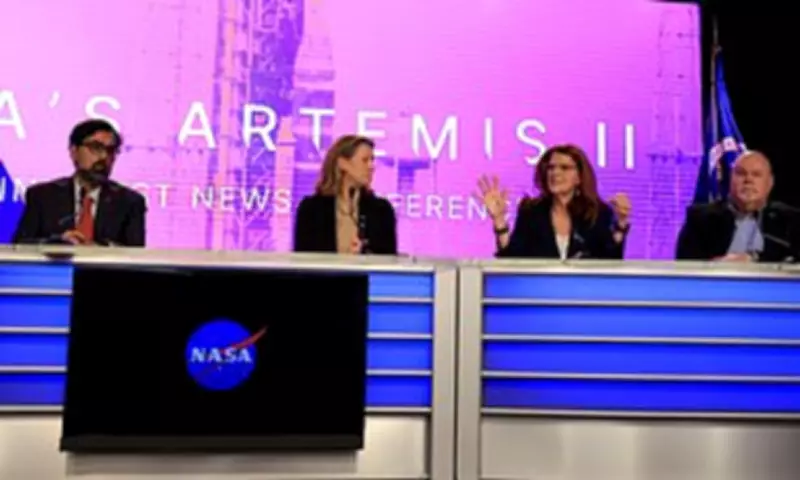
During a press conference addressing the aborted test, Marcia Dunn of the Associated Press challenged NASA representatives, asking: 'How can you still be having the same problem three years later?' In response, John Honeycutt, Chair of the Artemis II Mission Management Team, conceded: 'This one caught us off guard.'

Technical Challenges During Wet Dress Rehearsal
The dress rehearsal failed just five minutes from completion when hydrogen leakage exceeded safe levels. Ground crews had been filling the Space Launch System (SLS) rocket with over 2.6 million litres of liquid hydrogen and liquid oxygen during the simulation, which began at 01:13 GMT on January 31.
Lori Glaze, NASA's Exploration Systems Development Mission Directorate acting associate administrator, acknowledged: 'Everyone's aware of some of the challenges with the hydrogen tanking from Artemis 1. We really did learn a lot from the Artemis 1 mission, and we implemented a lot of the lessons learned yesterday through wet dress.'
Investigations revealed the leak originated from a component called the 'tail service mast umbilical quick disconnect' - nine-metre-tall pods that attach to the rocket's base and route propellant lines into fuel tanks. Alarmingly, this is precisely the same location where the SLS rocket experienced leaks during Artemis I's wet dress rehearsal three years earlier.
Historical Context of Hydrogen Challenges
Hydrogen leakage has presented NASA with persistent difficulties throughout its space exploration history. The Artemis I mission experienced such severe leaks that the SLS rocket required removal from the launchpad three separate times for repairs, delaying the eventual launch by six months.
This historical pattern raises significant questions about why NASA hasn't resolved this well-documented issue before the Artemis II testing phase. On social media platforms, space enthusiasts expressed frustration that the agency continues to struggle with hydrogen containment.
One commentator remarked: 'Couldn't fix it in three years, how can they fix it in three weeks?' while another added: 'You would think by now they would realize, hydrogen is very difficult to seal plumbing for.'
NASA's Technical Explanations
Mr Honeycutt explained to reporters that the issue stems from limitations in ground testing conditions, stating: 'After Artemis I and the challenges we had with the leaks, we took a pretty aggressive approach to do some component-level testing with these valves and the seals. But on the ground, we're pretty limited as to how much realism we can put into the test.'
Amit Kshatriya, NASA Associate Administrator, highlighted the complexity of the SLS rocket system, noting: 'This is the first time this particular machine has borne witness to cryogens, and how it breathes and how it vents and how it wants to leak is something we're going to have to characterise.'
Hydrogen's Advantages and Disadvantages
NASA continues to use hydrogen fuel despite its leakage challenges for several compelling reasons:

- Hydrogen provides the highest specific impulse of any known rocket propellant
- The fuel is naturally abundant and relatively inexpensive
- Hydrogen produces exceptional energy output
- The SLS rocket inherits hardware from Shuttle-era systems designed for hydrogen
- Changing fuels would require expensive redesign of the entire rocket system
The fundamental challenge arises from hydrogen's molecular structure - as the smallest molecule, it can permeate microscopic pores in welds, making containment exceptionally difficult.
Progress Despite Setbacks
Despite the recurrence of hydrogen leakage, NASA officials noted significant improvements compared to previous missions. During the Artemis II wet dress rehearsal, ground crews successfully filled the SLS fuel tank while maintaining leakage within acceptable safety parameters for most of the procedure.
Charlie Blackwell-Thompson, Artemis Launch Director, explained: 'As we began that pressurisation, we did see that the leak within the cavity came up pretty quick.' However, she emphasised that: 'If we were within our parameters on launch day and you had not had the issue when you pressurised during terminal count, you would have been within your launch commit criteria and certainly could have been go for launch.'
Future Timeline and Mission Details
Unlike the Artemis I experience, NASA executives maintain that current issues can be resolved on the launchpad without returning the rocket to the hangar. This suggests Artemis II might address its hydrogen problems before the next scheduled wet dress rehearsal.
NASA has identified three potential launch windows for Artemis II:
- March 6 to March 9 and March 11
- April 1 to April 6 (if further delayed)
The mission represents a crucial step in NASA's lunar exploration programme, with Artemis II scheduled to complete a lunar flyby, pass the moon's dark side, and test systems for future lunar landings. The ten-day mission will cover approximately 620,000 miles at an estimated total cost of $44 billion.
As NASA analyses data from the recent test, the space agency continues to balance ambitious exploration goals with the persistent technical challenges of hydrogen-fuelled spaceflight.