Astronomers have finally unravelled the mystery behind a series of strange, crimson-hued objects spotted throughout the cosmos. The enigmatic 'little red dots', observed by NASA's powerful James Webb Space Telescope (JWST), have been identified as young black holes in a crucial early growth phase.
The Cosmic Enigma Explained
These peculiar objects first appeared in the telescope's deep-field images of the very early universe, only to vanish from later observations. Their origin had baffled scientists until a breakthrough study, published in the prestigious journal Nature, provided a definitive answer. Researchers now confirm the dots are not distant galaxies or stars, but supermassive black holes with masses equivalent to about 10 million Suns.
This finding is significant because it suggests these cosmic giants were far smaller in their infancy than previously theorised. "We are seeing these black holes at a remarkably early stage, shrouded in their birth cocoon," explained a lead researcher on the project.

A Cocoon of Gas and Light
The distinctive red colour that gave these objects their name is a direct result of their unique environment. Each young black hole is enveloped in a thick, swirling cocoon of ionised gas. As the black hole voraciously consumes this surrounding material, the process generates immense heat and intense radiation.
This radiation struggles to escape the dense gas cloud, and the specific way the light is filtered through it results in the deep red signature detected by Webb's sensitive instruments. "The cocoon acts like a cosmic lampshade, tinting the brilliant light within to the red hue we observe," the study notes.
Implications for Understanding Cosmic Evolution
The discovery, made on Wednesday 14 January 2026, fundamentally alters our understanding of how the universe's most massive objects form and evolve. It provides a direct snapshot of how primordial black holes fed and grew in the ancient cosmos.
The research indicates that this early, rapid consumption of gas was a key phase in the development of the supermassive black holes that reside at the heart of most large galaxies today, including our own Milky Way. By studying these 'little red dots', scientists gain a unprecedented window into the chaotic conditions of the early universe and the forces that shaped it.
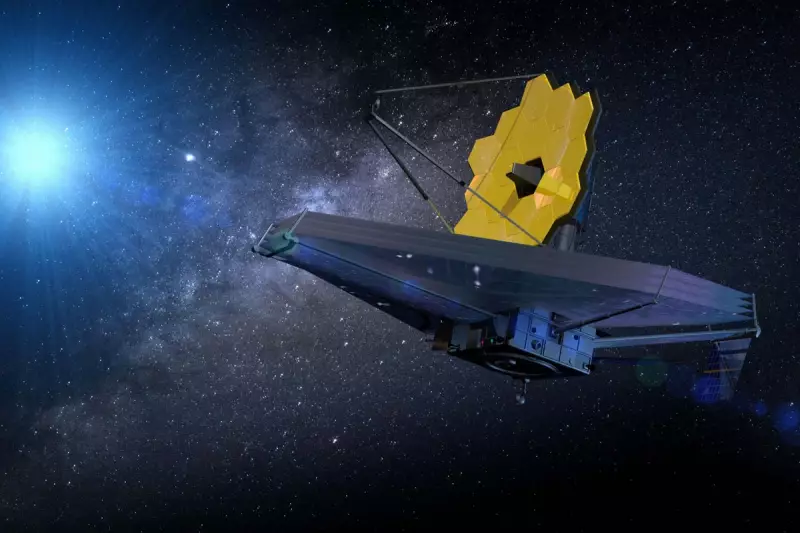
The James Webb Space Telescope, with its unparalleled ability to peer back in time, continues to revolutionise astrophysics. This resolution of the 'little red dots' mystery stands as one of its most compelling early discoveries, solving one cosmic puzzle while undoubtedly paving the way for new questions about the dawn of time.