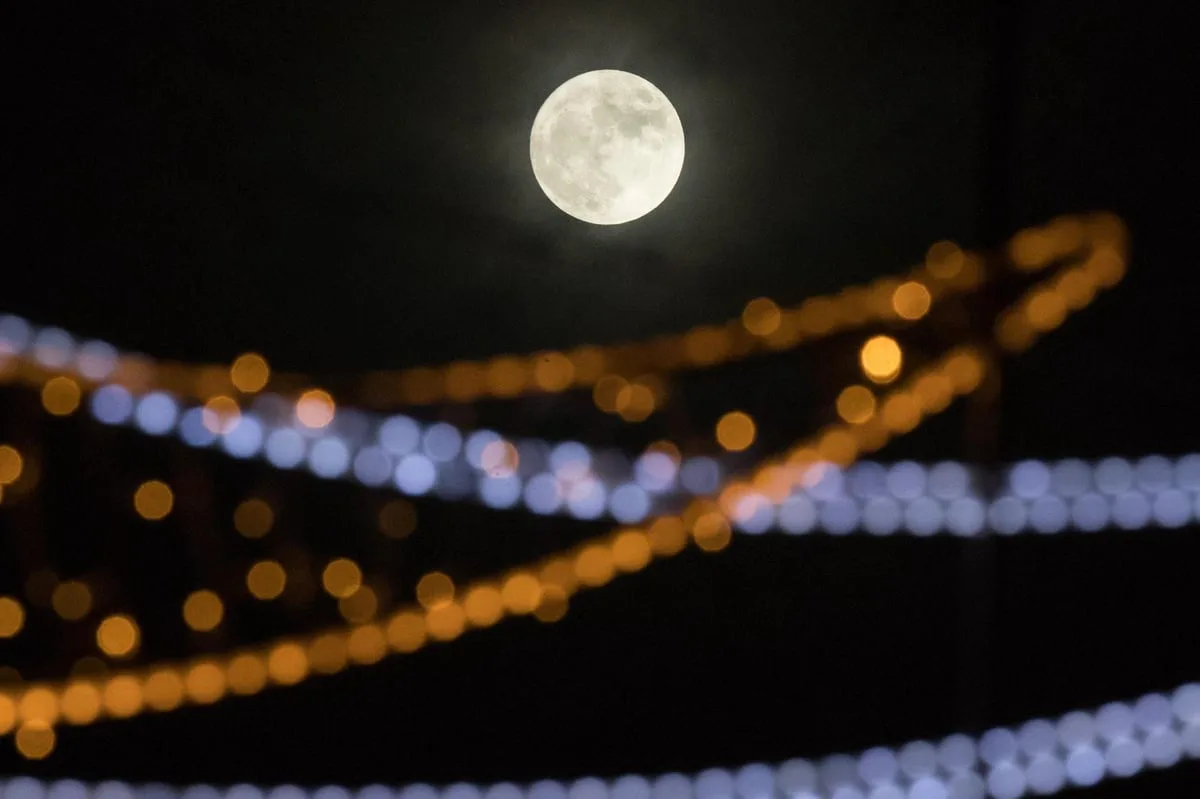
Skywatchers are in for a treat tonight as the final supermoon of 2025 lights up the sky. This celestial event, known as the 'Cold Moon', occurs when a full moon coincides with the moon's closest approach to Earth, making it appear up to 14 per cent larger and 30 per cent brighter than usual.
The supermoon will reach its peak fullness on the evening of December 4, offering prime viewing in the UK and across Europe, where it will rise shortly after sunset and remain visible all night. Observers in North America, Asia, and other regions will also have excellent opportunities, with timings varying by location.
No telescope is needed to enjoy the spectacle, as the supermoon is bright enough to be seen with the naked eye. For the best experience, experts recommend finding a spot away from city lights with a clear view of the horizon. Binoculars or a telescope can enhance the view, revealing lunar craters and dark plains.

This supermoon is particularly special because a full moon this close to Earth will not be visible again until 2042. Thanks to a rare 18.6-year Major Lunar Standstill, tonight's moon will soar higher in the Northern Hemisphere sky than any other this year, a height not reached again for 17 years.
Photographers and amateur astronomers are encouraged to capture the moment, experimenting with long exposures or silhouette shots. Checking weather forecasts beforehand is advised to avoid cloud cover. This once-in-a-lifetime event promises a memorable end-of-year show for all who look up.