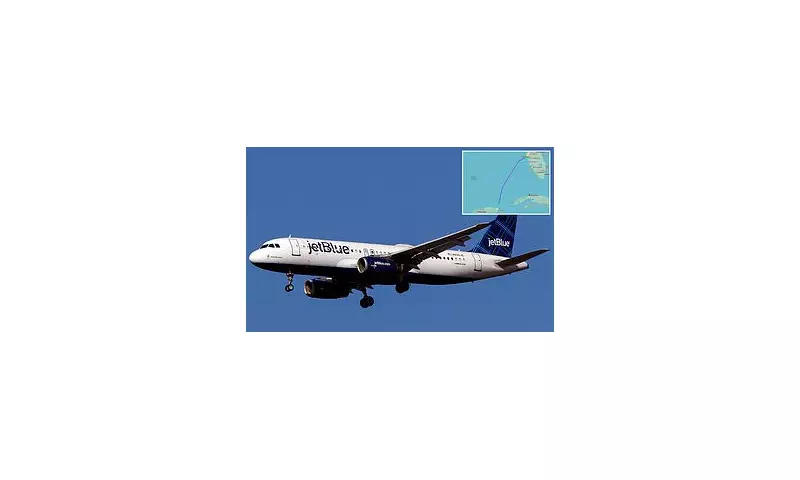
A sudden and uncontrolled plunge by a JetBlue flight from Mexico to the United States has sparked a complex technical debate, with Airbus's official explanation now facing significant scrutiny from space and radiation experts based in the UK.
The Incident and Initial Airbus Response
The event occurred on October 30, involving JetBlue Flight 1230, an Airbus A320 travelling from Cancun, Mexico, to Newark, New Jersey. The aircraft experienced a dramatic loss of altitude, descending thousands of feet and causing injuries to at least 15 passengers. The flight was diverted and landed safely at Tampa International Airport in Florida around 2:19pm ET.
Following an investigation, Airbus concluded that intense solar radiation could corrupt critical flight control data. This finding prompted the aerospace giant to issue an urgent software update, grounding and updating systems across more than 6,000 A320 family aircraft globally.

UK Expert Challenges the Solar Radiation Theory
However, Clive Dyer, a space and radiation specialist at the University of Surrey in the UK, has cast doubt on this conclusion. Speaking to Space.com, Dyer noted that solar radiation levels on the day of the incident were within normal limits and far too low to affect the aircraft's systems.
Instead, he proposed that a cosmic ray – a high-energy particle from deep space travelling near light speed – may have been responsible. "They can interact with modern microelectronics and change the state of a circuit," Dyer explained. "They can cause a simple bit flip, like a 0 to 1 or 1 to 0, messing up information and making things go wrong."
This phenomenon, known as a single-event upset, can temporarily disrupt sensors or onboard computers and, in rare cases, even induce hardware failures.
Historical Precedents and Safety Implications
Dyer, who has researched radiation effects on aviation since the Concorde era, pointed to historical incidents. He cited the 2008 Qantas Flight 72 event, where an Airbus A330 nosedived twice over the Pacific, as a likely example of a cosmic ray-induced glitch.
The expert suggested that the timing of Airbus's software update may have been influenced by a separate, powerful solar flare that occurred less than two weeks after the JetBlue incident, which did elevate radiation levels at flight altitudes. "It's down to manufacturers to produce hardy electronics, especially in safety-critical units," Dyer stated, adding that complacency can set in during prolonged periods of quiet solar weather.
The aircraft involved remains out of service for inspection, and JetBlue has committed to a full investigation to determine the definitive cause of the alarming altitude drop.