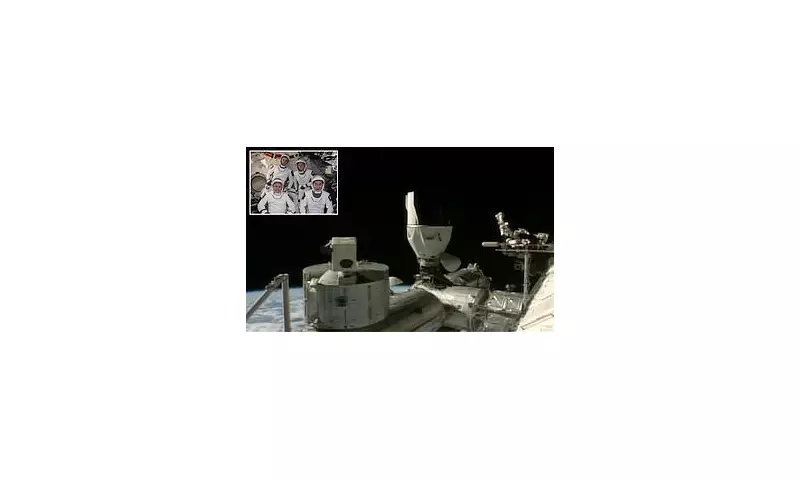
A historic and unprecedented medical evacuation from the International Space Station (ISS) is now in progress, marking the first time a crew's mission has been cut short for health reasons. The four astronauts of Crew-11 have boarded their SpaceX Dragon capsule and begun their journey back to Earth, a return accelerated by a serious but stable medical condition affecting one crew member.
The Timeline of an Emergency Return
The carefully orchestrated evacuation began on Wednesday afternoon, US Eastern Time. The crew, comprising NASA astronauts Zena Cardman and Mike Fincke, Japanese astronaut Kimiya Yui, and Russian cosmonaut Oleg Platonov, entered the SpaceX Dragon spacecraft and secured its hatch at 2.29pm ET. This was a critical step before the capsule's scheduled undocking from the ISS at 5.15pm ET the same day.
The return journey involves a roughly 10-hour space flight to a deorbiting point above the United States. The capsule is expected to fire its engines for deorbiting around 2.50am ET on Thursday, January 15, before making its targeted splashdown off the coast of California at approximately 3.40am.

Cause of the Premature Mission End
This emergency return was triggered by a serious medical issue suffered by one of the Crew-11 astronauts last Wednesday. While NASA has not disclosed the identity of the astronaut or the specific condition, the agency's chief medical officer, Dr James Polk, confirmed the individual is in a stable condition and is not in immediate danger.
Dr Polk clarified that the medical episode was unrelated to a cancelled spacewalk planned for January 8 or any other station operations. "It's mostly having a medical issue in the difficult areas of microgravity," Polk explained during a press conference, without providing further specifics.
The decision to bring the entire crew home early was made by new NASA administrator Jared Isaacman out of an abundance of caution. He noted the episode was considered serious enough to require additional medical care that is only available on Earth.
Mission Impact and Future Launches
Crew-11's mission has been dramatically shortened. The team arrived at the orbiting laboratory on August 1, 2025, and was originally scheduled to remain on board until late February. Their departure was contingent on the arrival of their replacements, Crew-12, on a new SpaceX Dragon capsule no earlier than February 15.
Despite this disruption, Administrator Isaacman assured that plans for the highly anticipated Artemis II mission—the first crewed lunar orbit since 1972—remain on track for its planned date in February 2026. He described the Crew-12 and Artemis launch campaigns as "totally separate," indicating the emergency return should not cause a delay for the landmark moon mission.
This event underscores the inherent risks of long-duration spaceflight and the robust contingency plans agencies like NASA have in place. The world now watches as the Crew-11 astronauts complete their unexpected and historic journey home.