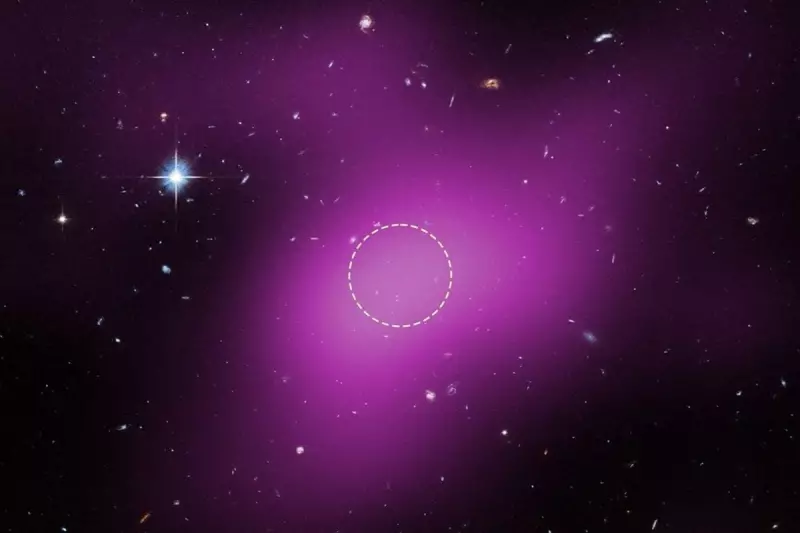
In a landmark discovery that challenges our understanding of cosmic formation, astronomers using NASA's Hubble Space Telescope have identified a bizarre new type of object deep in space: a 'failed galaxy' composed almost entirely of dark matter.
A Ghostly Galactic Building Block
The enigmatic entity, which scientists have named Cloud-9, sits approximately 14 million light-years from Earth. It was spotted by the veteran orbital observatory, which continues to deliver groundbreaking data decades after its launch. The key characteristic that makes Cloud-9 so extraordinary is its complete lack of stars.
This marks the first time such an object has ever been definitively detected. Researchers, including scientist Alejandro Benitez-Llambay, describe it as a primordial building block of a galaxy that, for reasons not yet fully understood, never managed to spark star formation. It represents a fossil from the early universe, a ghostly remnant of a structure that never fully matured.

A Pure Window into Dark Matter
The profound significance of finding a dark matter cloud devoid of stars lies in the unique observational opportunity it presents. Dark matter, which makes up the vast majority of the universe's mass, does not emit, absorb, or reflect light, making it notoriously difficult to study directly.
Cloud-9, however, offers a rare chance to examine a relatively pure dark matter 'halo' without the blinding interference of stellar light. This provides crucial insights into the properties and behaviour of this mysterious, invisible substance that governs the shape and growth of galaxies. Analysing Cloud-9 helps scientists test theories about how the universe's structure first assembled from dark matter scaffolding.
Implications for Cosmic History
The discovery, announced on Wednesday 7 January 2026, is more than a celestial curiosity. It serves as a vital clue for cosmologists piecing together the narrative of the early universe. By studying this failed galaxy, astronomers can better understand the conditions required for successful galaxy formation and why some clumps of dark matter remained barren while others blossomed into the brilliant star cities we see today.
The find underscores the continued invaluable role of the Hubble Space Telescope in frontier astrophysics. As it peers into the depths of space, it continues to uncover fundamental secrets, pushing the boundaries of human knowledge about the cosmos's darkest and most elusive components.