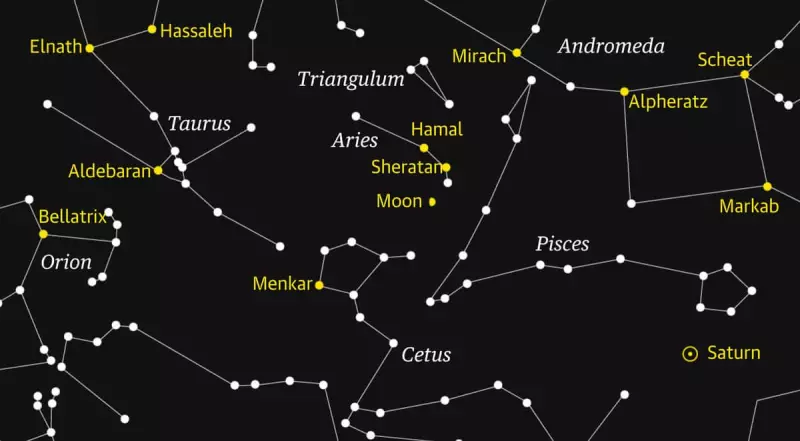
Stargazers across the UK have a celestial treat in store this week, as one of the zodiac's more subtle constellations becomes visible in the winter night sky. Aries, the ram, offers a rewarding challenge for those willing to brave the colder evenings.
An Ancient Constellation with a Storied Past
The constellation of Aries boasts a rich history that stretches back millennia. Originally identified by early Babylonian astronomers as a hired farmhand, its identity evolved over centuries into the ram recognised today. This figure held significance across many ancient cultures. In Egyptian mythology, it was linked to Amun-Ra, a ram-headed deity representing creativity and fertility. For the Greeks, Aries was tied to the legend of the Golden Fleece, the prize sought by Jason and his Argonauts.
Currently positioned between the more prominent Taurus to the east and Pisces to the west, Aries is best viewed from the northern hemisphere during the deep winter months. Its location makes it a fixture of the season's astronomical landscape.

How to Locate the Faint Ram with Lunar Help
Finding Aries can be tricky for beginners, as it contains only two moderately bright stars: Hamal and Sheratan. These form a close pair and serve as the starting point for identifying the rest of the constellation. However, they are dimmer than many of the sky's most famous stars, so a helping hand is often needed.
This week, that assistance comes from our nearest celestial neighbour. On the evening of 29 December, the moon will act as a perfect signpost. The chart, configured for London at 8pm GMT, shows a waxing moon with 72% of its face illuminated, positioned conveniently to guide the eye towards Aries. Observers should look towards the south. For those in the southern hemisphere, the direction shifts to the north-west after sunset.
Your Winter Stargazing Guide
To successfully track down the ram, find a spot away from bright city lights and allow your eyes to adjust to the darkness for at least 15 minutes. Start by locating the bright moon on the specified date. Use it as a reference point to scan the surrounding area for the two key stars, Hamal and Sheratan. Once you have identified this pair, you can begin to trace the fainter outlines of the mythical ram's form.
This winter spectacle connects us to countless generations of humans who have looked up and woven stories from the same patterns of light. So wrap up warm, grab a hot drink, and let the moon guide you to this ancient and fascinating constellation.