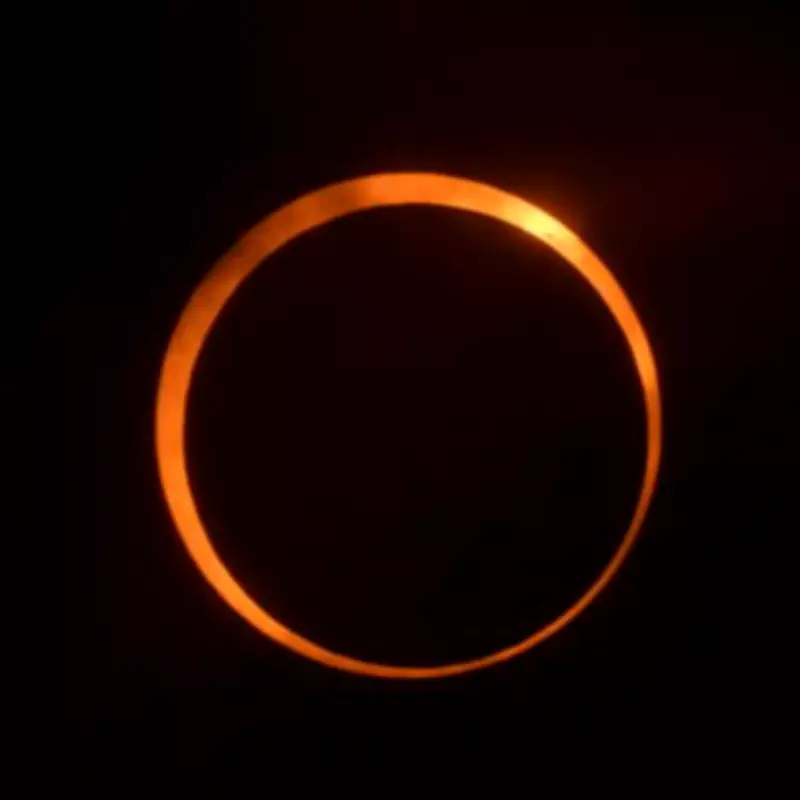
First 'Ring of Fire' Solar Eclipse of 2026 Set to Dazzle Skywatchers
Stargazers and eclipse enthusiasts are poised for a celestial spectacle this week as the first solar eclipse of 2026, famously known as the 'ring of fire', is scheduled to occur. This astronomical phenomenon happens when the moon aligns perfectly between the Earth and the sun, casting a shadow and partially blocking the sun's light to create a stunning annular effect.
Timing and Visibility of the Eclipse
The eclipse is set to take place tomorrow at 7.10am, with its path of annularity tracing across western Antarctica, the Davis Sea coast, and the Southern Ocean. Unfortunately, this means the event will not be visible from the United Kingdom, but observers in select international locations have a chance to witness it.
Top 12 Locations to View the Solar Eclipse
For those eager to catch a glimpse, here are the 12 places where the eclipse will be visible, along with the percentage of the sun's disk that will be covered in each location:

- French Southern and Antarctic Lands, France - 88%
- Port Louis, Mauritius - 32%
- Mascarene Islands, Mauritius/France - 35%
- Saint-Denis, Reunion, France - 31%
- Heard and McDonald Islands, Australia - 88%
- Maseru, Lesotho - 11%
- Ushuaia, Argentina - 3%
- Gaborone, Botswana - 4%
- Antananarivo, Madagascar - 20%
- Durban, South Africa - 16%
- Maputo, Mozambique - 13%
- Harare, Zimbabwe - 3%
Upcoming Lunar Eclipse in March
If you miss this solar event, another opportunity arises next month with a lunar eclipse, often referred to as a 'Blood Moon', occurring between March 3 and March 4. Approximately 31% of the global population, including residents of North America, New Zealand, and East Asia, will have the chance to view this event, which is expected to last around 58 minutes.