Asteroid Bennu Discovery Rewrites Theory of Life's Origins in Space
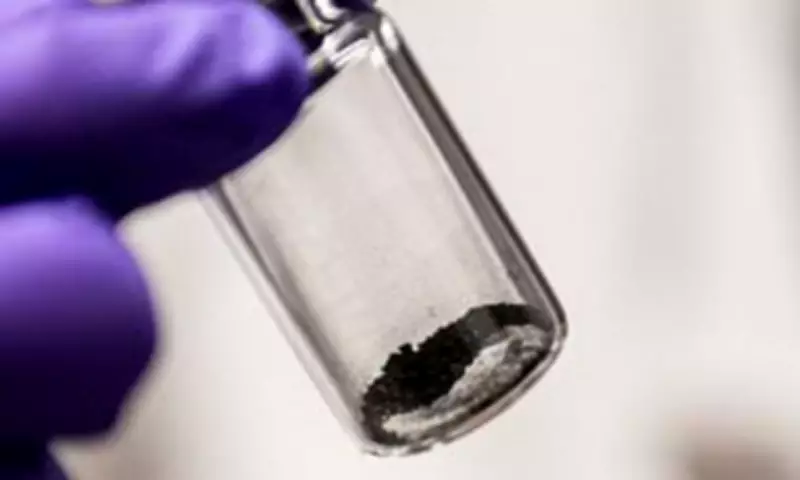
Scientists have finally unravelled the mystery of how the fundamental building blocks of life formed on a 4.6-billion-year-old asteroid, a breakthrough that could dramatically rewrite humanity's own origin story. This revelation stems from NASA's landmark OSIRIS-REx mission, which successfully recovered 121.6 grams of pristine material from the asteroid Bennu as it journeyed through our solar system in 2023.
Ancient Space Rock Holds Key Ingredients
Analysis of this rocky rubble revealed the presence of molecules called amino acids, which combine to create proteins that form the very basis of all biological life on Earth. For years, the scientific community was baffled by how these complex organic molecules could have formed on a freezing rock located approximately 105 million miles from the sun. The prevailing theory suggested amino acids required liquid water and relatively warm conditions to form, a process known as Strecker synthesis.
However, groundbreaking research from Pennsylvania State University has overturned this long-held assumption. The team discovered that the amino acids on Bennu actually formed in the cold, radioactive environment of the early universe. This finding strongly hints that the basic ingredients for life on our planet could have been delivered by a frozen asteroid similar to Bennu, seeding Earth with the precursors to biology.

Co-lead author Dr. Allison Baczynski stated: 'It now looks like there are many conditions where these building blocks of life can form, not just when there's warm liquid water. Our results flip the script on how we have typically thought amino acids formed in asteroids.'
Shocking Diversity of Organic Molecules
After NASA's mission returned with material from Bennu, minuscule samples of this precious cosmic dust were distributed to research centres globally. Scientists were astonished to discover that this ancient space rock carried a remarkably wide array of organic molecules. Beyond amino acids, researchers identified sugars essential for life and a mysterious 'gum-like' substance, painting a picture of a chemically rich asteroid.
At Pennsylvania State University, scientists honed in on the molecule glycine – the simplest of all amino acids, composed of just two linked carbon molecules. These tiny molecules serve as crucial precursors that can combine to form more complex amino acids, which then assemble into proteins and, ultimately, the earliest forms of life. Consequently, glycine is considered a vital signpost of the chemical reactions that eventually led to life emerging on our planet.
Isotopic Analysis Reveals New Formation Pathways
The researchers employed specialised equipment to detect subtle differences in the weight of atoms, known as isotopes. These minute atomic variations provide scientists with critical information about a chemical's origin, the conditions that created it, and the types of reactions that occurred. The team compared their isotopic measurements from Bennu with amino acids extracted from the Murchison meteorite, a carbon-rich space rock that landed in Australia in 1969.
Co-lead author Dr. Ophélie McIntosh explained: 'What's a real surprise is that the amino acids in Bennu show a much different isotopic pattern than those in Murchison. These results suggest that Bennu and Murchison's parent bodies likely originated in chemically distinct regions of the solar system.'
The chemicals within the Murchison meteorite likely formed via traditional Strecker synthesis under warm, wet conditions analogous to those found on Earth. In stark contrast, the amino acids on Bennu appear to have formed through a radically different set of processes. The researchers propose these molecules formed as primordial ice was bombarded with radiation during the solar system's earliest days.
Implications for the Search for Life
This discovery suggests there may be far more diverse pathways for amino acid formation than previously theorised, significantly increasing the probability that these vital chemicals could form in the harsh environment of space. Dr. Baczynski emphasised: 'There's much more diversity in the pathways and conditions in which these amino acids can be formed.'

Looking ahead, the research team aims to examine additional samples from various asteroids to determine what kinds of amino acids they might contain. Dr. Baczynski added: 'We want to know if they continue to look like Murchison and Bennu, or maybe there is even more diversity in the conditions and pathways that can create the building blocks of life.'
Asteroid Bennu: Key Facts
- Age: 4.6 billion years
- Diameter: 500 metres
- Surface Temperatures: Ranging from –73°C to 116°C
- Average Distance from the Sun: 105 million miles (168 million kilometres)
- Orbital Period: 1.2 years
- Composition: Primarily clay materials similar to those found on mid-ocean ridges on Earth
This research not only solves a long-standing cosmic mystery but also expands the potential environments where life's essential ingredients could arise, both within our solar system and beyond.