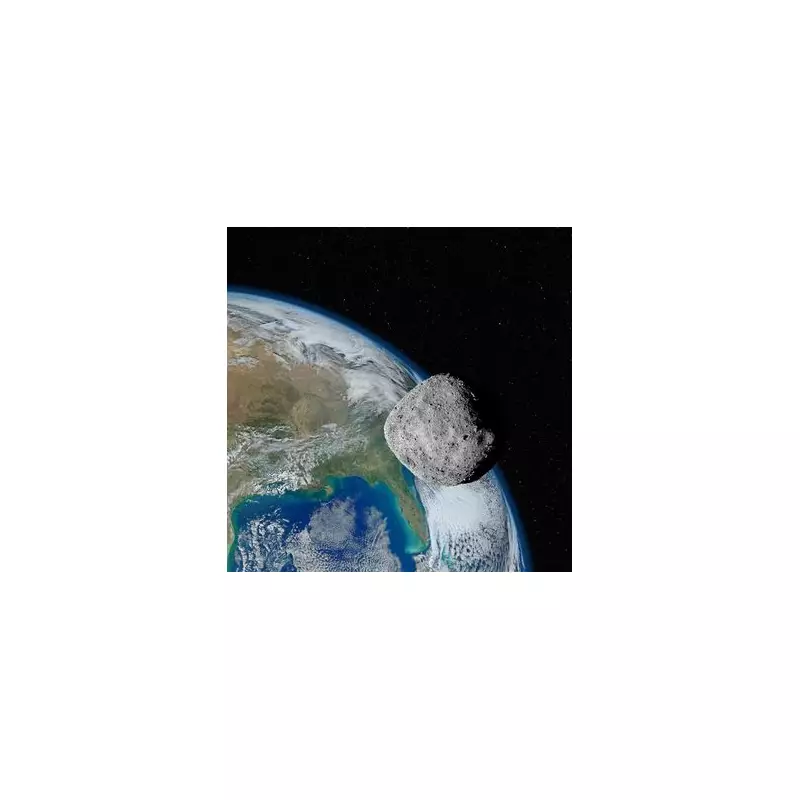
In a revelation that could fundamentally alter our understanding of life's beginnings, scientists analysing samples from the asteroid Bennu have made a series of staggering discoveries. The findings, which include essential biological sugars and a never-before-seen gum-like substance, suggest the raw ingredients for life may be scattered throughout the cosmos.
The Cosmic Treasure Trove: What Bennu Revealed
Space communications expert Alexandra Doten highlighted the "huge news" stemming from NASA's OSIRIS-REx mission, which successfully grabbed a chunk of the asteroid Bennu from 63 million kilometres away and returned it to Earth. Analysis led by teams including Yoshihiro Furukawa at Tohoku University in Japan has since uncovered a molecular treasure chest.
Scientists already knew the sample was rich in carbon and water, the basic building blocks for life. However, they have now identified 14 of the 20 amino acids used by life on Earth within the space rock. Crucially, all five nucleotide bases required to create DNA and RNA were also present.

The most recent breakthrough, announced this week, is the detection of vital sugars, specifically ribose and glucose. Ribose is a core component of RNA (Ribonucleic Acid). As Alexandra Doten explained, this implies all the components needed to create RNA exist on Bennu. "This has huge implications," she said. "It could imply that RNA is more prevalent in the universe and could be the dominant form of early life."
The Mysterious 'Space Gum' and an Ancient Water World
In a second paper published in Natural Astronomy, researchers led by Scott Sandford of NASA’s Ames Research Center and Zack Gainsforth of the University of California detailed an extraordinary find: a bizarre, gum-like material coating the asteroid.
NASA described the substance as flexible and pliable, similar to used chewing gum or soft plastic. It was translucent and would dimple under pressure, but exposure to radiation made it brittle. This material has never been observed on a celestial object before, adding another layer of mystery to Bennu's composition.
The asteroid is also covered in serpentine, a mineral commonly found in Earth's mid-ocean ridges. This, combined with its high water content, has led scientists to a compelling theory. Bennu may be a chunk of an ancient water world that has been drifting through space for billions of years, carrying with it the preserved ingredients of a potentially habitable environment.
Implications: Are We All Extraterrestrial?
A third study led by Ann Nguyen of NASA’s Johnson Space Center found an unexpectedly high amount of presolar dust, particles created by supernova explosions that predate our own solar system. This paints a picture of Bennu as a time capsule, preserving material from the dawn of the cosmos.
Collectively, these discoveries have sent shockwaves through the scientific community. One biologist reacting to the news wrote that the implications are "INSANE," suggesting several profound possibilities:
- Life, or its precursors, could be prevalent across the universe.
- Life on Earth may not have evolved solely here but could have been delivered by asteroids like Bennu.
- The recipe for life might be narrow, meaning if alien life exists, it could share a similar molecular biology with us.
As Alexandra Doten and the teams at NASA and global universities continue to decode Bennu's secrets, one thing is clear: our perception of life as a uniquely terrestrial phenomenon is being profoundly challenged. The asteroid's cargo suggests we may all, ultimately, be children of the stars.