Artemis II Astronauts Achieve Historic Space Communication Milestone
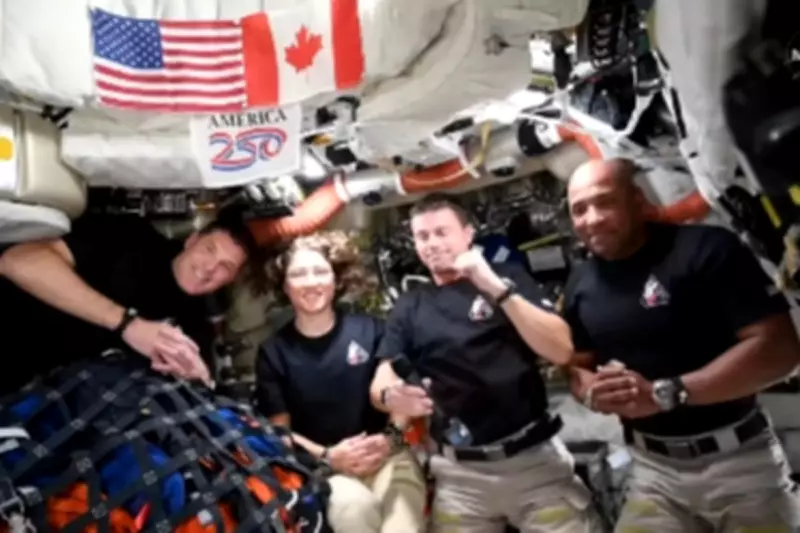
Fresh from their triumphant lunar flyby, the Artemis II astronauts made history on Tuesday by establishing an unprecedented radio link with the International Space Station as they began their journey home from the Moon. This marked the first-ever moonship-to-spaceship communication, a technological feat that was impossible during NASA's Apollo missions in the 1960s and 1970s, the last time humans ventured into deep space.
A Long-Awaited Cosmic Connection
Artemis II commander Reid Wiseman expressed the crew's profound anticipation, stating emphatically, "We have been waiting for this like you can’t imagine." Houston's Mission Control expertly arranged the cosmic chitchat between the four lunar travelers and the space station's three NASA astronauts plus one French crew member.
The call served as a particularly joyous reunion for Christina Koch aboard Artemis II and Jessica Meir stationed on the orbiting laboratory. Despite the vast 230,000 miles (370,000 kilometers) separating them, the two astronauts shared an emotional moment. Koch told her "astro-sister" that she'd hoped to meet up with her again in space "but I never thought it would be like this — it's amazing."

Meir responded warmly, "I'm so happy that we are back in space together, even if we are a few miles apart." The pair previously made history together in 2019 when they conducted the world's first all-female spacewalk outside the International Space Station.
Earth's Precious Perspective from Lunar Distance
As Tuesday dawned, Commander Wiseman continued transmitting remarkable images from the previous day's lunar rendezvous, which established a new distance record for human space exploration. The photographic highlight featured an Earthset image strikingly reminiscent of Apollo 8's iconic Earthrise photograph from 1968.
Christina Koch described being awe-struck not just by Earth's beauty, but by the profound darkness surrounding it. "It just made it even more special. It truly emphasized how alike we are, how the same thing keeps every single person on planet Earth alive," she explained to the space station crew. "The specialness and preciousness of that really is emphasized when viewing the home planet from the moon."
Scientific Observations and Mission Details
During a subsequent debriefing with Mission Control's lead lunar scientist Kelsey Young, the astronauts recounted observing a cascade of pinprick lights on the lunar surface caused by impacting cosmic debris. These brief flashes lasted mere milliseconds and coincidentally occurred during Monday evening's total solar eclipse.
As the first lunar explorers since Apollo 17 in 1972, Wiseman and his crew are targeting a Friday splashdown off the San Diego coast to conclude their nearly ten-day test flight. This successful mission paves the way for next year's Artemis III, which will feature a lunar lander docking demonstration in Earth orbit. Artemis IV will follow in 2028 with two astronauts attempting to land near the lunar south pole.
Technical Challenges and Future Preparations
Regarding the Orion capsule's problematic toilet system, Mission Control assured the astronauts that no immediate repairs were required on Tuesday. The facility has experienced intermittent functionality since last week's launch, necessitating reliance on a backup bag-and-funnel system for urination.
NASA Administrator Jared Isaacman addressed the crew following Monday night's lunar flyby, acknowledging, "We definitely have to fix some of the plumbing ahead of the next Artemis mission." This test flight has provided crucial data for improving systems before future lunar expeditions.