The Privilege Behind Calls for a Teen Social Media Ban
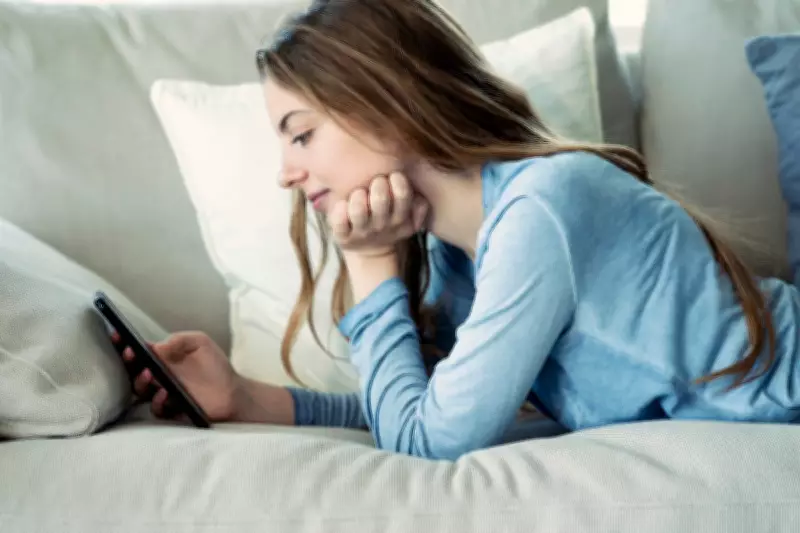
While social media is often criticised as a toxic and lawless environment, for countless teenagers it has evolved into an indispensable resource. As Labour leader Keir Starmer pledges to enforce a crackdown on smartphone use for under-16s within months, voices like Chloë Combi urge policymakers to consider the profound consequences of removing this access. The debate intensifies as the UK government recently celebrated a rare victory against Big Tech, targeting AI tools like Grok on Elon Musk's platform X for generating non-consensual explicit imagery.
Government Action and Growing Backing for a Ban
In a firm stance during Prime Minister's Questions, Sir Keir Starmer declared, "We will take the necessary measures. We will strengthen existing laws and prepare for legislation if it needs to go further, and Ofcom will continue its independent investigation." This followed Ofcom's probe into Grok, which led to restrictions on its image-generating capabilities despite accusations of suppressing free speech. With two decades of warnings and emerging research on social media's impact on developing brains, concern is mounting for Generation A and Generation Z, who have never known a world without digital connectivity.
Amid this clash, 61 backbench Labour MPs, led by Fred Thomas, have endorsed a ban on social media for under-16s. Australia implemented the first such ban late last year, and the UK's House of Lords recently voted in favour of a similar measure as part of an amendment to the Children's Wellbeing and Schools Bill. Baroness Hilary Cass added her support, stating, "Across our constituencies, we hear the same message: children are anxious, unhappy and unable to focus on learning. They are not building the social skills needed to thrive, nor having the experience that will prepare them for adulthood."

The Overlooked Voices of Young People
Critically, the perspectives of under-16s themselves are often sidelined, dismissed with the notion that "they don't know what's good for them." Governments frequently adopt a cavalier approach to youth, championing their interests when convenient but ignoring them otherwise. Banning or severely limiting social media could have deep repercussions, and granting young people a say seems only fair. While toxicity and bullying are valid justifications for regulation, millions of teens highlight the positives.
Before the internet era, friendships and social standing were largely confined to school environments, where rigid hierarchies favoured the attractive, able-bodied, wealthy, and confident. Those who were different—whether due to sexuality, disability, poverty, or non-conformity—often faced exclusion. Over the past 20 years, the internet and social media have provided lifelines, offering parasocial structures that welcome marginalised teens and foster real-world connections.
Personal Stories Highlighting Social Media's Value
GK*, a 17-year-old who identifies as non-binary and neurodivergent, explains, "I'm well aware that if I'd been like I am when my parents were at school, I would have had a really hard time. My interests in Minecraft, Stranger Things, and Chappell Roan saved my life—they gave me friends online and at school, and things to talk about. It scares me that governments want to take away those lifelines without considering the wider consequences."
Luke, a self-described "quiet, fat, gay kid" from the countryside, credits his Taylor Swift online community with shielding him from bullying. "Some girls in my class who are massive Swifties became my best friends after we connected online. They formed a Swift-shaped shield around me, and the boys left me alone because the girls were scarier. That online community was the difference between me being here and maybe me not being here."

Privilege and the Screen-Free Childhood Movement
A major critique of the growing "screen-free childhood" movement is its foundation in privilege. Parents with ample time and wealth can more easily provide offline activities and access to safe third spaces. However, millions of young people lack such resources, with parks, libraries, and youth clubs being cut from communities and hobbies becoming increasingly expensive. Removing online access risks further disadvantaging the most vulnerable.
Monica, 19, a politics and philosophy student at Durham University from a deprived background in the Midlands, attributes her academic success to social media. "My family are skint, no one went to university, and my school had a 29 per cent GCSE pass rate. We didn't even have a maths or science teacher for my whole GCSE years. I taught myself using YouTube, TikTok, ChatGPT, X, TedTalks, and podcasts. I'm begging the government to think about who will really lose out if they ban social media. There are millions of kids who use it to learn, connect, and feel like they matter."
Charles, 16, found solace in online chess communities after discovering the game through TikTok. "I don't have any friends where I live. There's nothing to do, and I worry about crime. School is like a prison, but I don't know what job to do. Following Magnus Carlsen opened up a new world—it's given me a reason to get up and some hope. I want to be a chess grandmaster too."
A Call for Caution and Investment
The online world remains a lawless space that fosters misery and division, but rushing into a ban may be unwise. It could be prudent to await data from Australia's experiment before making decisions in the UK. Many adults fail to grasp that the "social" in social media is a reality for millions of young people who rely on it for connection. Removing it entirely risks creating a void, particularly for the most vulnerable.
If governments are serious about banning social media, they must also outline plans to replace it with safe third spaces, affordable resources, and accessible activities. Telling teenagers to "go outside" is futile if there is nowhere safe for them to go. Genuine concern for young people would involve renewed investment in extracurricular opportunities, ensuring it is not only privileged teens who benefit. The question remains: Are those advocating for a ban prepared to take on this challenge?
*Some names have been changed to protect identities.