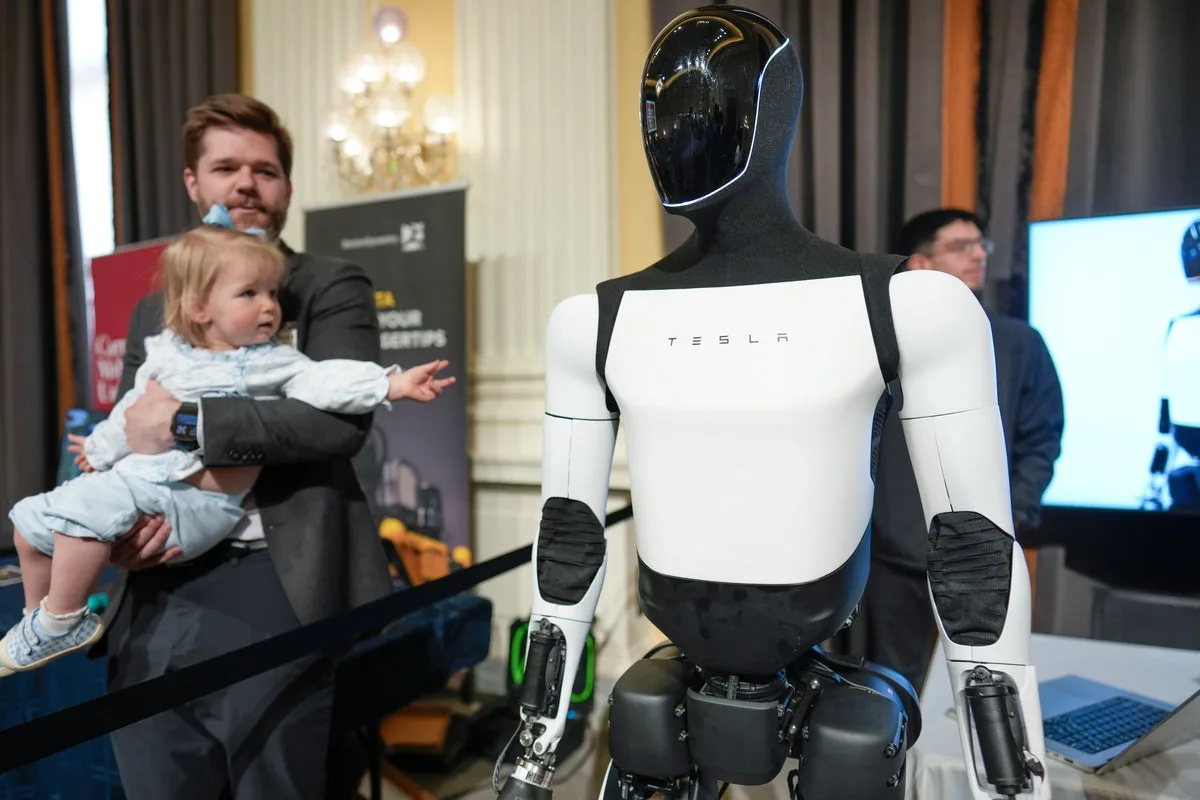
American robotics companies, including Tesla, Boston Dynamics, and Agility Robotics, have called for a national robotics strategy to compete with China's rapid advances in intelligent robotics. Representatives met with lawmakers on Capitol Hill on Wednesday, showcasing products and urging policies to boost US competitiveness in the global race for next-generation robots.
Jeff Cardenas, CEO of humanoid startup Apptronik, highlighted that while the US deployed the first industrial robot in 1961, it later lost its lead to Japan and Europe. He stressed that the next robotics race, powered by artificial intelligence, is “anybody’s to win” and that the US needs a national strategy to stay ahead. The Association for Advanced Automation warned that without federal leadership, the US risks losing both the robotics and AI races.
The association proposed tax incentives, federally-funded training, and a new federal robotics office to drive adoption and innovation. Rep. Raja Krishnamoorthi acknowledged US leadership but noted China's rapid resource allocation. Tesla's Jonathan Chen emphasised that manufacturing scale will be key to competition.
China, the world's largest industrial robot market with 1.8 million units in 2023, is prioritising humanoid robots as a frontier technology. It has approved a $138 billion state-backed venture capital fund for robotics and AI. Chinese Premier Li Qiang recently pledged to integrate digital technologies with manufacturing, including intelligent robots. In contrast, US firms like Boston Dynamics have historically relied on military research grants.