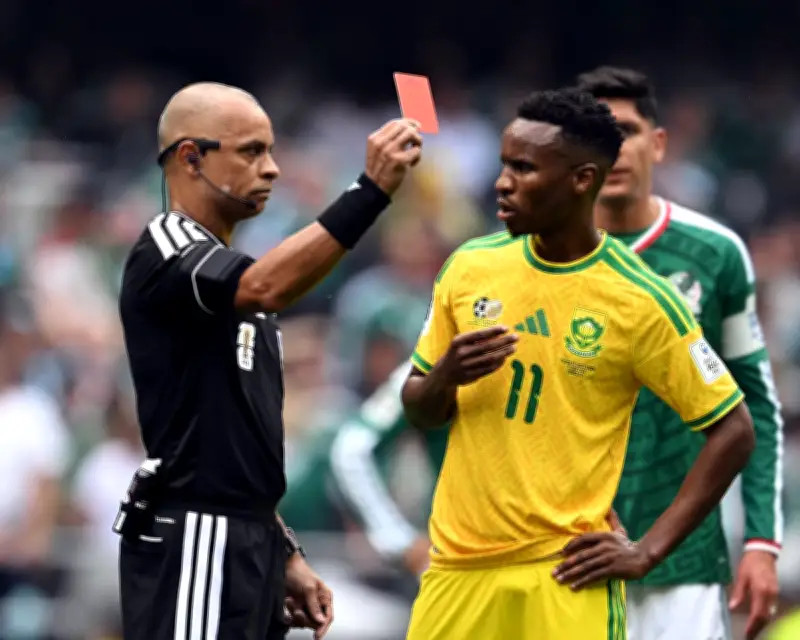
In the comic strip Calvin and Hobbes, Calvinball was a game with no fixed rules—a farcical sport where a "30-yard base wicket" could appear at any moment. This World Cup, FIFA seems to have taken a page from that playbook, implementing hastily adopted law changes that have turned refereeing into a chaotic free-for-all.
Untested Rules at the Biggest Stage
FIFA insists on applying annual changes to the Laws of the Game at the World Cup, even though the tournament technically began before the 1 July effective date. According to IFAB, competitions starting before that date may delay implementation until the next competition. Yet FIFA pushes ahead, forcing match officials to enforce rules that have hardly been tested in any widely broadcast competition.
Some changes are straightforward, like five substitutions instead of three. Others, like VAR, first appeared in 2018 before top European leagues adopted them. But many seemingly minor tweaks have had dramatic impacts.
Mistaken Identity and Simulation
In Paraguay's opener against the USA, Miguel Almirón tumbled after minimal contact with Tim Ream. Referee Danny Makkelie booked Ream, but replays showed Almirón had simulated. Under a revised law, the "mistaken identity" clause now allows review when a card is shown to the wrong player. Ream's yellow was wiped, and Almirón was booked for simulation, according to FIFA.
Switzerland's Breel Embolo suffered a more costly reversal in the quarter-finals. A yellow card initially awarded to Argentina's Leandro Paredes was switched to Embolo—his second—leaving Switzerland with 10 men in a 1-1 match they lost in extra time.
New Sending-Off Offense
Another change: covering one's mouth when communicating with an opponent in a provocative manner is now a sending-off offense. Almirón fell foul of this rule in Paraguay's second game, earning a red card that sparked a furious rant from a Paraguayan commentator, who later lost his World Cup credentials.
Confusion Over Substitutions and Injuries
Players being substituted must leave the field within 10 seconds of the referee's signal, unless safety or injury prevents it. This has led to players feigning injuries to slow the game, leaving referees to judge severity. Countless times, play has continued while a player lies crumpled, bewildering both teams and fans. The old sportsmanship custom of kicking the ball out is nearly extinct.
Selective Enforcement
Some laws are ignored entirely. Egypt's Mostafa Ziko did not receive a yellow card for removing his shirt after a disallowed goal against Argentina—a mandatory booking under the laws. Similarly, homophobic chants from Mexican fans have been loud enough to escape broadcasters' attempts to muffle them, but no match suspensions or fines have been announced, despite Mexico being punished for the same chants in the past.
Hair-Splitting Technology
While overlooking obvious infractions, officials have split hairs using technology. Croatia's equalizer against Portugal was ruled out because a sensor in the ball detected the slightest contact with Igor Matanovic's hair, putting Josko Gvardiol offside by a fraction. If Matanovic had been bald, the goal likely would have stood.
Such calls fuel criticism of VAR, but the problem isn't replay technology itself—it's the constant rewriting of rules. The handball law, for example, has been changed so many times that it's become a game of telephone: one person whispers "I like hamburgers," and after a chain of whispers, it comes out as "purple mambo dishwasher."
FIFA Should Reconsider
Perhaps FIFA should reconsider implementing so many changes when the whole world is watching in bewilderment. Clear communication from IFAB and FIFA is essential, but that has not been the case. Until then, the World Cup will remain a Calvinball tournament where the rules are anyone's guess.