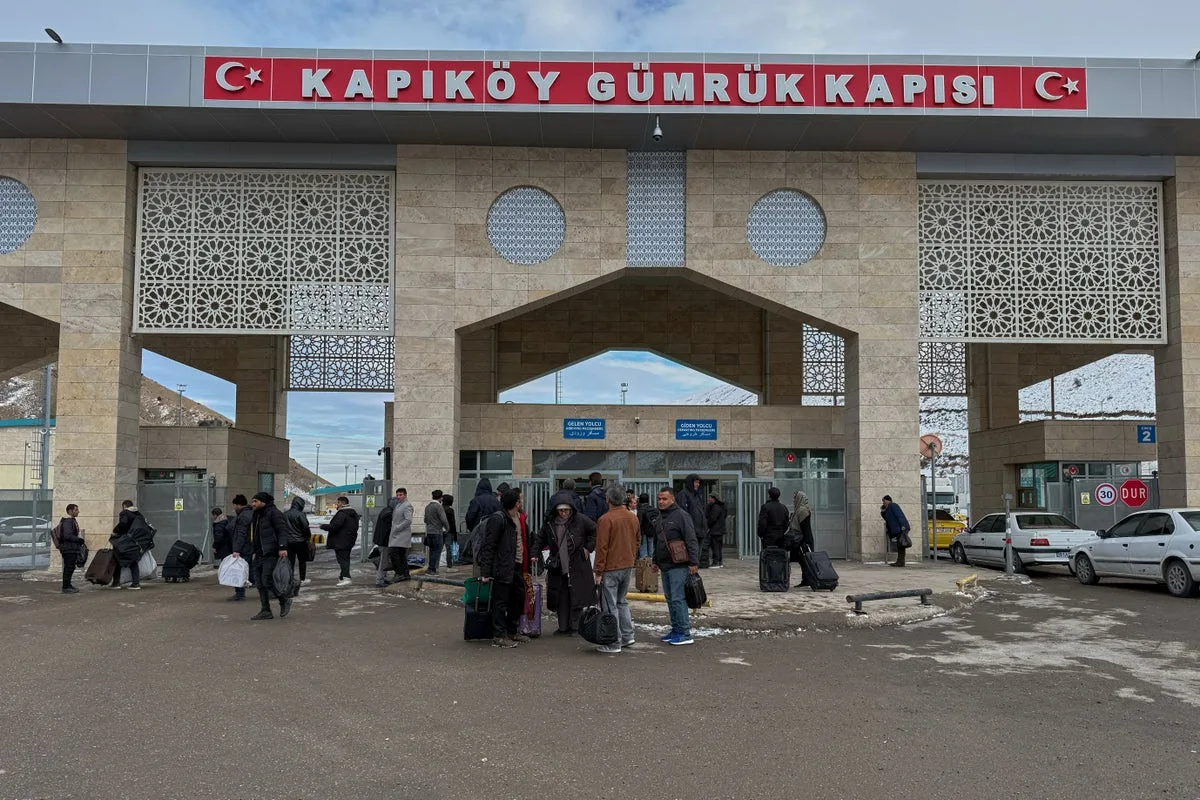
Iranians living near the Turkish border have been making short trips into Turkey to access the internet, which has been largely blocked in Iran since January 8 amid mass protests and a government crackdown. The border crossing in Turkey's eastern Van province has not seen a major influx of asylum seekers, but many have been using it to circumvent communications blackouts.
Internet services in Iran have been severely restricted, creating difficulties for those who rely on the web for work. Some Iranians fund their trips by selling goods like cigarettes and tea, which are cheaper in Iran and fetch higher prices in Turkey. Sami Ranjbar, an e-commerce worker from Tehran, said he stayed in Van for four days to catch up on business. 'My work depends on the internet, so I am forced to come here to access it,' he said.
Ali, 37, who spoke on condition of anonymity, came with his brother to use the internet for university applications. He expressed mixed feelings about the situation in Iran, saying, 'We are under a dictatorship, but we are also in danger of war from Israel and other countries.' The crackdown on protests that began December 28 has left at least 3,095 people dead, according to the U.S.-based Human Rights Activists News Agency.
In contrast, many Iranian travelers from the north said they see the protests as irrelevant to them and echoed government allegations that the unrest was fomented by the U.S. and Israel. Milad Soleimani, 28, from Qatur, said, 'The majority supports their state.' Ethnic Turks and Azeris in the region are largely averse to exiled Crown Prince Reza Pahlavi, who has urged protests. Afshin, a Kurdish traveler from Khoy, said, 'Iran is stable, that’s what is good about it. If there is a civil war, the country will split into 80 pieces.'