Verona's Ancient Arena to Deliver 'Something Very Special' for Olympic Closing Ceremony
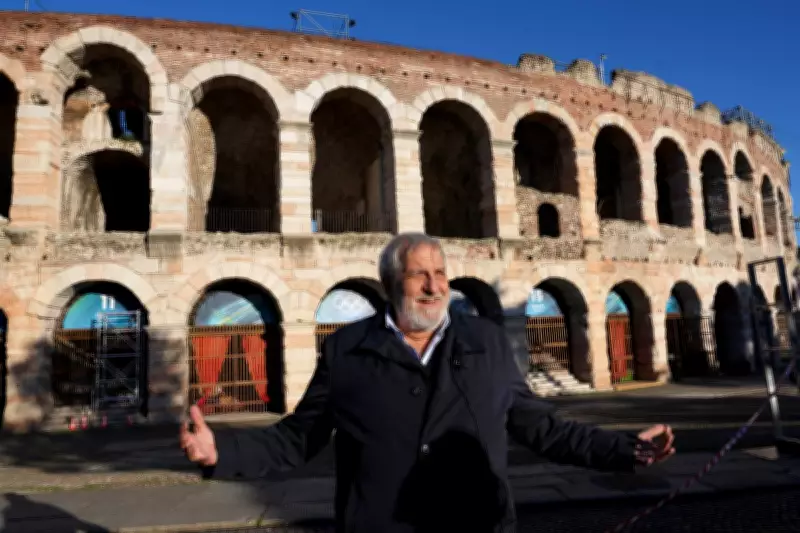
The Winter Olympics will draw to a close with a spectacular ceremony in Verona on Sunday, as the historic Roman Arena prepares to host the final act of the Milan Cortina Games. This ancient venue, forever linked to the tale of Romeo and Juliet, will welcome approximately 1,500 athletes for a celebration set against a backdrop of Italian music and dance.
'Beauty in Motion' to Explore Dynamic Themes
The closing spectacle, officially titled "Beauty in Motion", promises a dynamic exploration of beauty through art and sport. Acclaimed ballet dancer Roberto Bolle has been rehearsing inside the Arena di Verona this week under strict secrecy, joined by around 350 dedicated volunteers. Alfredo Accatino, the ceremony's producer, elaborated on the theme, stating: "Beauty cannot be fixed in time. This ancient monument is beautiful if it is alive, if it continues to change."
Accatino further explained: "This is what we want to narrate: An Italy that is changing, and also the beauty of movement, the beauty of sport and the beauty of nature." The ceremony will feature other prominent Italian artists, including singer Achille Lauro and DJ Gabry Ponte, whose music has already echoed through the Arena during rehearsals.

Historic Venue with Mysterious Depths
The Arena, constructed in 1 A.D. and predating the Roman Colosseum by decades, has long served as a hub for popular entertainment. Accatino hinted at surprises emerging from its vast underground tunnels, saying: "Under the Arena there is a mysterious world that hides everything that has happened. At a certain point, this world will come out," promising attendees "something very beautiful."
The event will commence with athletes parading triumphantly through Piazza Bra into the Arena, a site once used for gladiator battles and exotic animal hunts. The stage design, inspired by a drop of water, symbolically unites the Olympic mountain venues with the Po River Valley, home to Milan and Verona, while subtly acknowledging how climate change is reshaping the Winter Games.
Intimate Setting and Practical Considerations
Maria Laura Iascone, head of ceremonies for the local organising committee, highlighted the uniqueness of using such a monument, noting: "Only Italians can use such monuments to do special events, so this is very unique, very rare." She promised a more intimate evening compared to the opening ceremony at Milan's San Siro stadium, with about 12,000 attendees versus over 60,000 previously.
Iascone added that roughly 1,500 of the nearly 3,000 athletes from the most geographically dispersed Winter Games in history are expected to travel to Verona, driving just over an hour from Milan or between two to four hours from the six mountain venues. Cortina d'Ampezzo, the other host city in the Dolomites, was deemed too small and remote for the closing ceremony, leading to Verona's selection for its central location and iconic Arena.
Accessibility and Environmental Measures
The ceremony will conclude with the extinguishing of the Olympic flame, accompanied by a light show instead of fireworks, which are prohibited in Verona to prevent disturbing local wildlife. The Arena has also been retrofitted with new wheelchair ramps and accessible restrooms, along with other safety upgrades, in preparation for its role in the Paralympic opening ceremony on March 6.
Backstage, seamstresses have been putting finishing touches on opera-inspired costumes, while volunteers like Matilde Ricchiuto, a local dance student, expressed excitement. "It’s really special to be inside the Arena," she said. "Usually, I am there as a spectator and now I get to be a star, I would say. I feel super special." The six Paralympic events will continue in Milan and Cortina until March 15, capping off a historic Olympic period in Italy.