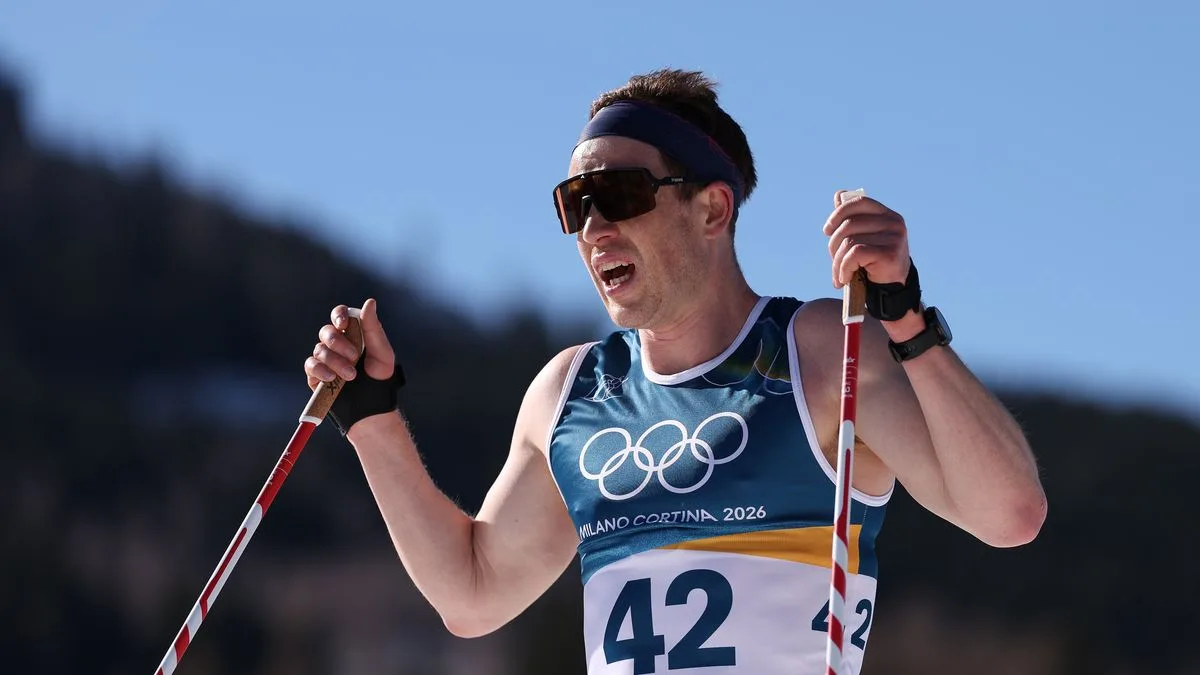
British cross-country skier Andrew Musgrave experienced a dramatic and physically demanding conclusion to his event at the Winter Olympics on Friday, culminating in an unexpected interruption during a post-race interview. The 35-year-old athlete, representing Great Britain, competed in the men's cross-country skiing competition held at the Tesero Cross-Country Skiing Stadium.
A Personal Best Amid Physical Exhaustion
Musgrave delivered a commendable performance, securing a sixth-place finish with a time of 21:06.3. This result marked his best-ever achievement at a Winter Olympic Games, showcasing his dedication and skill on the global stage. However, the intense effort took a significant toll on his body, leading to an immediate physical reaction after the race.
Unplanned Interview Exit
Shortly after completing the energy-sapping event, Musgrave began an interview but was compelled to leave abruptly to vomit. He later explained that such reactions are not uncommon for him following shorter, high-intensity races. "Quite often with shorter, harder races, when we push with super-high lactic acid levels, I sometimes have to vomit at the end," Musgrave stated. "That's always a sign I have pushed it hard. It just came a bit quickly so I had to go for a little spew there."
The conditions added to the challenge, with Musgrave noting the warmer than usual temperatures required him to wear a lightweight vest. Reflecting on his performance, he expressed mixed feelings about his sixth-place finish. "The position is fairly decent and I was feeling good," he said. "But when I'm out training every day, it's not sixth spot I'm dreaming of. I'm not going to go and party tonight and pop the champagne or anything like that."
Race Strategy and Reflections
Musgrave praised his support team, highlighting the excellent work of the wax technicians who ensured his skis performed superbly. He adhered well to his plan during the initial laps but acknowledged pushing too hard on the final lap. "It was hot so you don't want to go out too hard because it's easy to push a bit too hard and then die," he explained. "But I pushed a bit too hard on the last lap and those last two hills I was absolutely dying."
Despite feeling strong after the first two laps, Musgrave believed he could have improved his position. "I was never going to be in the fight for the medals. It was a long way up to the guys fighting for the podium. I should probably have been able to take fourth spot though," he admitted. "After the first two laps, I felt like I had plenty in the tank and could go up another gear. But I probably should have increased the speed a bit more gradually rather than losing my head with 2.5 kilometres to go."
Future Prospects and Retirement Considerations
Following his performance, Musgrave addressed questions about his future in the sport. While he has no immediate plans to retire, he expressed uncertainty about competing in the next Winter Olympics in 2030. "I don't know. I have no plans for when I'm going to retire. I love skiing. I love training," he said. "There's nothing else I want to do. I don't feel any reason to think about retiring at the moment. But whether I've got another four years in me, I don't know. We'll see."
This incident underscores the extreme physical demands of Olympic-level cross-country skiing, where athletes often push their bodies to the absolute limit in pursuit of excellence. Musgrave's experience highlights the intense lactic acid buildup and exhaustion that can follow such gruelling efforts, even when resulting in personal best achievements.