Adeliia Petrosian Makes Olympic Debut Amidst Controversy and High Stakes
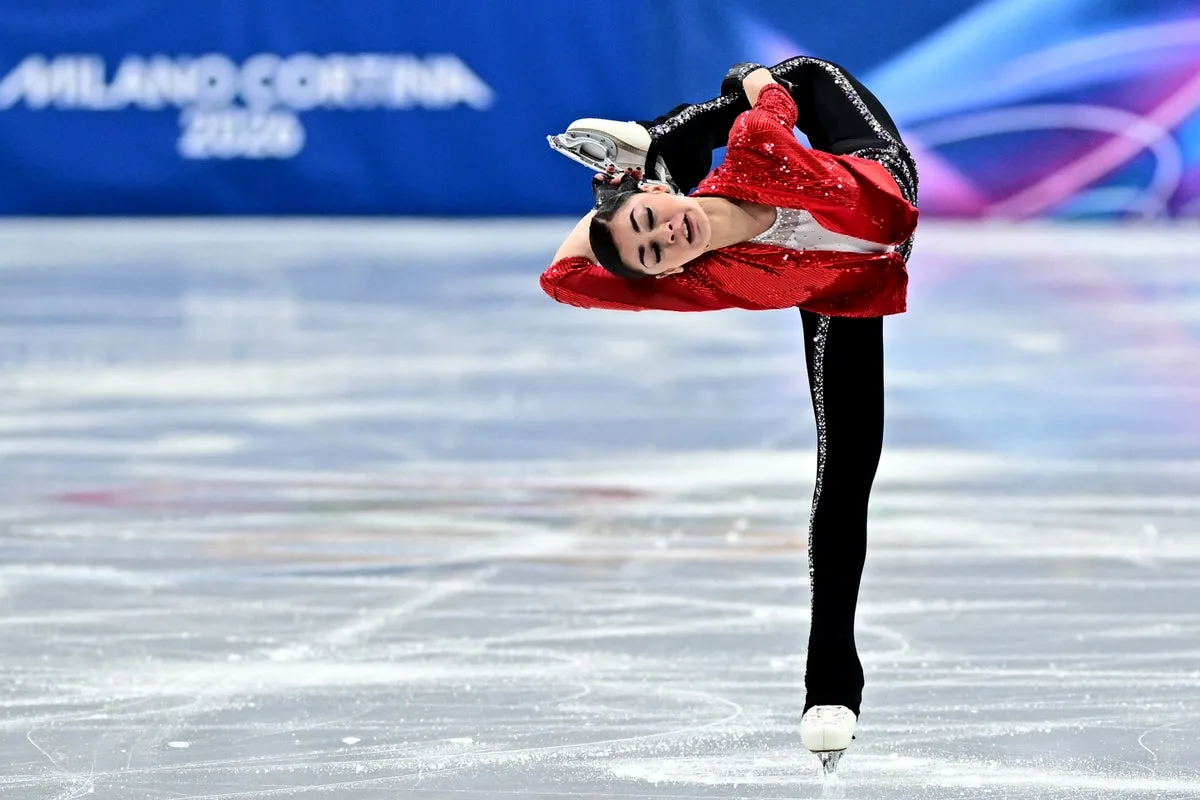
Adeliia Petrosian, the Russian figure skater whose career is shadowed by association with a controversial coach, has taken to the ice at the Winter Olympics in Milan. Competing in the women's singles event at the Assago Arena, Petrosian marked her Olympic debut with a performance that blended athletic prowess with underlying political tension.
A Career-Best Performance Under the Spotlight
Clad in a sparkling red jacket, Petrosian skated to a Michael Jackson medley featuring Earth Song and They Don't Care About Us. On Tuesday, she delivered a career-best short program score of 72.89, a result that places her on the fringe of medal contention ahead of Thursday's decisive free skate. This strong showing comes as a significant milestone in her young career, which has been largely confined to domestic competitions until recently.
These Games represent only Petrosian's second senior competition outside Russia. A three-time national champion known by the nickname 'Miss Mystery', she previously secured victory at the Skate to Milano event in China last year. In a rare interview with international media earlier this year, the 18-year-old offered glimpses into her personal life, speaking candidly about childhood dreams of hairdressing and selling vegetables, alongside her affection for her Yorkshire terrier, Almochka.
Political Scrutiny and Olympic Eligibility
Petrosian's appearance at the Olympics is not without significant controversy. She was invited to compete only after being judged not to have supported Russia's war on Ukraine, nor to have any links with Russia's military or security services. This political vetting process underscores the complex landscape in which Russian athletes now operate on the international stage.
More pertinently, Petrosian trains at Sambo 70 in Moscow, the club that nurtured Kamila Valieva, whose dramatic fall during the 2022 Olympics under the weight of an initial positive drugs test resulted in subsequent disqualification. The club is run by Eteri Tutberidze, the coach who was excoriated by then International Olympic Committee president Thomas Bach in Beijing for her part in Valieva's dramatic demise.
The Tutberidze Factor and Russian Legacy
At an extraordinary press conference during the Beijing Games, Bach said he was "disturbed" by Valieva's error-strewn performance and criticised the "tremendous coldness" of her entourage, clearly referring to Tutberidze, who had seemingly ticked off the tearful teenager as she stepped off the ice.
Despite concerns expressed by World Anti-Doping Agency president Witold Banka, who said he was "not comfortable", Tutberidze has been able to subvert the Russian ban after being accredited as a member of the Georgian delegation. She coached Luca Berulava and Anastasiia Metelkina to silver in Monday's pairs competition, demonstrating her continued influence despite restrictions.
Tutberidze has been seen with Petrosian in the Milan practice hall, though she was not allowed rink-side on Tuesday due to her accreditation with a separate delegation. Nevertheless, her influence was evident in Petrosian's audacious if slightly under-stated performance.
Continuing a Russian Dynasty in Women's Figure Skating
Petrosian is seeking to extend a Russian hold on the women's singles figure skating title that stretches back to Adelina Sotnikova, who controversially pipped South Korea's defending champion Yuna Kim to victory in Sochi in 2014. Alina Zagitova stomped her way to victory in Pyeongchang in 2018, and amid the tumult of Beijing, Anna Shcherbakova took gold ahead of another Tutberidze protege, Alexandra Trusova.
Barring a twist of 'Quad God' proportions, Petrosian is unlikely to be in a position to extend that illustrious lineage. She resisted the quad-jumps which, in common with most of Tutberidze's skaters, have become a trademark. "I am very happy with my skate," Petrosian said afterwards. "This was the most important skate of my life."
As the culmination of her performance drew cheers from the packed crowd in Milan, it was easy to forget the political ramifications of her appearance. For a fleeting moment, as she threw her head back and accepted the acclaim, she was simply another young girl skating her heart out to a pop song, her personal achievement momentarily overshadowing the complex web of controversy surrounding her participation.