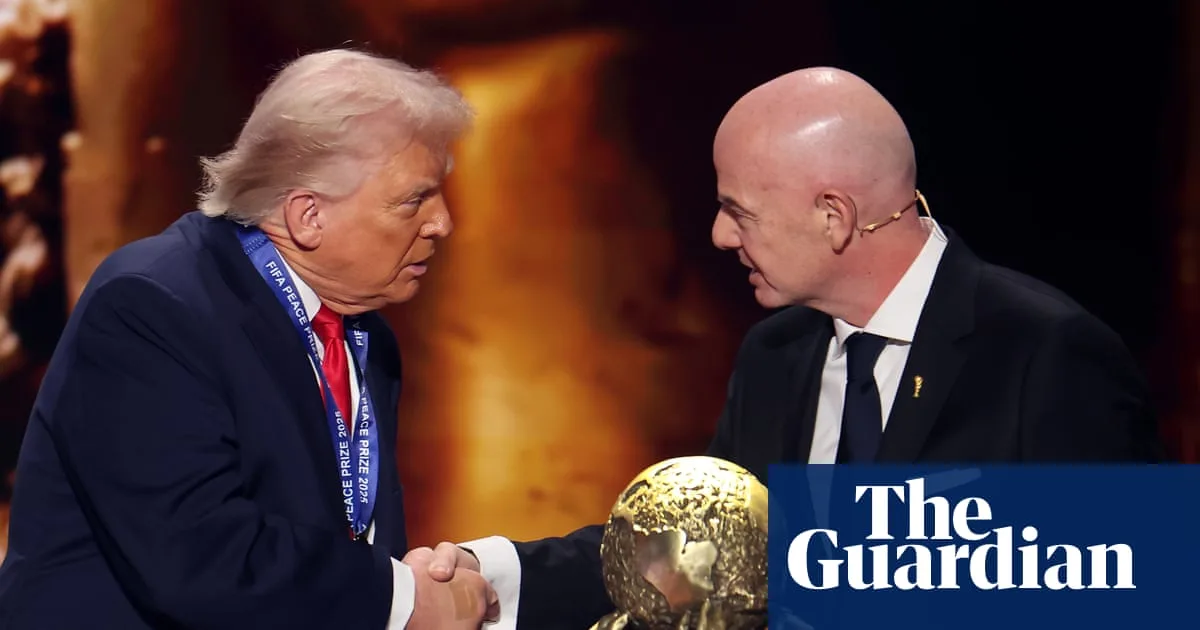
Donald Trump has been awarded the inaugural Fifa peace prize at the draw for the 2026 World Cup in Washington DC, sparking controversy over the selection process and the US president's claims of peacemaking. Fifa president Gianni Infantino presented the honour onstage at the Kennedy Center for the Performing Arts on Friday, saying Trump had been chosen 'in recognition of his exceptional and extraordinary actions to promote peace and unity around the world'.
Accepting the award, Trump called it 'one of the great honours of my life' and claimed to have 'saved millions and millions of lives' by ending conflicts in the Congo, India and Pakistan, and elsewhere. However, many of his claims are disputed. The Gaza conflict, which Trump says he ended, continues at a lower level, with regular Israeli strikes. India has denied Trump's meaningful involvement in easing tensions with Pakistan, and fighting between Rwandan-backed rebels and the DRC has continued despite his claims.
Fifa says the prize is for 'individuals who help unite people in peace through unwavering commitment and special actions', but has not disclosed details of the selection process. A Guardian investigation found that a new 'social responsibility' committee chaired by controversial Myanmar tycoon Zaw Zaw will propose the process for future awards. The decision is likely to intensify scrutiny of Fifa's close alignment with Trump's political orbit.
Trump has long sought international validation and has aggressively campaigned for the Nobel peace prize. After this year's award went to Venezuelan opposition leader María Corina Machado, senior Republicans denounced the decision as 'politics over peace', while US House speaker Mike Johnson vowed to help marshal a global nomination for Trump next year. Infantino's relationship with Trump has grown increasingly visible ahead of the expanded 2026 World Cup, co-hosted by the United States, Canada and Mexico.