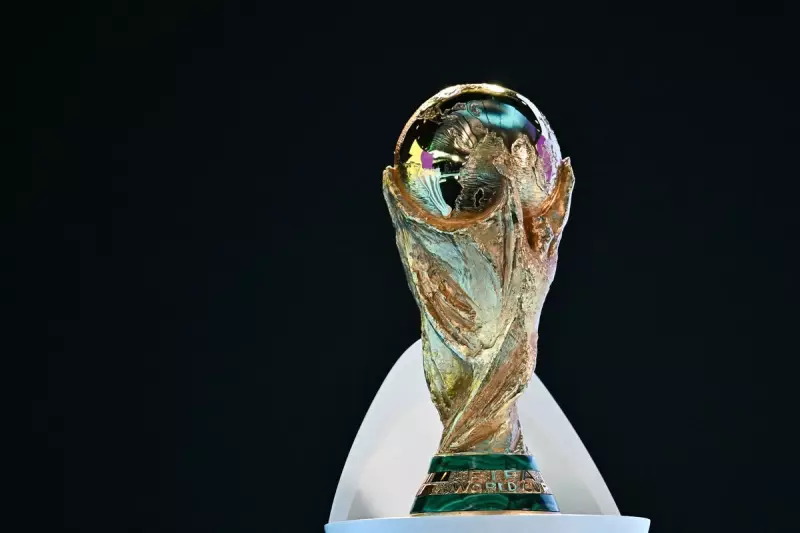
The long road to the 2026 FIFA World Cup began in earnest today as the official draw for the tournament's group stage took place at the Kennedy Center in Washington DC. The ceremony, marked by significant political and sporting spectacle, set the initial path for the 48 competing nations, including home nations England and Scotland.
A Historic Tournament Takes Shape
This edition of the World Cup is set to be a landmark event for multiple reasons. It will be the first to feature 48 teams, expanded from the 32 that competed in Qatar 2022. Furthermore, it is the first World Cup to be jointly hosted by three nations: the United States, Canada, and Mexico. The tournament will commence on 11 June 2026 at Mexico City's iconic Estadio Azteca and conclude with the final on 19 July 2026 at the MetLife Stadium in New Jersey.
The expanded format means the teams will be drawn into 12 groups of four, labelled A through to L. The hosts have already been assigned: Mexico will head Group A, Canada will be in Group B, and the United States will lead Group D. The top two teams from each group, plus the eight best third-placed sides, will advance to a new round of 32.
Pomp, Ceremony, and Political Controversy
The draw itself was a high-profile affair, attracting notable figures from across the globe. The attendance of US President Donald Trump alongside FIFA President Gianni Infantino added a layer of political controversy to the proceedings, with critics accusing football's governing body of bringing shame upon itself by associating so closely with the divisive leader.
On the pitch, the focus for British fans is firmly on the prospects of the home nations. England, under new manager Thomas Tuchel, are considered among the favourites to win the tournament. Tuchel will be aiming to succeed where Gareth Southgate fell just short and secure a major international trophy. Scotland, qualifying for their first World Cup in 28 years, will be hoping to make a significant impact on their long-awaited return to the global stage.
How the New Format Works
The shift to 48 teams necessitates a complex new structure. The nations were divided into four pots based on FIFA world rankings. Pot 1 contained the three host nations and the nine highest-ranked qualified teams, including Spain, Argentina, France, England, Brazil, Portugal, the Netherlands, Belgium, and Germany.
Teams from the same confederation are generally kept apart in the group stage, with the exception of European sides. Given there are 16 UEFA nations, no group can contain more than two teams from Europe. The ranking of the eight best third-placed teams, who will join the group winners and runners-up in the knockout phase, will be determined first by points, then goal difference, goals scored, and finally by a 'team conduct score' based on disciplinary records.
With the draw now complete, the countdown to the biggest World Cup in history truly begins. For England and Scotland, the quest for glory in North America now has a defined starting point.