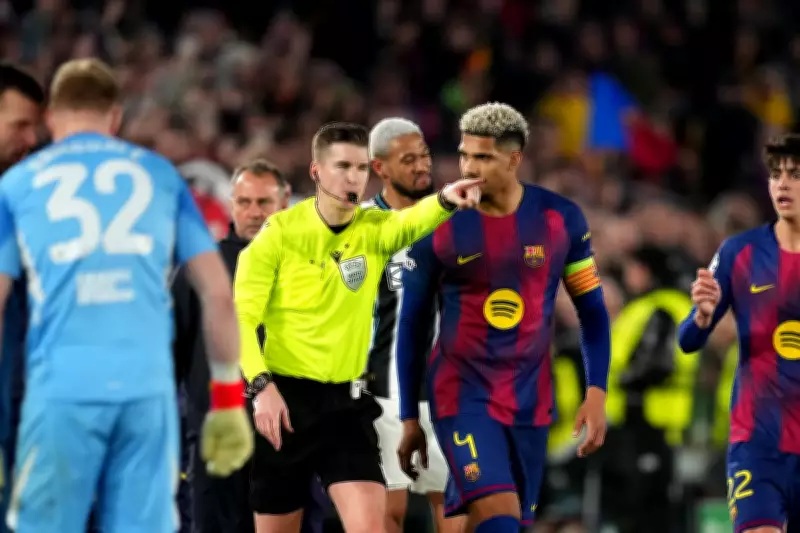
UEFA Champions League VAR Changes Aim to Reduce Microscopic Interference
UEFA is planning significant changes to how VAR is implemented in the Champions League and its other competitions, with a focus on diluting what officials describe as "microscopic" interference. This move comes as UEFA aims to streamline the VAR process, addressing criticism from fans and pundits while ensuring the technology remains a fixture in football for the foreseeable future.
Aligning VAR Across European Competitions
There is a noticeable disparity in VAR usage between UEFA competitions and major domestic leagues like the Premier League and Serie A. To bridge this gap, UEFA referees chief Roberto Rosetti is set to meet with representatives from major European leagues, including the Premier League, after the 2026 World Cup. The goal is to foster better alignment on VAR protocols, creating more consistency across competitions and appeasing critics who have voiced concerns over inconsistent decisions.
UEFA remains committed to retaining VAR, but there is a strong desire to make the process more efficient and less intrusive. This includes a specific change regarding corners: VAR will only be used on corner incidents if an issue is immediately identifiable before play restarts, eliminating any delays. This adjustment is part of a broader effort to reduce interruptions and maintain the flow of the game.

Debate Over Country Protection and Streaming Trials
Another hot topic within UEFA is the potential removal of country protection earlier in the Champions League. Some clubs are pushing to dilute the Premier League's dominance by eliminating protections from the play-off round onwards. This season, Paris Saint-Germain faced Monaco in the play-offs due to seeding nuances, highlighting the current system's complexities. European officials argue that dropping country protection could lead to English teams knocking each other out earlier, potentially affecting league phase outcomes based on matchups against English sides.
The debate is particularly intense among clubs from domestic leagues with one dominant team, and it remains subject to further discussion. Meanwhile, UEFA is also exploring new broadcast models, planning to trial streaming platforms in smaller markets, similar to the Premier League's "Premflix" initiative in Singapore. These plans were a key topic in negotiations about Real Madrid's return to the European Football Club (EFC) after the Super League project, with Madrid accelerating discussions on streaming innovations.
Premier League's Influence and Future Implications
The multitude of English clubs in the Champions League has sparked significant debate, even though only two advanced to the quarter-finals this season after exits by Manchester City, Chelsea, Newcastle, and Tottenham. There is a growing realization that the Premier League is virtually certain to secure five places annually, with the possibility of up to seven teams next season if Liverpool and Aston Villa finish outside the top five but win the Champions League and Europa League, respectively.
As UEFA and its EFC partners in UC3 investigate new broadcast models, some fixtures may eventually appear on Netflix-style streaming services in foreign territories. This shift reflects broader trends in sports media, with the Premier League already announcing similar plans. The ongoing discussions underscore UEFA's efforts to modernize the Champions League while balancing competitive fairness and fan engagement in an evolving football landscape.