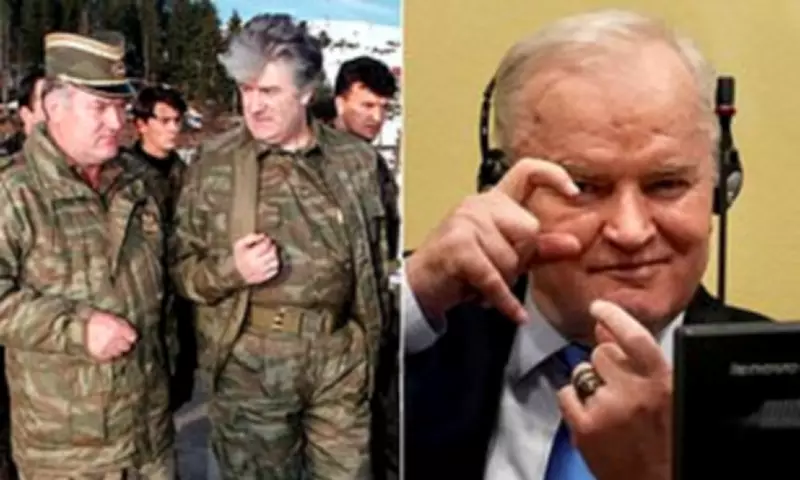
Lawyers representing Ratko Mladic, the convicted war criminal infamously known as the 'Butcher of Bosnia,' have formally requested his release, asserting that he is gravely ill and nearing death following a stroke. The 84-year-old former Bosnian Serb military commander was convicted of genocide nine years ago and is currently serving a life sentence at a detention facility in The Hague.
Defence Team's Motion for Release
On Friday, Mladic's defence team submitted a motion dated April 30, arguing that the war criminal is 'in a state of advanced, irreversible medical decline resulting from a medical incident ... and is approaching the end of his life.' They are seeking his provisional release to facilitate his transfer to Serbia for medical treatment. Mladic's son, Darko Mladic, revealed on Bosnian Serb public television on April 15 that a UN-authorised doctor had informed him his father suffered 'a silent (minor) stroke.'
Background of Conviction
In 2017, a UN tribunal sentenced Mladic to life imprisonment for genocide and war crimes committed during Bosnia's 1990s war, which resulted in approximately 100,000 deaths. The verdict was upheld on appeal in 2021. One of the most heinous crimes attributed to him is the July 1995 massacre of around 8,000 Bosnian men and boys in the eastern Srebrenica region, the worst massacre on European soil since World War II.

Medical Condition Details
According to the defence counsel, Mladic suffered 'an acute neurological/medical episode characterised by sudden total aphasia,' meaning a loss of the ability to speak. He is also experiencing difficulty swallowing, as observed during a video call with his son, which led to his emergency hospitalisation. 'Doctors have offered reports that confirm the fact that Mr Mladic's condition is serious, life-threatening ... and such that it cannot be adequately treated in the hospital prison,' the defence team stated.
Opposition from Victims' Associations
In late April, several associations representing Bosnian victims of the 1992-1995 war urged the international court to deny Mladic's transfer to Serbia, opposing any move that could be seen as leniency for his crimes. After the war, Mladic evaded capture until 2011, when he was arrested and handed over to the International Criminal Tribunal for the former Yugoslavia by the then pro-Western government of Serbia.