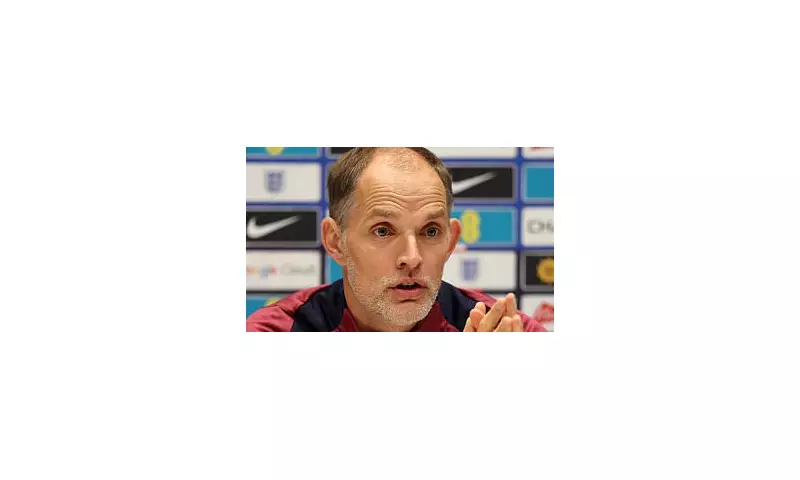
England manager Thomas Tuchel has delivered a significant team selection update, stating he will not play star attackers Harry Kane, Jude Bellingham, and Phil Foden in the same starting eleven. The German tactician emphasised that the development of his squad has progressed beyond simply fitting all his best-known players onto the pitch, putting their guaranteed inclusion in next summer's World Cup squad in doubt.
The Structure Over Stars Philosophy
Speaking to talkSPORT, Tuchel was unequivocal about his approach. He confirmed that, within his preferred team structure, it is currently impossible to accommodate all three superstars simultaneously. This stance comes just a year after stand-in coach Lee Carsley successfully fielded the trio, along with Cole Palmer, in a match against Greece at Wembley.
Bellingham and Foden have returned to the England setup for the upcoming qualifiers against Serbia and Albania, having been omitted from the October internationals. However, Tuchel has a clear vision for his team's formation ahead of the World Cup and is unwilling to compromise it by playing individuals out of position.
"At the moment, if we keep the structure, they cannot play," Tuchel stated. "They can but not in the structure, not for the balance that we developed and not for structure that comes also with wingers who are specialists in their positions. We play at the moment with a six, eight, a 10 and a nine."
Tough Decisions Loom for World Cup Selection
The manager highlighted the intense competition for the number 10 role, a position where both Foden and Bellingham are vying for minutes. He named a host of talent competing for that spot, including Morgan Rogers, Cole Palmer, and Morgan Gibbs-White.
"There's a lot, a lot of players, and there's the chance that we will not take everyone," Tuchel admitted. "This is not because we don't like it, not because they don't individually deserve it, but because we will always do what's best for the team. We will always do what's best for winning."
He stressed his commitment to making difficult choices for the benefit of the squad's overall balance and clarity, a process he says happens in every camp and will not change for a major tournament.
What This Means for Foden and Bellingham
This new policy appears to be particularly challenging for Phil Foden. Tuchel recently described the Manchester City player as a central operator rather than a winger, which now places him behind both Jude Bellingham and the in-form Morgan Rogers for the attacking midfield role behind striker Harry Kane.
While Tuchel has previously considered using Foden as a false nine, he indicated this would only be a situational tactic. He did, however, leave the door slightly ajar, suggesting Foden's versatility could be an asset. "For Man City, he plays almost like an eight-ten, so maybe during the next months we consider him as an eight," Tuchel mused.
Nevertheless, he remained firm on his overall selection principle, adding, "I see a very, very low percentage that we take five number 10s in the number 10 position into a tournament. I don't see how this will help us."
The rise of Aston Villa's Morgan Rogers has further complicated the selection picture. Tuchel revealed that if the World Cup began now, the number ten shirt would belong to Rogers, setting up a direct competition with Bellingham. He described it as a "friendly competition" between two respectful friends, but one with high stakes.
When asked if they could play together, Tuchel conceded it was possible, but only in a different team structure. "At the moment is not the moment to change our structure," he concluded, firmly shutting the door on a Kane-Bellingham-Foden attacking trio for the foreseeable future.