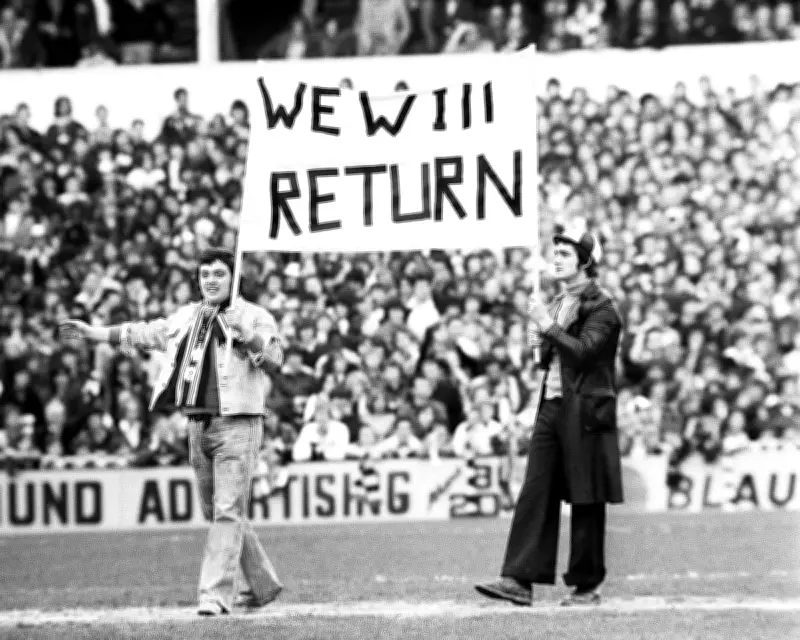
Tottenham Hotspur Football Fans Protest Against Relegation in 1977
In a historic moment captured by Trinity Mirror/Mirrorpix/Alamy, Tottenham Hotspur football fans took to the streets in 1977 to protest the club's relegation. This poignant image serves as a reminder of the deep emotional ties between supporters and their teams during times of crisis.
Relegation as a Cathartic and Regenerative Force for Football Clubs
Richard Pitman argues that relegation, while never pleasant, can sometimes be exactly what a football club needs to undergo a profound transformation. Drawing parallels to the hero's journey in Joseph Campbell's monomyth, Pitman suggests that facing the abyss might be necessary for Tottenham Hotspur's eventual renewal.
He points to the example of Aston Villa, who regularly qualified for European competitions throughout the 1990s and early 2000s. However, after Martin O'Neill's abrupt departure—a move blamed on owner Randy Lerner—the club endured a series of poor seasons, culminating in relegation from the Premier League in the 2015/16 campaign.

Pitman likens Tottenham's current situation to a narrative where manager Igor Tudor and his staff are leading the club ever closer to the edge. The only viable path back, he contends, is through a transformative period in the Championship.
The Silver Linings of Relegation
Contrary to common fears, relegation might not be entirely bleak. Pitman highlights several potential benefits:
- Easier access to match tickets for loyal fans.
- Opportunities to visit grounds and experience away days that are typically off the Premier League radar.
- A chance to rebuild confidence and feel like world-beaters again in a competitive lower league.
- The possibility for Spurs to loan out their spectacular stadium for lucrative events during the interim.
This perspective challenges the conventional dread associated with dropping down a division, suggesting it could foster a stronger, more resilient club identity.
A Fan's Perspective on Current Struggles
In a related letter, Toby Wood adds a touch of dark humor to the discussion. He references a recent news story about a Barcelona fan who mistakenly went to the wrong St James's Park and missed a Newcastle game.
Wood quips that Spurs fans deserve more sympathy, as they are turning up at the right ground week after week, only to witness their team's ongoing struggles on the pitch.This comment underscores the frustration and loyalty of Tottenham supporters, who continue to show up despite the club's precarious position near the relegation zone.
Broader Implications for Football Folklore and Mythology
The debate touches on themes beyond mere sports performance, delving into the folklore and mythology of football. Relegation is framed not just as a sporting failure, but as a potential rite of passage—a necessary descent before a triumphant return.
For clubs like Tottenham Hotspur, with a rich history and passionate fanbase, this narrative offers a way to contextualize current challenges within a larger, almost archetypal story of struggle and renewal.
As the Premier League season progresses, the specter of relegation looms large for several teams. The lessons from Aston Villa's experience and the historical protests of 1977 remind us that in football, as in myth, the journey through darkness can sometimes lead to a brighter dawn.