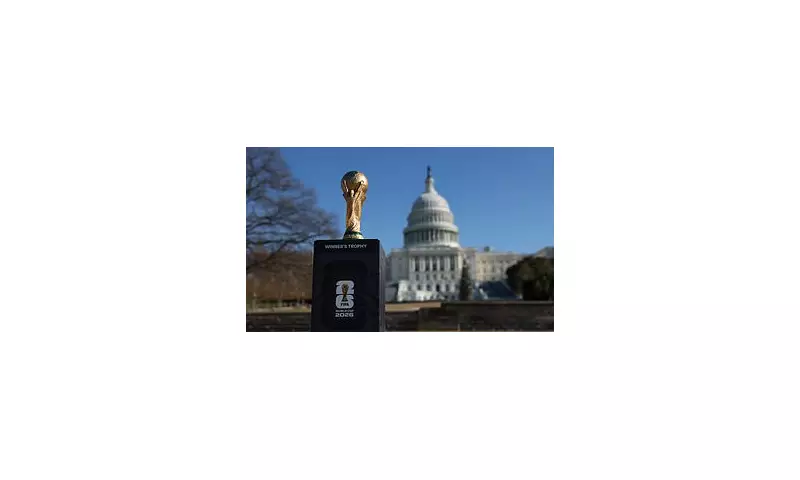
For the first time since the 1998 tournament in France, Scotland will be part of the World Cup draw, set for 5pm on Friday in Washington DC. The Tartan Army's long wait is over as Steve Clarke's men join the 48 nations discovering their group stage fate for the expanded 2026 finals in the US, Canada, and Mexico.
The Draw Mechanics: Pots, Hosts, and Restrictions
The tournament has grown by 16 nations since Qatar 2022, leading to a new format of 12 groups of four teams. The 48 qualifiers are split into four pots of 12, with Scotland placed in pot three. The draw process itself is expected to take just under an hour.
Pot composition is primarily based on FIFA rankings, but with a significant twist. The three co-hosts—USA, Canada, and Mexico—are automatically placed in pot one to guarantee they play all group games on home soil. This displaces higher-ranked nations like Croatia (10), Morocco (11), and potentially Italy (12).
FIFA aims to avoid teams from the same confederation meeting in the groups, but with 16 European nations qualifying, this is mathematically impossible. Four groups will inevitably contain two UEFA sides. Scotland could therefore draw England or any other top European seed from pot one, but they cannot be placed into a group that already contains two European teams.
Navigating the Pots: Scotland's Best and Worst Case Scenarios
As a pot three team, Scotland's path is fraught with both opportunity and danger. From pot one, drawing one of the host nations is considered preferable, as they are theoretically weaker than the elite footballing powerhouses like Spain, Argentina, France, England, Brazil, or Germany.
Pot two presents a mixed bag. While Scotland have recent positive results against an ageing Croatia, the South American trio of Colombia, Uruguay, and Ecuador—who all finished above Brazil in qualifying—would be problematic. Morocco, semi-finalists in 2022, and African champions Senegal are also formidable.
Pot four is where Scotland desperately need fortune. With eight third-placed teams advancing to the knockout round of 32, a favourable draw here could be transformative. The nightmare scenario would be landing a European play-off winner like Italy, Czech Republic, or Poland, or a tough inter-continental qualifier such as DR Congo or Bolivia.
Unresolved Questions and Final Details
Six nations will come through play-offs in March 2025, adding further uncertainty. The four European play-off winners cannot go into a group with two existing UEFA sides. The inter-confederation play-off teams face even stricter geographical restrictions on their potential groups.
FIFA has also planned for the latter stages, placing Spain and Argentina (ranked 1 and 2) on opposite sides of the draw, as well as France and England. This ensures these heavyweights cannot meet before the semi-finals, provided they win their groups.
While the match dates and order will be known immediately after the draw, specific venues and kick-off times will not be confirmed until the following day. For Scottish fans planning their long-awaited pilgrimage, the final pieces of the puzzle will fall into place then. The dream scenario? A group with Canada, Australia, and Haiti. The nightmare? Argentina, Morocco, and Italy.