Royal Shrovetide Football: A Centuries-Old Tradition Continues in Ashbourne
The annual Royal Shrovetide Football match took place in Ashbourne, Derbyshire, on 17 February, showcasing a mass event with minimal rules and deep historical roots. This chaotic game, which has been played nearly every year since at least 1667 and may date back to the 12th century, pits two teams against each other in a fierce competition that can lead to injuries and property damage.
Teams and Rules of the Game
Competitors are divided into the Up'ards and Down'ards based on which side of a small brook that bisects Ashbourne they were born. The game features two goals standing three miles apart and is played in two sessions of eight hours on Shrove Tuesday and Ash Wednesday. If a goal is scored before 6pm, a new ball is 'turned up' to start a new game, while a goal after 6pm ends play for the day, with the match continuing into Ash Wednesday. The annual event can last until 10pm, with volunteer stewards monitoring for foul play or damage.
Scenes from the Match
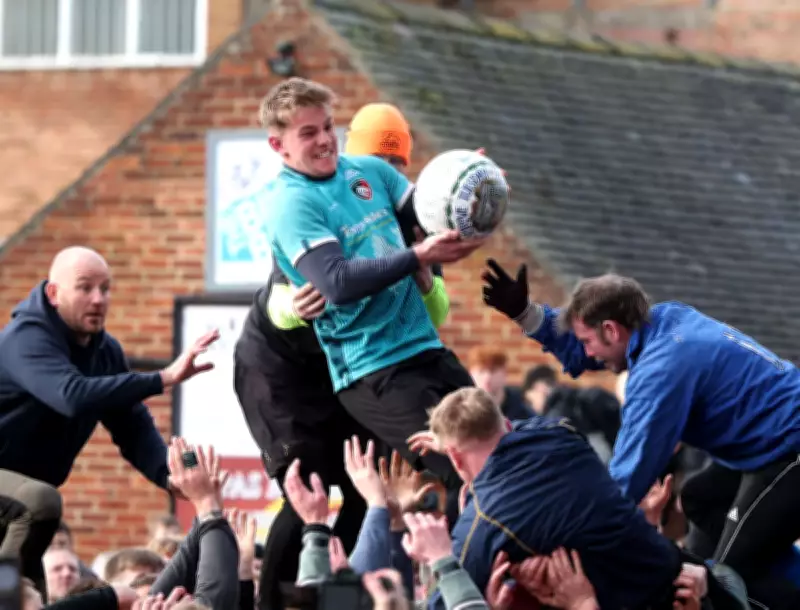
Players from the Up'ards and Down'ards battled for possession of the ball, often resulting in ripped shirts and intense physical confrontations. Before the match, competitors were seen drinking wine and eating pasties, adding to the festive atmosphere. Shops in Ashbourne were boarded up to protect them from potential damage during the game.

Historical and Regional Significance
The Royal Shrovetide Football is not limited to Ashbourne; a similar match also occurred in Alnwick, Northumberland, where players from the parishes of St Paul's and St Michael's participated near Alnwick Castle. This version has been documented since at least 1762, highlighting the widespread nature of such traditional sports across England.
Key aspects of the event include:
- Minimal rules except for the team division based on birthplace.
- Potential for injuries and property damage, mitigated by volunteer stewards.
- Deep historical roots, with records tracing back centuries.
- Regional variations, such as the match in Alnwick, Northumberland.
This unique tradition continues to draw participants and spectators, preserving a piece of England's cultural heritage through spirited and often rugged competition.