Alan Rothenberg, the foundational figure who presided over American soccer's modern awakening, remains a pivotal voice as the sport prepares for its next great leap. As president of the US Soccer Federation throughout the 1990s and the driving force behind the successful 1994 FIFA World Cup, his legacy is inextricably linked to the creation of Major League Soccer (MLS) and the sport's commercial boom in the United States.
From NASL to MLS: Architect of an American Soccer Era
Rothenberg's journey began in the boardrooms of the old North American Soccer League (NASL), working under the renowned sports magnate Jack Kent Cooke. His legal and organisational acumen led to his role as commissioner of soccer for the 1984 Los Angeles Olympics, a precursor to his defining challenge: leading the organising committee for the 1994 World Cup.
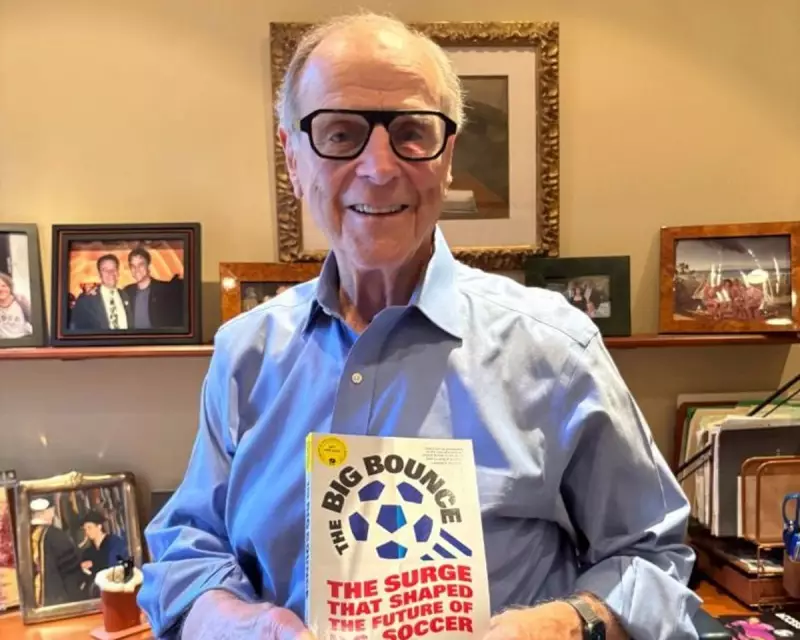
His negotiations with FIFA were directly responsible for the launch of MLS in 1996, a condition of hosting the tournament. The league's championship trophy bore his name until 2007, a testament to his foundational role. In a forthcoming book, The Big Bounce: The Surge That Shaped the Future of US Soccer, Rothenberg chronicles this transformative period.
The 2026 World Cup: Politics, Prices, and Fan Resilience
Looking ahead to the expanded 2026 World Cup across the US, Canada, and Mexico, Rothenberg anticipates a different atmosphere to the 1994 draw he orchestrated in Las Vegas. He notes the upcoming event in Washington D.C. will likely carry a "teeny bit of a political overload," given the personal investment of figures like former President Donald Trump and FIFA President Gianni Infantino.
On the contentious issue of dynamic pricing and soaring ticket costs, Rothenberg adopts a pragmatic, free-market stance. He compares it to the phenomenon of a Taylor Swift tour, arguing that dedicated fans will find a way. "Where there's a will, there's a way, and especially in soccer fans, there's a will," he states. While acknowledging it prices out many, he believes the secondary market would dictate costs regardless.
He is confident, however, that logistical hurdles like transportation will be overcome, citing the 1994 experience. "Soccer fans are really unique. They find their way," he asserts, downplaying concerns over immigration policies or public transit gaps affecting attendance.
The Unique Passion of the American Soccer Fan
Rothenberg draws a sharp distinction between the connection soccer fans have with their clubs and followers of traditional American sports. He points to the fan revolt that crushed the European Super League proposal as evidence of a deeper, more emotional bond.
This, he believes, is being successfully cultivated in the US, citing the remarkable atmosphere generated by LAFC's supporters as something transplanted from Brazil or England. "You don't really see that in other sports," he observes.
The American soccer audience, he explains, is both sophisticated and segmented. While a vast, knowledgeable core follows European leagues closely, the challenge and opportunity lie in growing support for domestic teams. He predicts the 2026 World Cup will provide an "exponential growth" in fandom, boosting TV revenue and helping MLS attract more top-tier talent in their prime, particularly with its shift towards the international calendar.
Reflecting on FIFA's increasingly political profile under Infantino, Rothenberg suggests it is unnecessary, though perhaps pragmatically useful. He contrasts it with the 1994 approach, where political leaders like Presidents George H.W. Bush and Bill Clinton offered support without inserting themselves into operations. "It's good and it's bad," he concludes, acknowledging the benefits of high-level commitment but also the potential for a divisive political overhang.
As the architect of one era looks toward the next, Alan Rothenberg's insights reveal a sport whose commercial forces and fan passions continue to evolve in a uniquely American, yet globally connected, marketplace.