Masters Contender Gary Woodland's Daily Health Battle Revealed
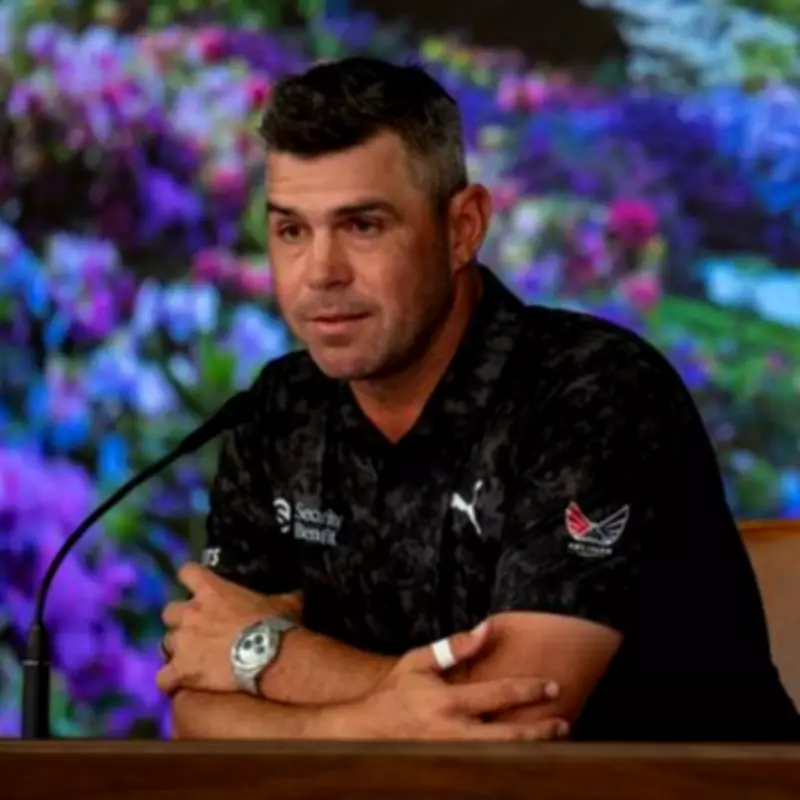
If spectators notice an increased security presence following Gary Woodland during the Masters tournament at Augusta National this week, there is a profound and deeply personal reason behind it. The 2019 US Open champion is courageously battling post-traumatic stress disorder following life-altering brain surgery, and he has openly discussed the significant challenges he faces both on and off the prestigious golf course.
A Triumphant Return Amidst Personal Adversity
Gary Woodland recently authored one of sport's most inspiring comeback narratives by securing a dramatic victory at the Texas Children's Houston Open on the PGA Tour just two weeks ago. This triumph earned the 41-year-old American an invitation to compete at the Masters, marking a phenomenal return to elite competition. Remarkably, Woodland is currently playing some of the finest golf of his professional career despite confronting immense personal health challenges.
The internal battle during his Houston Open victory was arguably more formidable than the competition from fellow players. Woodland experiences symptoms of hypervigilance and can become profoundly unsettled by unexpected movements or noises in his vicinity. His ability to overcome these intense anxieties on the course to claim his first PGA Tour win since his 2019 US Open victory at Pebble Beach stands as a testament to his resilience and determination.

Security as a Visual Anchor for Safety
Augusta National Golf Club is renowned for its strict decorum and orderly atmosphere, with instances of unruly patron behavior being exceptionally rare. However, for Woodland, the visible presence of security personnel provides a crucial psychological anchor. "Just like on tour, I'll have security with me," Woodland explained. "The main deal is they were showing me where security is. The whole deal for me is it's visual, right? If I can see somebody, then I can remind myself that I'm safe constantly."
He elaborated on this meticulous preparation, stating, "So I have a good idea now where security is on every hole. The big deal for me, my caddie knows too. So he can constantly remind me. Like I said, I don't have control when this thing hits me, and it's tough. It can be a fan. It can be a walking score. It can be a camera guy running by me, just any startlement from behind me can trigger this pretty quickly. Knowing where the security is is a constant reminder that I'm safe."
The Unrelenting Nature of the Mental Battle
Woodland bravely disclosed his PTSD diagnosis publicly in March, merely a fortnight before his emotional victory in Houston. While the win provided deep satisfaction, he emphasized that his condition presents a relentless daily struggle unaffected by competitive outcomes. "I know what I'm battling every day. People ask me, 'How was the win?' The one thing I know is that having this brain tumor and having PTSD, it doesn't matter if I win or lose. It doesn't care," he revealed. "I had a tough time last week battling this stuff. A lot of stimulation comes with winning, stuff I hadn't seen in a long time."
Reflecting on the unique pressures of competing at Augusta National, Woodland added, "It's a big week for me this week. The fans are very close on the tee boxes. There's a lot going on. There's probably not a safer golf tournament in the world, so I'm happy for that, but it's still a battle in my head if I'm safe or not. That's a tough pill to swallow. I'm emotional from the standpoint that I know how close I probably was to never being back here, and I'm very proud of myself for earning my way back."
Gary Woodland's journey underscores the profound intersection of elite athletic performance and personal mental health, highlighting his extraordinary courage in competing at the highest level while managing a significant psychological condition.