Former England striker and Match of the Day presenter Gary Lineker has launched a critique against the use of slow-motion replays in VAR decisions, following a controversial red card shown to Chelsea's Moises Caicedo on Sunday.
The Incident That Sparked The Debate
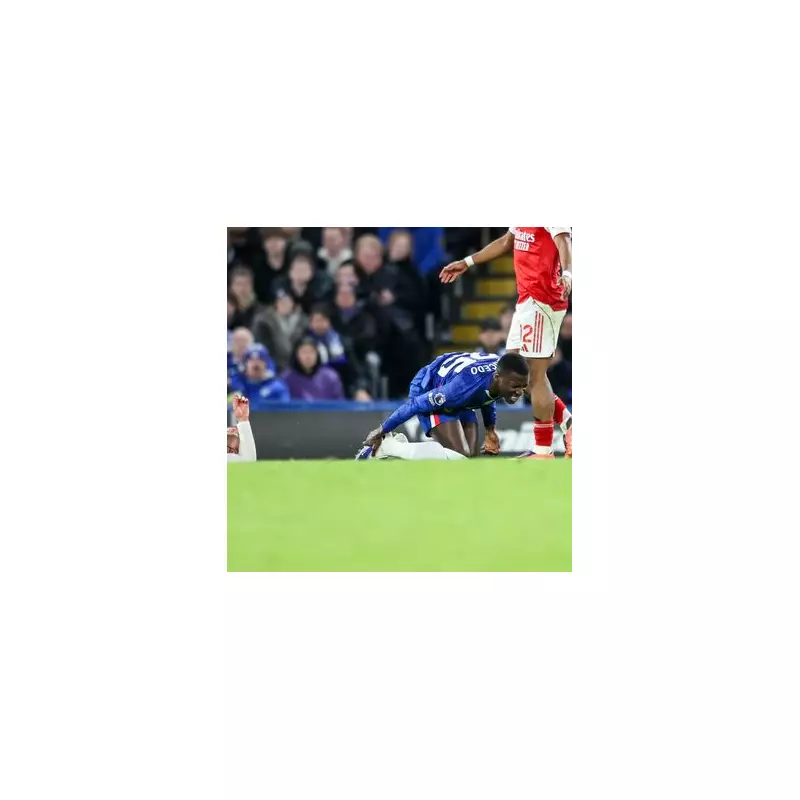
The flashpoint occurred during Chelsea's Premier League clash with league leaders Arsenal at Stamford Bridge. Towards the end of the first half, Chelsea midfielder Moises Caicedo challenged Arsenal's Mikel Merino. On-field referee Anthony Taylor initially deemed the offence worthy of only a yellow card.
However, the Video Assistant Referee (VAR), John Brooks, intervened and advised Taylor to review the incident at the pitchside monitor. After watching slowed-down replays, Taylor upgraded the sanction, showing Caicedo a straight red card for the challenge.
Lineker's Core Argument: Slow-Motion 'Distorts'
While not outright disputing the final decision, Lineker expressed significant concern about the process. Speaking on The Rest Is Football podcast, he argued that slow-motion footage fundamentally alters perception.
"I don’t think they should have slow motion for things like that," Lineker stated. "His foot wasn’t raised, it was on the ground, he was a millisecond late for the ball and slow motion makes it look terrible. I just think slow motion distorts what actually happens."
He elaborated that at normal speed, the challenge appeared merely "a fraction late", but the slowed-down version presented a dramatically different picture to the official.
Panel Divided But United on VAR Impact
Lineker's co-panellist, Micah Richards, concurred with his analysis. "When it happened in real speed I didn't think it was that bad, and when they slowed it down I thought 'That's horrendous'," Richards said, acknowledging that the referee was almost compelled to change his decision after the review.
Alan Shearer offered a slightly different perspective, sympathising with the referee's difficult position. He noted that while such challenges might not have been punished with red cards in previous eras, players now "run the risk of giving the referee or the VAR the chance to send you off" with late tackles.
Chelsea's Resilience and Maresca's Frustration
Despite playing over 50 minutes with ten men, Chelsea demonstrated resilience to secure a 1-1 draw. Trevoh Chalobah headed the Blues into the lead early in the second half, before Merino equalised for Arsenal just before the hour mark.
Chelsea manager Enzo Maresca accepted that Caicedo's red card was probably justified. However, he voiced frustration over perceived inconsistencies, pointing to an elbow from Arsenal's Piero Hincapie that went unpunished and a similar incident involving Tottenham's Rodrigo Bentancur against Chelsea earlier this season.
"We struggle to understand why they judge in [a] different way," Maresca said, highlighting Chalobah's black eye from the Hincapie incident. His comments underscore a wider concern within the game about the subjective application of VAR technology.
The debate ignited by Lineker goes beyond a single decision, touching on the very mechanics of how video technology is used to adjudicate the fast-paced action of football, with calls for a review of whether slow-motion truly delivers justice or distortion.