Judy Murray Reveals How Junior Tennis Parents Shaped Her Anti-Pushy Approach
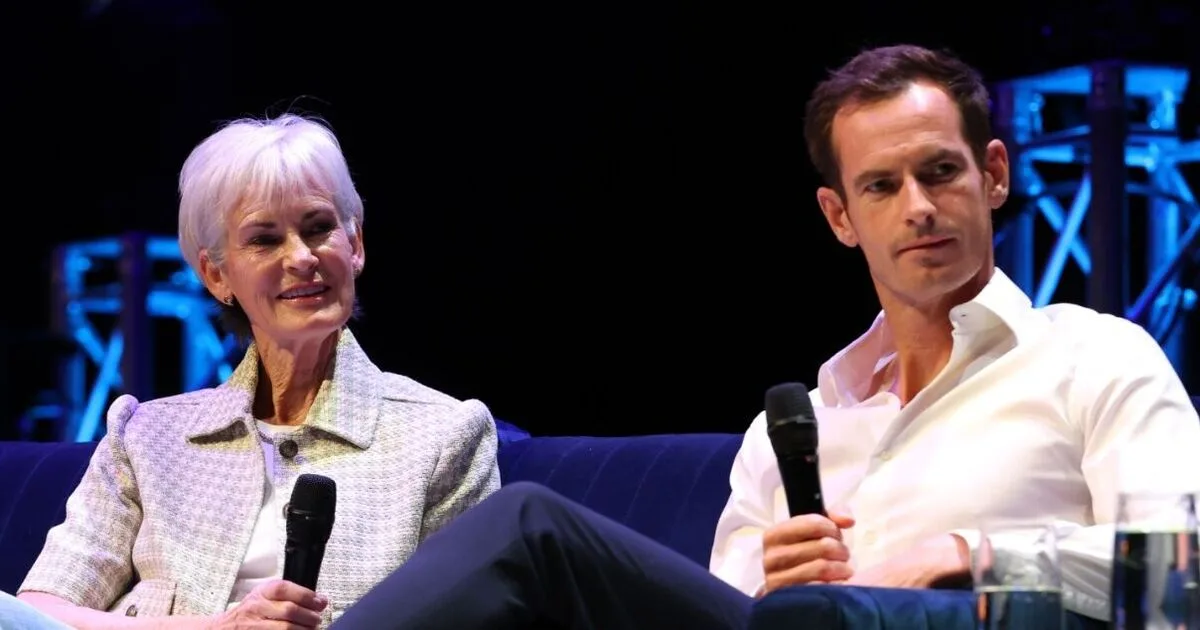
Judy Murray has been frequently portrayed as an overly pushy parent, with images of her enthusiastically cheering and punching the air during her sons' matches used to reinforce that insinuation. However, the mother of tennis legends Andy and Jamie Murray has now revealed that she consciously avoided placing pressure on her champion sons during their youth. This decision came after observing how terrified their peers were about disappointing their own parents.
Learning from Anxious Young Players
Mrs Murray, 66, described how youngsters playing alongside her boys would often approach her after games to discuss their profound trepidation following losses. She said these children would be visibly upset, knowing their parents would become 'angry' with them or emotionally distant if they failed to win. The experience proved deeply influential for Mrs Murray, who noted that the youngsters felt they would only be valued by their families if they secured victories.
This insight led her to deliberately avoid taking the same approach with her own two boys during their upbringing in Dunblane, Perthshire. Speaking on the podcast Tennis Insider Club, Mrs Murray explained: 'I learned a lot about how not to parent by observing many parents in junior tennis, how they behaved with their kids.'
The Emotional Toll on Junior Athletes
The tennis coach elaborated on her conversations with children who were worried about parental reactions to losses, which taught her precisely what to avoid. 'The kids would come to me and they're upset and they've lost, and they don't want to get in the car with their father on the way home because [they say] “He's going to be really angry with me. He is not going to talk to me all the way home”,' she recalled.
'You learn this from the kids. They're telling you and it's making them anxious and then you realise why they play with fear and caution and they don't want to risk anything because they're scared to lose because of the way that the parents behave.'
Mrs Murray further noted that even rewarding children for winning can generate anxiety, as they may interpret the absence of a reward after a loss as a sign they have disappointed their parents. 'They start to feel that they're only valued and that there's a reward if [they] win and there's almost like a punishment if [they] don't win,' she stated.
Advocating for Parental Support Systems
According to Mrs Murray, children are unlikely to directly ask their parents to stop such behavior, placing the responsibility on adults to be mindful of their approach. She emphasized the need for structured support, saying: 'I would always advise clubs and governing bodies to invest much more in parental support.'
Both Jamie and Sir Andy Murray achieved extraordinary success in their careers. Sir Andy won the men’s singles at Wimbledon twice, secured the US Open title, and bagged an Olympic gold medal before his retirement in 2024. Meanwhile, Jamie's 20-year career saw him ranked as the world's number one men’s doubles player—the first British athlete to achieve this accolade—and he has won 34 tour-level men’s doubles titles, including triumphs at the Australian Open and US Open in 2016.
Challenging the 'Pushy Parent' Label
Throughout their careers, their mother Judy was typically in the crowd cheering them on. However, her visible reactions at matches led to her being labeled a pushy parent—a description she firmly rejects as completely inaccurate. In a previous interview, she asserted: 'I was painted as Tiger Mum, a nightmare parent. But I should never have been made to feel I had to apologise for being there for my kids, or for being competitive. If I’d been a man I would have been lauded and applauded for it.'
She once revealed that her reputation for being 'pushy' almost prevented her from hugging Sir Andy when he won Wimbledon in 2013. 'I was longing to give him a hug, but I stayed put, knowing I couldn't face getting nailed in the press again for being a pushy mother,' she admitted. 'But the crowd shouted, "what about your mum?" He turned back and I walked down to get my hug.'
Sibling Rivalry as a Driving Force
If anything, it was her sons' own sibling rivalry that often fueled their competitive spirit. Jamie, who is just 15 months older than Andy, once recalled a pivotal moment as the two returned home after a junior tournament. He said: 'Mum was driving the minibus and he [Andy] had beaten me in the final of the under-10s or under-12s or something and he was giving me stick about it. I turned round and grabbed his armrest. I banged his hand with it. His nail did not recover for years and probably still, if you look at it now, is not completely like the rest of them. A little reminder for him not to mess with me.'