Iran's 2026 World Cup Withdrawal Sparks Historical Review of Tournament Cancellations
Iran Withdraws from 2026 World Cup, Prompting Historical Look

Iran's Dramatic Withdrawal from 2026 World Cup Amid Military Conflict

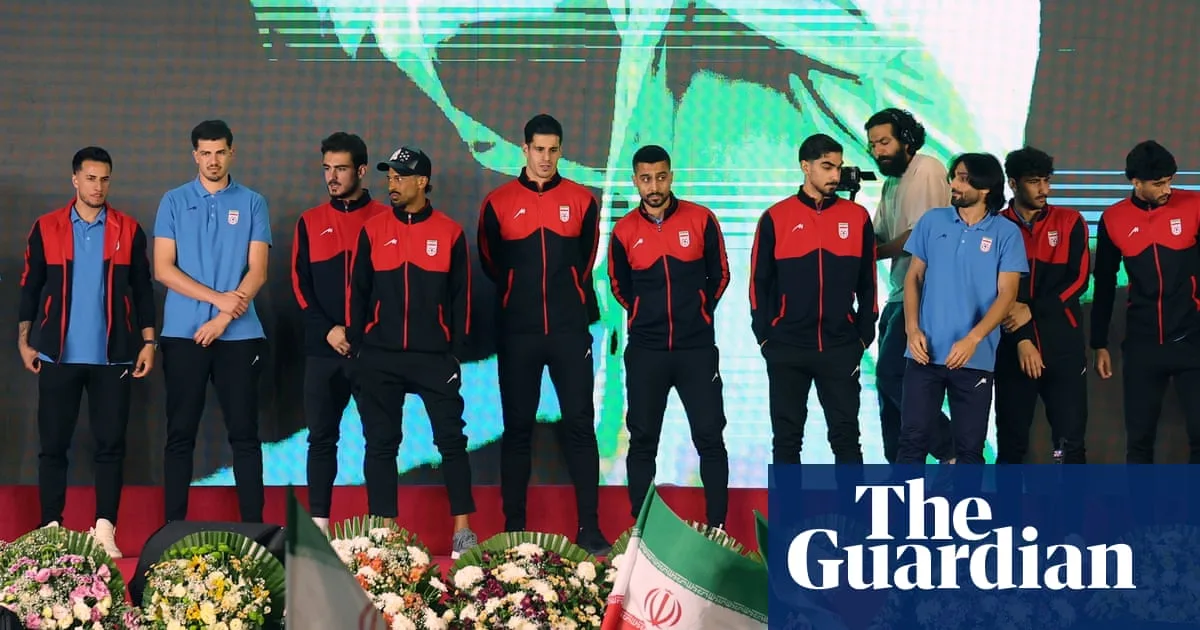
Iran has delivered a seismic shock to the global football community by announcing its withdrawal from the 2026 FIFA World Cup. This unprecedented decision comes in the wake of the killing of Supreme Leader Ayatollah Ali Khamenei and the outbreak of military hostilities between Iran and the United States. Since the United States is serving as a joint-host nation for the tournament alongside Canada and Mexico, Iranian officials have declared it "impossible" for their national team to participate under these circumstances.

FIFA's Response and Commitment to Unity

Despite this significant geopolitical crisis, FIFA leadership has moved swiftly to reassure the football world. Chief operating officer Heimo Schirgi emphasized on Monday that the World Cup would proceed as scheduled, regardless of Iran's absence. Schirgi stressed that the tournament must continue to serve as a unifying force, even during periods of international conflict. FIFA President Gianni Infantino has extended an olive branch, assuring Iranian authorities that their team remains "welcome" to compete in the 48-nation tournament for which they had successfully qualified.

Historical Precedents: When Global Politics Disrupts Football

Iran's sudden exit has prompted many fans and analysts to examine the World Cup's turbulent history with political interference. While it is exceptionally rare for a team to withdraw so close to the tournament's commencement, the competition has frequently been impacted by global tensions. From complete cancellations during wartime to numerous boycotts and enforced bans, the world's premier sporting event has navigated complex political landscapes throughout its nearly century-long existence.

Wide Pickt banner — collaborative shopping lists app for Telegram, phone mockup with grocery list

Complete Tournament Cancellations: The World War II Era

The World Cup has only been cancelled outright on two occasions in its history, both due to the cataclysmic events of World War II. The planned 1942 tournament was abandoned even before the conflict reached its peak intensity. Nazi Germany had submitted a strong bid to host and was considered the frontrunner, but their invasion of Poland in 1939 prompted FIFA to cancel the competition entirely.

Despite the war concluding in 1945, FIFA made the difficult decision not to stage the 1946 World Cup. Six years of global warfare had left much of the world, particularly Europe, in profound disarray. Football infrastructure was severely damaged or repurposed, with many clubs and national teams disbanded as players and resources were diverted to military efforts. Consequently, international football's showcase event did not return until 1950, marking a twelve-year hiatus for the World Cup.

Notable Boycotts and Voluntary Withdrawals Through History

While Iran represents the first nation to boycott the World Cup since the 1970s, tournament withdrawals have occurred multiple times throughout history. The inaugural 1930 tournament in Uruguay was boycotted by most European nations due to the arduous three-week transatlantic voyage required, with only four European teams making the journey.

In 1934, Uruguay boycotted the tournament in Italy in retaliation for European absences four years earlier, becoming the first and only defending champion not to defend their title. The 1938 tournament saw withdrawals from Uruguay and Argentina after France was selected as host, breaking an informal understanding about continental rotation.

Other significant boycotts include India in 1950 due to travel costs, Scotland in 1950 after refusing to participate as the "second best" UK team, and multiple Middle Eastern and African nations in 1958 who refused to compete against Israel. In 1966, all African nations boycotted qualifiers after FIFA declined to guarantee a continental spot, a protest that successfully secured Africa's first automatic qualification place for 1970. The Soviet Union famously refused to play a 1974 playoff in Chile's National Stadium due to its use as a detention center under Pinochet's regime.

Pickt after-article banner — collaborative shopping lists app with family illustration

Enforced Bans and Exclusions from Competition

Beyond voluntary withdrawals, several nations have been forcibly excluded from World Cup participation through official bans. In 1950, Germany and Japan were barred as part of post-World War II international isolation efforts. South Africa endured the longest ban in FIFA history from 1966 to 1990 due to the country's Apartheid policies.

Mexico received a two-year ban from all international competition in 1990 after fielding overage players in youth qualifiers. Chile was expelled from 1994 qualification after goalkeeper Roberto Rojas faked an injury using a concealed razor blade. Yugoslavia was banned by the UN and FIFA in 1994 due to the Yugoslav Wars, while Russia has been excluded since 2022 following its invasion of Ukraine, preventing participation in both 2022 and 2026 tournaments.

The World Cup's Resilience Amid Global Tensions

Despite Iran's withdrawal and the numerous historical precedents of political interference, the World Cup has demonstrated remarkable resilience throughout its history. The tournament has consistently rebounded from cancellations, boycotts, and bans to maintain its status as the world's most-watched sporting event. As FIFA prepares for the 2026 tournament without Iran, the organization faces the ongoing challenge of navigating complex international relations while preserving football's capacity to unite nations across political divides.