Iran's Dramatic World Cup Boycott Forces FIFA into Action
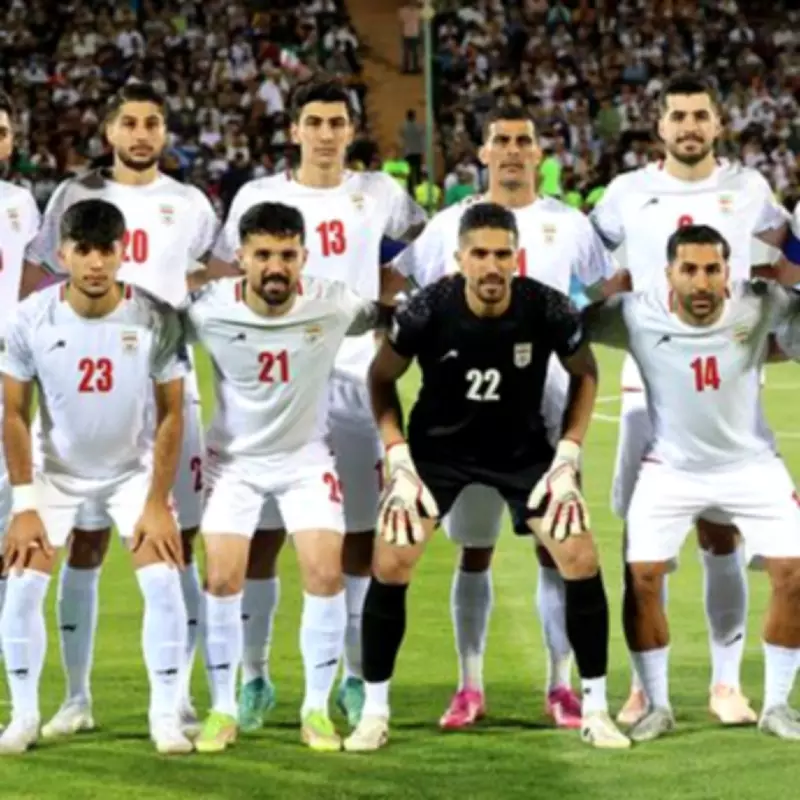
FIFA is confronting an unprecedented crisis as Iran has declared its intention to boycott the 2026 World Cup, citing the ongoing conflict with the United States. The tournament, set to be hosted predominantly in the USA, now faces the urgent task of finding a replacement team to fill the void left by Iran's withdrawal.
The Political Backdrop of Iran's Decision
Iran's sports minister, Ahmad Donyamali, has made the nation's position unequivocally clear. In a televised interview, he stated, "Considering that this corrupt regime [the US] has assassinated our leader, under no circumstances can we participate in the World Cup." This refers to the US-Israeli airstrikes that killed Supreme Leader Ayatollah Ali Khamenei and caused significant damage in Tehran.
Donyamali elaborated on the rationale behind the boycott, highlighting the broader geopolitical tensions. "In view of the malicious measures taken against Iran, two wars were forced upon us within eight or nine months, and several thousand of our people were killed. Our children are not safe and, fundamentally, such conditions for participation do not exist," he asserted.

FIFA's Replacement Rules and Potential Candidates
According to FIFA's official rulebook, a replacement team typically comes from "a nominated alternate, often the direct runner-up from the relevant qualifying playoff or highest-ranked non-qualified team from that confederation." Iran had qualified top of their section in the Asian qualification system, leaving several options on the table for world football's governing body.
The most straightforward solution would be to fast-track the United Arab Emirates (UAE) into the tournament, as they finished directly behind Iran in the Asian qualification standings. However, this is complicated by the fact that the UAE recently lost to Iraq in a match that determined the Asian confederation's representative for the upcoming intercontinental play-off.
Iraq is scheduled to play the winner of Bolivia versus Suriname for a spot at the World Cup. There is growing speculation that FIFA might instead grant Iraq an automatic qualification as Iran's replacement, which would then allow the UAE to participate in the intercontinental play-off in their stead.
The Group Stage Conundrum and FIFA's Diplomatic Efforts
Iran was originally drawn into a group with Belgium, Egypt, and New Zealand. Their withdrawal creates a logistical headache for FIFA, as running a group with only three teams would disrupt the tournament's format. The expanded 2026 World Cup allows the best-performing third-placed teams to advance to the knockout stages, but a three-team group complicates this mechanism significantly.
FIFA President Gianni Infantino has engaged in high-level diplomacy to address the situation. He recently met with US President Donald Trump, who provided assurances that Iran would still be welcome to compete despite the political tensions. "During the discussions, President Trump reiterated that the Iranian team is, of course, welcome to compete in the tournament in the United States," Infantino reported.
Nevertheless, Iran's firm stance suggests that these diplomatic overtures are unlikely to change their decision. As a result, FIFA must now navigate a complex web of sporting regulations and geopolitical sensitivities to ensure the integrity of the 2026 World Cup remains intact.