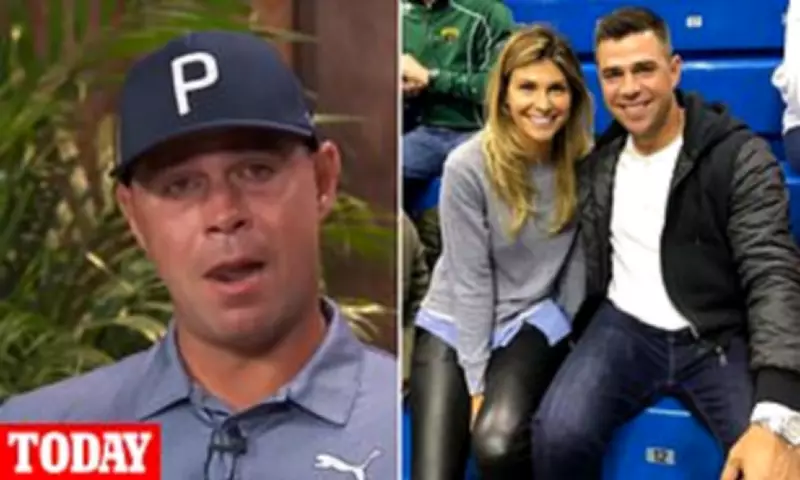
PGA Tour professional and former US Open champion Gary Woodland has courageously disclosed his ongoing battle with post-traumatic stress disorder, almost three years after undergoing critical surgery to remove a brain tumor. The 41-year-old golfer, who had the operation in September 2023, has now spoken publicly about the profound mental and emotional challenges he has faced in the aftermath.
Emotional Revelation on the Golf Channel
In a deeply personal interview with the Golf Channel this week, Woodland shared his experiences with remarkable honesty, at times fighting back tears as he described feeling like he was "dying inside" and "living a lie" by concealing his condition. "I can't waste energy anymore hiding this," he told interviewer Rex Hoggard just days before the prestigious Players Championship tournament.
Traumatic Episodes on the Course
Woodland recounted a particularly distressing incident during a recent round where he found himself crying in the middle of the fairway. "I was hyper-vigilant," he explained. "A walking scorer startled me, approaching from behind. I immediately told my caddie, 'You can't let anybody get behind me.' Suddenly, I couldn't remember what I was doing, my vision became blurry, and when it was my turn to hit, I couldn't swing."

Despite his caddie's suggestion to withdraw, Woodland insisted on continuing. "I went into every bathroom to cry the rest of the day," he revealed. "When I finished, I rushed to my car to escape. There are days when it's overwhelming - crying in scoring trailers, running to my vehicle just to hide it. I don't want to live that way anymore."
Continued Competition Despite Challenges
In recent months, Woodland has collaborated with PGA Tour officials to implement security measures that help him feel safer during tournaments. He recently competed before thousands of spectators at the Cognizant Classic and participated in the notoriously lively Waste Management Phoenix Open, where he finished tied for 64th place.
"I hope somebody that's struggling sees me out here still fighting and battling and trying to live my dreams," Woodland expressed. "I've consulted with military veterans, and one consistent message I've received is that you cannot face this alone, regardless of how strong you believe yourself to be."
Medical Recommendations and Personal Determination
Medical professionals have advised Woodland to avoid high-stress environments, yet he remains determined to continue his professional golf career. "In an ideal world, I'm probably not playing," he acknowledged. "But in an ideal world, I don't have this condition. Competing in golf represents my lifelong dream."
The Road to Diagnosis and Surgery
Woodland captured the 2019 US Open at Pebble Beach, defeating Brooks Koepka by three strokes to claim his sole major championship victory. Four years later, he publicly announced his brain tumor diagnosis and the necessity for surgical intervention after years of medication and treatment.
Before the operation, Woodland penned an emotional letter to his three children - son Jaxson and twin daughters Maddox and Lennox - providing guidance and support in case he did not survive the procedure. "Daddy's got a big team around him. They're your team now," he wrote, according to CNN's Don Riddell. "There's a lot of people that will be here for you." Woodland described composing this letter as "the hardest thing I've ever done in my life, but it's something I'm glad I did."
Surgical Success and Ongoing Symptoms
The craniotomy procedure proved successful, with surgeons removing a baseball-sized portion of his skull to extract as much of the tumor as possible before replacing it with a titanium plate. Prior to surgery, Woodland experienced increasingly severe symptoms as the tumor grew on his amygdala, the brain region responsible for fear and anxiety responses.
He reported mounting anxiety, concentration difficulties, diminished energy levels, and seizures. Remarkably, Woodland continued competing after diagnosis, though he described waking with sudden jolts of unfounded fear during events like the Mexico Open while still managing to make tournament cuts.

Impact on Family Life
The golfer acknowledged how his condition affected his home life with wife Gabby and their children. "It was tough on my wife and my three little kids," he recalled. "When they became excited, I had to leave the room because my brain couldn't process the stimulation. They couldn't understand why I needed to retreat to a dark bedroom to calm my nervous system. That was devastating for me."
He added, "My wife had to ensure I was okay daily while raising our children. Simultaneously, I was attempting to maintain my golf career. The balancing act proved extraordinarily difficult." Woodland's caddie has even lent him sunglasses during rounds to conceal tears, demonstrating the ongoing challenges he faces while competing at the highest level of professional golf.