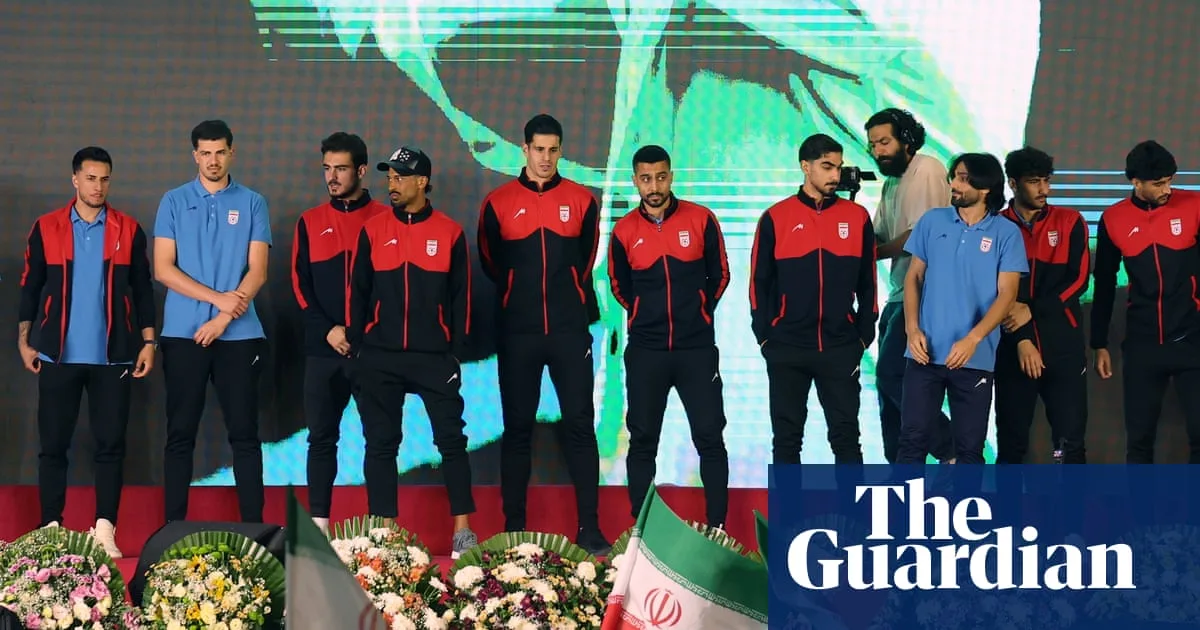
FIFA Rejects Iran's Request to Move World Cup Matches from US to Mexico
FIFA Rejects Iran's Request to Move World Cup Matches to Mexico

FIFA Firmly Rejects Iran's Proposal to Relocate World Cup Matches to Mexico

FIFA has categorically dismissed the possibility of Iran moving its 2026 World Cup matches from the United States to Mexico, stating unequivocally that it expects all participating teams to compete according to the original match schedule announced in December 2025. This decision comes amid escalating tensions and security concerns following recent military actions involving the United States and Israel against Iran.

Iranian FA's Negotiation Efforts Thwarted

The president of the Iranian Football Federation, Mehdi Taj, revealed earlier this week that his organisation was actively "negotiating" with FIFA to relocate Iran's matches away from American soil. Taj cited explicit statements from former US President Donald Trump regarding the inability to guarantee the security of the Iranian national team as a primary reason for the request.

"When Trump has explicitly stated that he cannot ensure the security of the Iranian national team, we will certainly not travel to America," Taj was quoted as saying in a post shared by the Iranian embassy in Mexico on social media platform X. "We are currently negotiating with FIFA to hold Iran's matches in the World Cup in Mexico."

Wide Pickt banner — collaborative shopping lists app for Telegram, phone mockup with grocery list

FIFA's Unwavering Stance on the Original Schedule

However, a FIFA spokesperson responded firmly on Tuesday, March 17, 2026, effectively shutting down these negotiations. "FIFA is in regular contact with all participating member associations, including IR Iran, to discuss planning for the FIFA World Cup 2026," the spokesperson stated. "FIFA is looking forward to all participating teams competing as per the match schedule announced on December 6, 2025."

This definitive stance leaves Iran with a stark choice: compete in the United States as scheduled or face potential withdrawal from the tournament. Should FIFA maintain this position, it appears increasingly likely that Iran would feel compelled to pull out of the competition altogether.

Match Schedule and Potential Knockout Scenarios

Iran is scheduled to play all three of its group stage matches in the United States, beginning with an opening fixture against New Zealand in Los Angeles on June 15, 2026. The geopolitical implications extend beyond the group stage, as should both Iran and the United States finish second in their respective groups, the two nations would meet in a politically charged last-32 knockout match.

The backdrop to this sporting dispute involves significant military tensions. The United States and Israel launched air strikes on Iran on February 28, 2026, with Iran retaliating by targeting other Gulf nations that host US military bases. These events have heightened security concerns surrounding Iran's participation in a tournament hosted primarily on American soil.

Reactions from Opponents and Football Officials

New Zealand Football's chief executive, Andrew Pragnell, expressed skepticism about the feasibility of relocating Iran's matches, telling local media that he doubted FIFA would agree to such a move. Meanwhile, the New Zealand national team's head coach, Darren Bazeley, indicated that his squad is preparing as if the match against Iran will proceed as planned.

"Right now we're still continuing as though we're playing Iran," Bazeley told reporters. "They're the team that qualified and we got drawn against them. That's still the fixture and until we get told otherwise, we'll continue with that preparation. Obviously, if things change, then we'll deal with that, but that would be people at a higher level than myself involved in those discussions."

The situation remains fluid, with the Iranian Football Federation's negotiations seemingly at an impasse following FIFA's firm rejection. The world football governing body's insistence on adherence to the original schedule underscores the complex intersection of international sports, politics, and security in the lead-up to the 2026 World Cup.

Pickt after-article banner — collaborative shopping lists app with family illustration