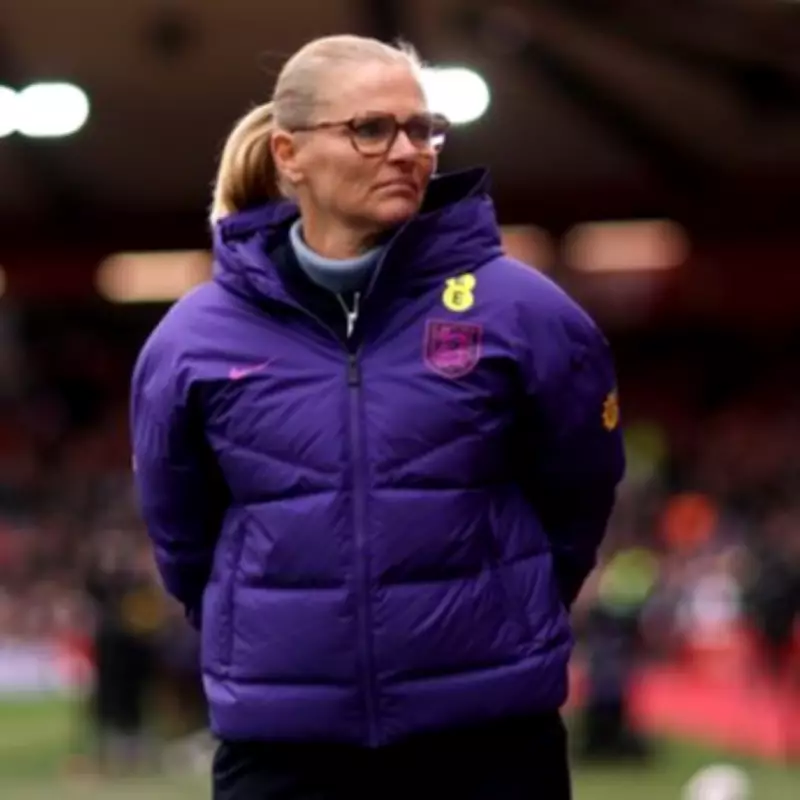
FIFA Implements Groundbreaking Gender Rule for Women's Football
In a landmark move for gender equality in sport, FIFA has approved a radical new regulation that will fundamentally alter the staffing requirements for women's national football teams. The governing body's council has mandated that all teams participating in FIFA competitions must include at least two female staff members on their bench, with one occupying either the head coach or assistant coach position.
Phased Implementation Across Competitions
This transformative directive will be introduced in a phased manner, commencing at the Under-20 Women's World Cup in Poland this September. It will then be fully enforced for the prestigious 2027 Women's World Cup, scheduled to be hosted in Brazil. Furthermore, the rule will extend its reach to FIFA's premier club competitions, including the Club World Cup and the Champions Cup, ensuring a consistent standard across all levels of the women's game.
The specific requirements will be formally detailed in the competition participation agreements following the qualification processes. FIFA's approach mirrors a similar policy that UEFA has successfully maintained since the 2020-21 season, demonstrating a growing international consensus on the importance of female representation in coaching roles.

Addressing a Critical Leadership Gap
This initiative is a core component of FIFA's broader strategic vision to ensure that the rapid expansion of women's football is paralleled by a significant increase in women occupying leadership and decision-making positions. The current statistics underscore the urgent need for such intervention. At the 2023 Women's World Cup, only 12 of the participating teams were led by female head coaches, with England's Sarina Wiegman being among that notable minority.
Since that tournament, the landscape has shifted, but not uniformly. Seven of those 12 teams are now under male leadership, while four teams previously coached by men have transitioned to female coaches, including the high-profile appointment of Emma Hayes to lead the United States women's national team. Notably, several nations that competed in 2023, such as Argentina, Colombia, France, Haiti, Morocco, and the Philippines, had no female members within their coaching staffs at all.
Official Endorsements and Development Commitments
Jill Ellis, FIFA's Chief Football Officer, emphasized the critical nature of this policy shift. "There are simply not enough women in coaching today," Ellis stated. "We must do more to accelerate change by creating clearer pathways, expanding opportunities, and increasing the visibility for women on our sidelines. The new FIFA regulations, combined with targeted development programmes, mark an important investment in both the current and future generation of female coaches."
FIFA President Gianni Infantino echoed this sentiment during a recent address, highlighting the personal and professional imperative for greater inclusion. "Of course we need more women in important positions in football," Infantino remarked. "We should support, of course, more women in football positions and more women generally. Maybe we need, actually, as well, more women coaches in women's teams. This is another debate that we will have to have at some stage because we've seen that there are excellent coaches."
Backing Words with Action
To substantiate its commitment, FIFA points to its ongoing investment in coach education. As part of its comprehensive women's football strategy, the organization has supported 795 female coaches across 73 national associations through its coach education scholarship programme since 2021. This new rule represents a powerful structural mechanism to complement these developmental efforts, creating mandatory opportunities and accelerating the pathway for women to reach the highest echelons of the sport they help to grow and popularize.