

State Department Orders Nonprofit Libraries to Cease Passport Processing
The United States State Department has issued a directive ordering nonprofit public libraries across the nation to immediately stop processing passport applications. This decision effectively terminates a popular and long-standing local service that many communities have depended upon for years.
Federal Mandate Disrupts Community Services
The agency responsible for regulating US passports began distributing cease and desist orders to not-for-profit libraries in late autumn. These notifications formally revoked their authorization to participate in the Passport Acceptance Facility program as of Friday, February 13, 2026.
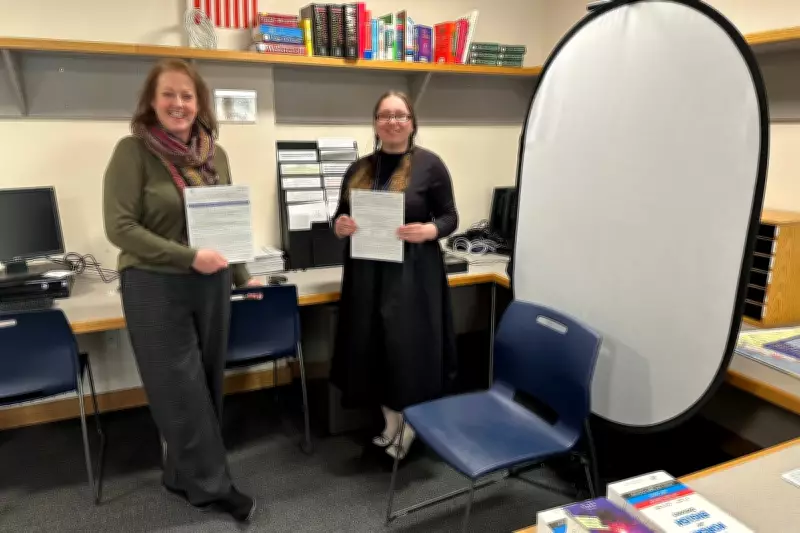
"We still receive daily calls from people seeking that service," revealed Cathleen Special, executive director of the Otis Library in Norwich, Connecticut. Her library had offered passport services for eighteen consecutive years before halting operations in November following receipt of the State Department letter. "Our community had become completely accustomed to us providing this essential service."

Legal Justification and Widespread Impact
A spokesperson for the State Department explained that the order stems from federal laws and regulations that "clearly prohibit non-governmental organizations" from collecting and retaining fees associated with passport applications. Importantly, government-operated libraries remain unaffected by this new policy.
The spokesperson declined to address why this issue has surfaced now or specify exactly how many libraries face disruption. However, they noted in an official statement that "passport services maintains over 7,500 acceptance facilities nationwide and the number of libraries found ineligible constitutes less than one percent of our total network."
Contrasting this assessment, the American Library Association estimates approximately 1,400 predominantly nonprofit public libraries could potentially be impacted. This represents about fifteen percent of all public libraries, depending on how many currently offer passport services.
Bipartisan Congressional Pushback
Democratic and Republican members of Congress from Connecticut, Pennsylvania, New York, New Jersey, and Maryland are actively resisting this change. They recently dispatched a letter to Secretary of State Marco Rubio urging him to extend the existing program until Congress can establish a permanent legislative solution.
"During a period when passport demand is surging, libraries represent some of the most accessible passport acceptance facilities, particularly for working families and rural residents," the lawmakers emphasized in their correspondence.
The congressional letter further warned that affected individuals may now need to travel considerable distances, take unpaid leave from employment, or abandon passport applications entirely. This comes as demand escalates due to Real ID requirements and potential new voting regulations that could necessitate passports or birth certificates for voter registration. Additionally, individuals concerned about immigration enforcement are increasingly carrying passports to confirm citizenship status.
Financial and Operational Consequences
Lawmakers predicted the policy change would prove especially disruptive in states where many public libraries operate as nonprofit entities. They cautioned that some libraries, which derive financial benefits from passport processing fees, might be forced to lay off staff members, reduce programs, or even close their doors if prohibited from continuing these services.
Public library organizational structures vary significantly by state. According to American Library Association data:
- Pennsylvania: 85% of public libraries are nonprofit organizations
- Maine: 56%
- Rhode Island: 54%
- New York: 47%
- Connecticut: 46%
Legislative Solutions Proposed
Pennsylvania Representatives Madeleine Dean, a Democrat, and John Joyce, a Republican, have introduced bipartisan legislation that would permit 501(c)(3) nonprofit public libraries to continue serving as passport acceptance facilities by amending the Passport Act of 1920. A similar companion bill currently awaits consideration in the Senate.

Dean, who first learned about the policy shift from a library in her district that had provided passport services for two decades, characterized the State Department's legal interpretation as "nonsense."
In Joyce's rural south-central Pennsylvania district, the Marysville-Rye Library represents one of only two passport facilities serving the 556-square-mile Perry County. With its elimination, the county courthouse remains the sole available option. The State Department noted that ninety-nine percent of the US population resides within twenty miles of designated passport processing locations, such as post offices, county clerk offices, or government-run libraries authorized to accept in-person applications.
"Should the removal of an ineligible facility affect passport services, we will work to identify new eligible program partners in the impacted area," the agency spokesperson assured.
Community Service Gap Created
Special noted that the Norwich post office frequently referred individuals to her library for passport assistance when people required service outside regular business hours or needed childcare while completing paperwork. Library staff also helped applicants overcome language barriers.
"Now the entire burden falls on them to handle everything, and that's genuinely challenging for them," she remarked regarding the nearby post office. "I honestly don't know how they're managing to keep up, because it was such an incredibly popular service at our location."





