
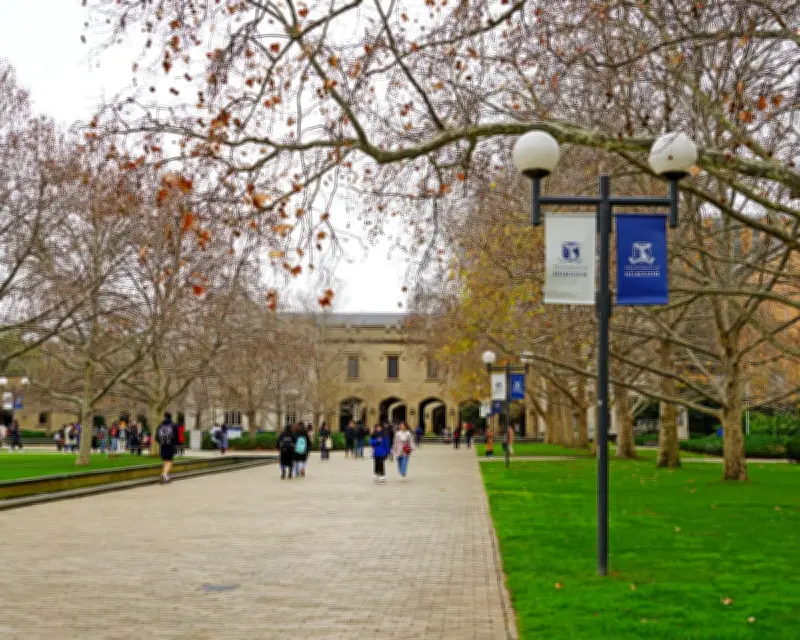
The University of Melbourne's interim vice-chancellor, Prof Glyn Davis, told the royal commission into antisemitism and social cohesion on Wednesday that pro-Palestine sit-ins on campus led the institution to 'quite sharply' change its protest policies, with further restrictions potentially forthcoming.
Encampment and Escalation
Davis was questioned about a pro-Palestine encampment established in 2024 that called for the university to cut ties with Israel and weapons companies. He agreed that the encampment created 'fear and unsafety' among staff and students. He noted that there were 'regular discussions' with Victoria police, who maintained they would not intervene unless a law was broken. 'The encampment on the South Lawn, it was judged, did not override any of those concerns and therefore the university would not seek action against the encampment,' Davis said.
Davis confirmed that misconduct including 'heckling and harassment' occurred during the encampment but said the incidents were 'not claimed to be antisemitic' and did not breach the university's racism policy. The situation escalated after a sit-in at the Arts West building in May 2024 and the occupation of Jewish physics professor Steven Prawer's office in October 2024.
Policy Changes and Surveillance
Davis said the atmosphere on campus 'changed dramatically' after these incidents, and the university's response to protests altered 'quite sharply'. The University of Melbourne has since prohibited outsiders from protesting on campus, banned camping onsite, and prohibited indoor protests. Last year, the state's deputy information commissioner found the university breached Victoria's Privacy and Data Protection Act when it used its wifi network to surveil students and staff holding the sit-in. Davis said the university had revisited its wifi policies and now provides clear warning when monitoring is in use.
Davis flagged further reforms to the university's rules on postering, following a request from Prawer to identify authors of offensive posters distributed around campus. 'There's an assumption that we will make a series of policy changes in the light of this royal commission and the other things that are under way,' Davis said. 'If you're not prepared to put your name to a statement, I don't think academic or freedom of speech applies.' However, he disagreed that the identities of the 20 protesters who occupied Prawer's office should be revealed, lest it 'make a stain on the rest of their lives'.
Other University Responses
Davis appeared alongside the vice-chancellors of the University of Sydney and the University of New South Wales. Prof Mark Scott, University of Sydney vice-chancellor, said forcibly disbanding the campus's pro-Palestine encampment could have led to it 'blowing up'. The encampment, established in mid-2024, was the first and longest-running in Australia. Scott said their priority was 'a peaceful resolution' but acknowledged it was a 'real failure' not to consult further with Jewish groups. 'I still felt the risk of the encampment blowing up by forcibly ending it,' he said. 'Police in riot gear taking students away could have seen an encampment 10 times the size the day after. But I can see that our Jewish students and staff paid a price for that … And I'm sorry we didn't keep them more closely engaged.'
Since the encampment was disbanded, the University of Sydney has introduced protest crackdowns including requiring organisers to notify management for demonstrations, banning encampments and indoor protests, and requiring authorisation details on posters. Scott said there was a 'strong reaction' to the changes but a 'significant reduction' in student complaints since enforcement. 'We're seeing this through a lens of safely managing our environment,' he said. 'The protest and demonstration culture at the university is alive. My feeling … is to be able to look not just at an individual's freedom of speech, but how you create a culture that enables the freedom of speech of many – to hear the other voice, to listen as well as speak.'
Broader Context and Reactions
The higher education sector has been under scrutiny since 2024, beginning with a parliamentary inquiry into antisemitism at Australian universities that recommended adopting a definition of antisemitism 'closely aligning' with the International Holocaust Remembrance Alliance definition. After the Bondi beach terror attack last year, the federal government established an antisemitism education taskforce and backed special envoy Jillian Segal's plan to combat antisemitism, which included a report card grading universities on their response to antisemitism and protest management.
The National Tertiary Education Union's University of Melbourne branch president, David Gonzalez, said Jewish students and staff had an 'absolute right to be safe' which should not be 'negotiable'. 'But neither should academic freedom,' he said. 'Antisemitism is real and must be taken seriously. It is precisely because it is serious that the term must not be stretched into a political weapon used to silence criticism of a state or its military conduct.'




