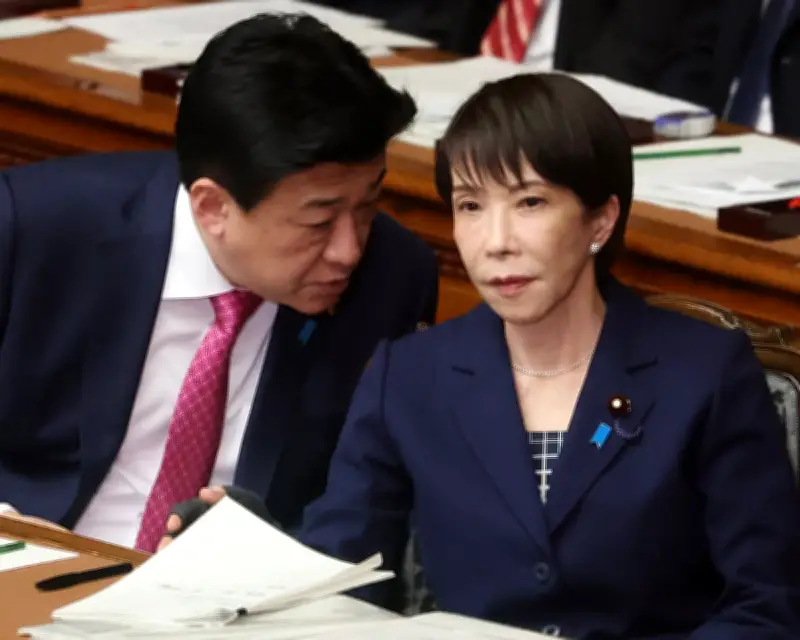
Japan, long considered a permissive environment for foreign spies, is racing to strengthen its intelligence and counterintelligence capabilities after reports revealed a significant Russian espionage operation on its soil. The country's postwar legal framework has limited state surveillance and prosecution of spies, but Prime Minister Sanae Takaichi's government is now pushing through major reforms.
Why Japan is a 'Den of Spies'
A July 12 New York Times article dubbed Japan a “den of spies,” detailing a Russian technology procurement operation run from a Tokyo office of Aeroflot. The operation aimed to acquire technology for Moscow's war in Ukraine. According to Nikkei Business, about 120 Russian intelligence officers were operating in Japan as of August 2022, following their expulsion from Western countries after the invasion of Ukraine.
Japan's chief government spokesperson, Minoru Kihara, acknowledged on Monday that “in a rapidly changing security environment, the need to deal with foreign information activities that threaten our national security, such as theft of important information, is growing.” However, he declined to comment on specific cases.

Weak Anti-Espionage Laws
Japan's postwar constitution, which enshrines privacy of communications and freedom of expression, has historically restricted state surveillance. Espionage is not illegal in many cases, except for military personnel and contractors. A 1985 attempt to introduce an anti-spy act with potential death penalty failed due to public backlash. The 2013 Specially Designated Secrets Act, which imposes up to 10 years' imprisonment for leaking state secrets, has proven weak. In January, Tokyo police referred a case of a machine-tool engineer leaking trade secrets to a suspected Russian operative as unfair competition, not espionage.
Japan's Own Spy Capabilities
Contrary to belief that Japan had no spy agency, documents leaked by Edward Snowden revealed the Directorate for Signals Intelligence (DFS) has operated since the 1950s in cooperation with the U.S. National Security Agency (NSA). NHK investigations in 2017 and 2018 identified at least six facilities with about 1,700 staff monitoring communications. The DFS reports only to the prime minister. The NSA maintains three major monitoring facilities in Japan, including a station on Okinawa to which Japan contributed around $500 million.
Reforms Under Prime Minister Takaichi
The National Intelligence Council Establishment Act, passed in May, creates a council chaired by the prime minister and a 700-strong National Intelligence Bureau (NIB) that consolidates previously separate operations. The NIB will oversee counterintelligence, and new legislation targeting foreign operatives is expected by the end of 2026. The DFS will continue to operate separately but share intelligence with the NIB. Most radically, a new foreign intelligence agency—akin to the CIA or MI6—is set to begin operations by early 2028.