
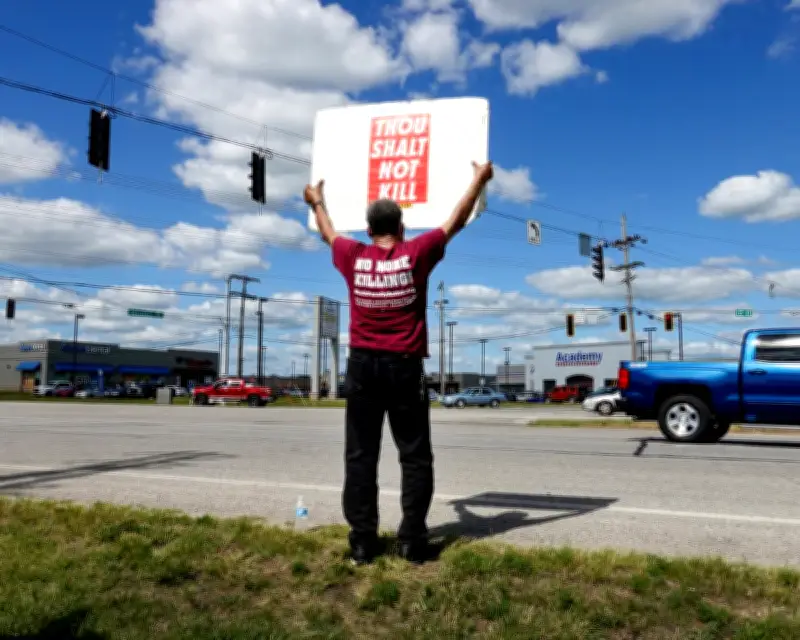
Fifty years after the US Supreme Court re-legalized the death penalty in Gregg v Georgia, a new analysis by the Marshall Project reveals that the system is plagued by inefficiency, racial disparities, and arbitrary outcomes. Examining over 9,000 death sentences handed down since states reinstated capital punishment, the data shows that fewer than one in five people sentenced to death have been executed.
Systemic Inefficiency and Long Delays
The average person executed in 2023 waited on death row for nearly 27 years, up from 12 years three decades ago. More than a quarter of the 2,000-plus inmates currently on death row have been there for over 30 years. "They're not leaving, so they're just going to go into geriatric care," said Frank Baumgartner, a University of North Carolina at Chapel Hill professor who collected the data with his students.
Ohio Governor Mike DeWine recently called for abolishing the death penalty, citing its failure as a deterrent and the emotional toll on victims' families. "Our system is an epic fail," Baumgartner added. "Every flaw they sought to rectify has been a failure, and now there are new problems that didn't used to exist."
Racial Disparities and Arbitrariness Persist
Black people remain overrepresented on state death rows. Whether someone receives the death penalty still depends more on the location of the crime than its nature. The Supreme Court's 1976 decision aimed to reduce arbitrariness through guided jury instructions and automatic appeals, but these fixes have not achieved their goals.
Legal Challenges and Reversals
More than a third of death sentences over the last 50 years have been overturned by courts, often due to prosecutorial misconduct, ineffective counsel, or constitutional violations. Defense lawyers, often federally funded, have successfully challenged sentences for juvenile offenders and individuals with intellectual disabilities. In some cases, prosecutors have sought the death penalty multiple times, as in the case of Curtis Flowers, who faced six capital trials before charges were dropped.
Commutations and Political Influences
In over 400 cases, governors or presidents have commuted death sentences. President Joe Biden commuted 37 federal death row sentences before leaving office, though he excluded three men convicted of mass shootings. Governors Gavin Newsom of California and Josh Shapiro of Pennsylvania have halted executions but not commuted sentences, leaving over 700 inmates on death row in those states—a de facto life sentence costing taxpayers more due to ongoing appeals.
Changing Public Opinion and Execution Methods
Support for the death penalty has declined to about 50% in polls. Pharmaceutical companies now refuse to supply drugs for lethal injections, leading some states to find alternative suppliers or methods like firing squads. Governors Ron DeSantis of Florida and Greg Abbott of Texas have prioritized executions, while others have effectively halted them.
Risk of Executing the Innocent
The emergence of DNA testing and innocence projects has led to the exoneration of one in 50 death row inmates since 1972. However, efforts to limit appeals to speed up executions have increased the risk of executing innocent people by restricting evidence that can be presented in court.
Uncertain Future
The death penalty's future remains uncertain. Fewer jurors are imposing death sentences, and former President Donald Trump has called for reviving executions, including via firing squads. However, the fundamental problems—racial disparities, arbitrary outcomes, endless delays, and the risk of executing the innocent—remain unaddressed. This analysis coincides with the release of The Last 12 Weeks, a Marshall Project podcast with Serial Productions and the New York Times, exploring a case that has dragged on for over 30 years.




