
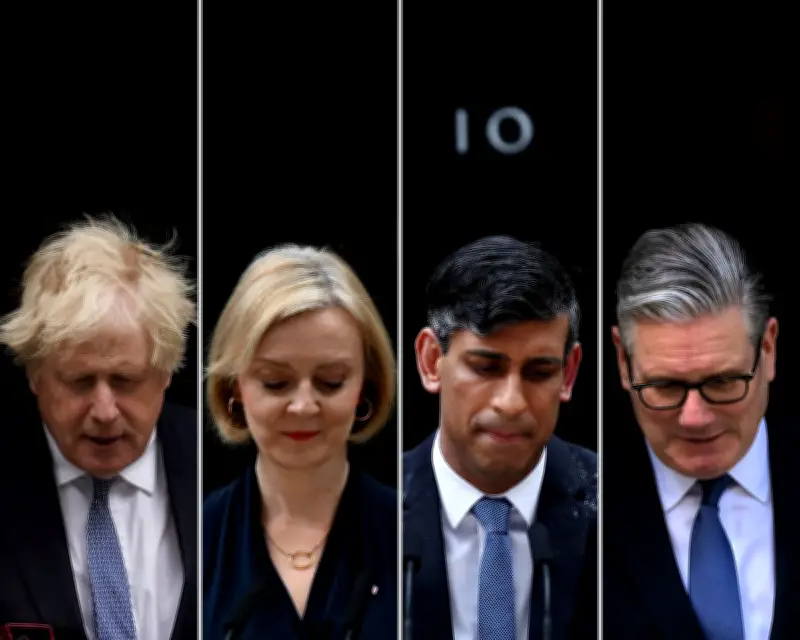
Britain has had five prime ministers in six years, sparking debate on governability. Experts cite Brexit, party divisions, and institutional weaknesses as key factors driving the rapid turnover.
Rapid Turnover of Prime Ministers
Since 2019, the UK has seen five prime ministers: Boris Johnson, Liz Truss, Rishi Sunak, Keir Starmer, and now a new leader. This unprecedented churn has raised questions about the stability of the British political system. According to a recent analysis by the Institute for Government, the average tenure of a prime minister since 2010 has been just over two years, compared to nearly five years in the post-war period.
Brexit's Role
Brexit is widely seen as the primary catalyst. The 2016 referendum shattered the traditional two-party system and exposed deep divisions within both the Conservative and Labour parties. The inability of successive governments to deliver a clear Brexit outcome led to infighting and leadership challenges. Political scientist Professor Tim Bale argues that Brexit created a "poisoned chalice" for any leader, making it nearly impossible to satisfy all factions.
Party Divisions and Internal Strife
Internal party divisions have become more pronounced. The Conservative Party, in particular, has been riven by factions over Europe, economic policy, and leadership style. The 1922 Committee, which oversees leadership contests, has changed rules multiple times, making it easier to oust a sitting prime minister. Labour, while more unified under Starmer, still grapples with internal tensions between the left and centrist wings.
Institutional Weaknesses
Britain's unwritten constitution and lack of a fixed-term parliament contribute to instability. The Fixed-term Parliaments Act 2011 was repealed in 2022, returning the power to call early elections to the prime minister. This has made leadership more precarious. Additionally, the absence of a codified constitution means that conventions can be bent or broken, as seen with the prorogation of Parliament in 2019.
Impact on Governance
The rapid turnover has led to policy reversals and a lack of long-term planning. Key initiatives like net-zero targets, NHS reform, and levelling up have been delayed or abandoned. International allies and investors have expressed concern about the UK's reliability. A 2024 survey by the World Economic Forum ranked the UK 38th in political stability, down from 10th in 2015.
Public Perception
Public trust in politicians has plummeted. According to a 2025 YouGov poll, only 15% of Britons believe the political system works well. Many feel that leaders are more focused on internal party battles than on governing the country. The phrase "ungovernable country" has become a common refrain in political commentary.
Looking Ahead
Some propose constitutional reforms, such as a written constitution, proportional representation, or a directly elected head of state. Others argue that the current system can stabilise if parties learn to cooperate. However, with another general election looming, the question remains: can Britain break the cycle of losing prime ministers?




