White House Distances Trump from 'Assassin' Remarks Over Minneapolis Protester Killing
White House Distances Trump from 'Assassin' Remarks

The White House has moved to create distance between President Donald Trump and highly charged rhetoric used by senior administration officials regarding the fatal shooting of a Minneapolis protester. Alex Pretti was killed on Saturday by a Border Patrol officer during demonstrations against federal immigration enforcement operations in the city.

Administration Officials' Inflammatory Comments

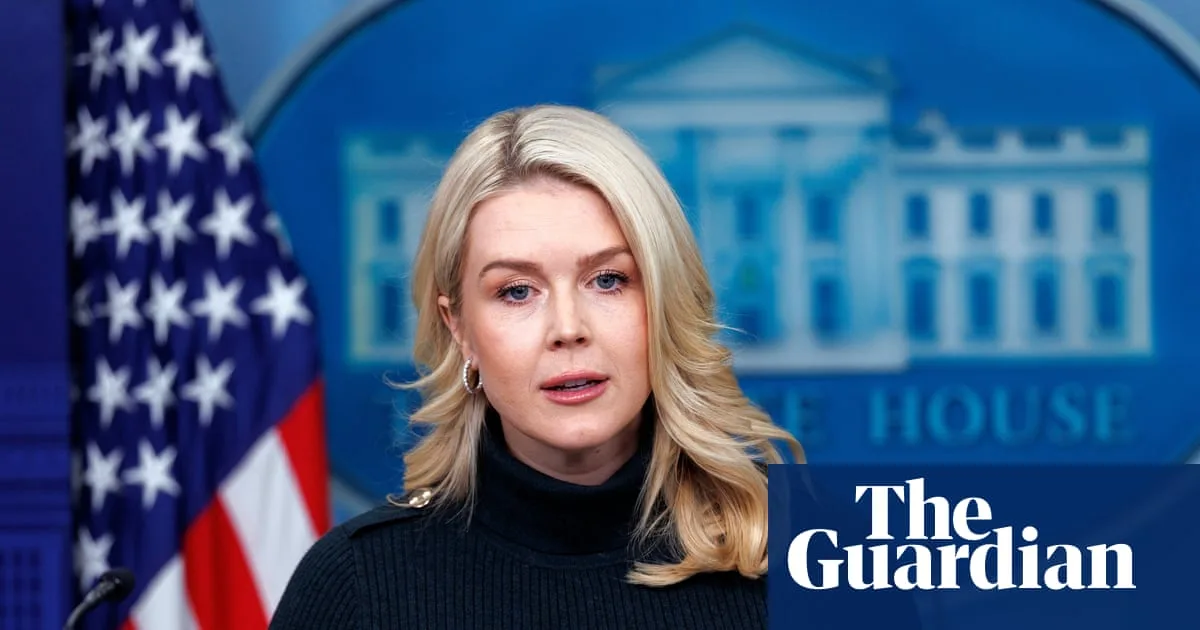
In the immediate aftermath of the shooting, Deputy White House Chief of Staff Stephen Miller labelled the protester "an assassin" who "tried to murder federal agents." Similarly, Homeland Security Secretary Kristi Noem characterised Pretti's actions as domestic terrorism. However, during a press briefing on Monday, White House Press Secretary Karoline Leavitt stressed that President Trump himself had not used such language.

"I have not heard the president characterise him as a domestic terrorist," Leavitt stated, adding that Trump "has said that he wants to let the investigation continue and let the facts lead." When questioned about Miller's remarks, Leavitt emphasised that the President's position was distinct, noting the situation had been "very fluid and fast moving throughout the weekend."

Growing Bipartisan Scrutiny and Investigations

The administration's attempts to moderate its messaging come amid increasing pressure from both sides of the political aisle. A growing number of Republican figures, including several governors and members of Congress, have joined Democratic calls for a thorough investigation into the circumstances surrounding Pretti's death.

Senator Rand Paul, Chairman of the Senate Homeland Security and Governmental Affairs Committee, has scheduled a hearing for February 12th, inviting top Homeland Security Department officials to testify. This follows a similar request from House Homeland Security Committee Chairman Andrew Garbarino. The bipartisan scrutiny suggests the administration's account of events may face significant congressional examination.

Legal Challenges and Federal Operations

Concurrently, a federal judge has been hearing arguments on whether to temporarily halt the immigration crackdown in Minnesota while a lawsuit from state and city officials proceeds. Minnesota Attorney General Keith Ellison argued that the case has "great ramifications for the rest of the country," concerning state sovereignty.

During the hearing, a Department of Justice attorney revealed that more than 3,000 federal immigration officers are involved in the Minnesota surge operation. Judge Katherine Menendez questioned the scale and motives behind the deployment, asking whether there was any limit to executive action under the guise of immigration enforcement.

Contradictory Accounts and Video Evidence

The administration's narrative has faced challenges from bystander footage of the incident. Use-of-force experts have stated that available videos contradict federal claims that Pretti "approached" officers with a firearm in a threatening manner. The Department of Homeland Security stated Pretti was shot after approaching Border Patrol officers with a 9mm handgun, but did not specify if he brandished the weapon.

Pretti's family confirmed he owned a handgun and had a Minnesota permit to carry it concealed, but said they had never known him to carry the weapon. The lack of released body camera footage from federal officers has further fuelled demands for transparency.

Political Fallout and Internal Divisions

The incident has exposed divisions within Republican ranks. Minnesota gubernatorial candidate Chris Madel ended his campaign, citing opposition to what he called "the national Republican's stated retribution on the citizens of our state." Meanwhile, Texas Governor Greg Abbott, a strong Trump ally, suggested the White House needed to "recalibrate" its approach in Minnesota.

Conversely, Florida Governor Ron DeSantis reiterated his support for Homeland Security's enforcement efforts, pointing to his state's cooperative agreements as a model. The White House itself continues to blame Minnesota Democratic leaders for the violence, with Leavitt alleging the shooting "occurred as a result of a deliberate and hostile resistance by Democrat leaders in Minnesota."

Administrative Response and Ongoing Probes

President Trump has dispatched border czar Tom Homan to Minneapolis as the main point of contact, replacing Border Patrol Commander Gregory Bovino as the public face of operations. The White House confirms three federal investigations are underway into the shooting, involving the Department of Homeland Security, the FBI, and an internal review by Customs and Border Protection.

Despite the tensions, Trump and Minnesota Governor Tim Walz held what both sides described as a "productive" phone conversation, with the President suggesting they were "actually" on the same page regarding immigration issues in the state. However, the administration shows no signs of halting its enforcement surge, maintaining its focus on what it describes as criminal elements within immigrant communities.




