Parliament's Shocking History: From Bribery to Scandal in Westminster
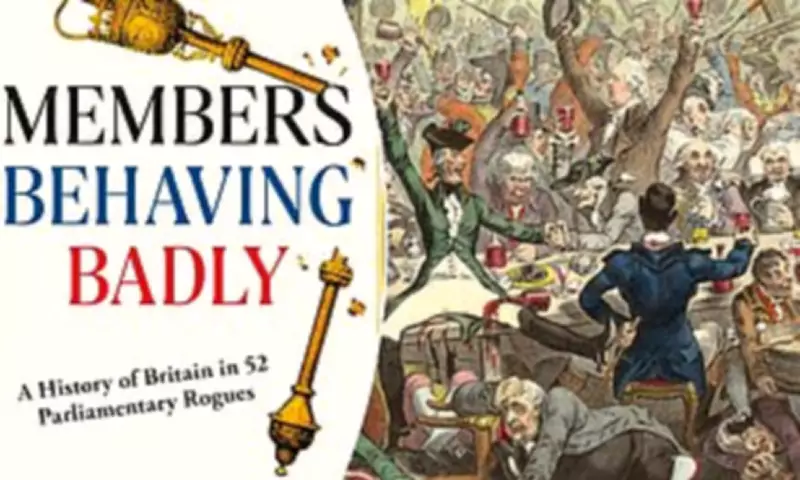
When children are told to behave in school, they might look to the House of Commons for guidance—only to find chaos. The iconic image of Speaker George Thomas shouting "Order! Order!" while being ignored, with MPs jeering and bouncing, suggests adults setting a poor example. This unruly behaviour, reminiscent of a farmyard or asylum, includes incidents like Michael Heseltine wielding a ceremonial mace. According to Debbie Kilroy's book, Members Behaving Badly, such conduct is deeply rooted in parliamentary history.
Centuries of Corruption and Bribery
Kilroy demonstrates that "acts of gratuitous savagery and vindictiveness" have plagued Parliament from its inception, with members often described as "erratic, impulsive and volatile." Over the centuries, nepotism, bribery, and corruption proved impossible to eradicate, being seen as "an unavoidable fact of life." Bribery was particularly rampant. For instance, William Pole spent £32,000 on 130 gallons of punch to sway voters in 1818, while Robert Rich offered a constituent a house for three pounds paid in lobsters in 1689.
Corruption extended to financial fraud, with MPs collecting taxes and rents for the Crown, issuing fake receipts, and pocketing the money. Giles Mompesson, upon hearing of his arrest warrant in 1614, escaped through a window, fled to France, and later returned to become Sir Giles Mompesson, despite the House's fury.

Forgiveness and Impunity for Bad Behaviour
Misconduct was frequently overlooked or pardoned. MPs sent to prison would be released within days, often without paying fines. George Monck, who massacred innocents in Scotland during the Civil War, was made Duke of Albemarle. Henry Belasyse killed passersby in Hampstead, falsely claiming they were highwaymen, and was immediately pardoned by the monarch. Duelling was common, with coroners routinely ruling deaths as "causes unknown."
Even serious crimes like embezzlement did not bar political careers. George Hudson, who embezzled £750,000, was re-elected to Parliament twice. Richard Brinsley Sheridan, an MP and playwright, missed crucial appointments after consuming five bottles of port, two of madeira, and one of brandy. Charles Stanhope, the Treasury Secretary charged with theft, served in the House for another 20 years.
Financial Misconduct and Insider Trading
MPs were often untrustworthy with money, especially as the stock market developed, described as "a trade founded in fraud, born of deceit, and nourished by forgers, falsehoods and all sorts of delusions." Insider dealing was rampant, used to boost share prices and destabilise competition. Thomas Guy made £234,000 through such means and established the hospital in London that bears his name—the only noted act of selfless public duty in the book.
When financial bubbles burst, the consequences mirrored modern crises: money stopped circulating, payments went unmet, tradesmen's bills were unsettled, and bankruptcies soared. The nation suffered from "the universal poverty which is the result of universal avarice."
Scandalous Private Lives and Treatment of Women
The private lives of MPs were equally scandalous, with the treatment of women being particularly outrageous. Edward Coke married heiress Elizabeth Hatton to steal her goods, and when she objected, he violently entered her chamber. Richard Grenville had his wife's solicitor hanged after she complained about his behaviour.
Shockingly, diarist Samuel Pepys was also a rapist, dubbed by Kilroy as a "vindictive toe rag who used coercion and blackmail" to bed servants, wives of clients, and daughters of friends. Pepys himself wrote of using "many hard looks and sighs" to achieve his desires. Government funds were even plundered to buy silence.
This behaviour persisted into later centuries. Lloyd George, known for his inability to "keep it in his trousers," was a liability with village girls, society ladies, secretaries, and even a beekeeper. Prime Minister William Gladstone's "rescuing" of prostitutes, bringing them to meals and Downing Street, raises further questions.

Eccentric and Criminal Acts
Other MPs engaged in bizarre or criminal activities. John Wilkes, in his 70s, was seen rushing to his mistress, declaring, "Don't stop me. I have got an erection now." Earlier, he had disrupted a Vatican ceremony with an English horsewhip. Charles Sackville and Charles Sedley were found "running up and down all night with their bottoms bare through the streets," yet Sackville was honoured with titles and fellowships.
Eyre Coote paid schoolboys to let him flog them, then encouraged them to return the favour. Gambling was another vice; Charles James Fox accumulated £120,000 in debts but later helped abolish the slave trade in 1807.
Reflections on Democracy and Human Nature
Members Behaving Badly is filled with rogues, miscreants, kidnappers, and murderers. The question remains: have things changed? Underneath, human nature may be much the same. While the farcical behaviour could be humorous, it is troubling that we must abide by laws created by such individuals. Kilroy's book prompts readers to question democracy when faced with this grim catalogue of egomania.
Hopefully, a second volume will bring this saga up to the present day, shedding light on whether modern politics has evolved or merely hidden its scandals better.