Venezuelan Leaders Maduro and Rodríguez Share Spiritual Bond with Guru Sathya Sai Baba
In Venezuela, a nation with a predominantly Christian population, the spiritual journeys of its political leaders reveal a fascinating blend of faiths. Former President Nicolás Maduro and the current acting President Delcy Rodríguez, both raised in the Catholic tradition, have developed a profound reverence for the teachings of the late Indian spiritual leader Sathya Sai Baba. This shared devotion highlights the complex and syncretic nature of religious identity in Venezuela, where multiple spiritual practices often coexist without conflict.
A Blend of Catholic Faith and Eastern Spirituality
Nicolás Maduro, during his presidency, frequently invoked Christian imagery in his speeches, framing political struggles as spiritual battles for Venezuela's soul. However, his spiritual outlook extended beyond Catholicism. Just weeks before his capture by U.S. forces on January 3, 2026, Maduro celebrated the centenary of Sathya Sai Baba on social media, expressing hope that the guru's wisdom would guide the nation toward love and peace. Maduro had previously declared a national day of mourning upon Sai Baba's death in 2011 and displayed a large photograph of the guru in his office alongside portraits of Simón Bolívar and Hugo Chávez.
Delcy Rodríguez has similarly integrated Sai Baba's teachings into her spiritual life. She visited the guru's ashram in Puttaparthi, India, in 2024 and during a 2023 interview with the organization's channel, she described feeling Sai Baba's presence during times of danger. In her first presidential media briefing, Rodríguez emphasized the importance of building a new spirituality based on coexistence and mutual respect, reflecting the guru's message of unity.

The Global and Venezuelan Presence of Sai Baba's Organization
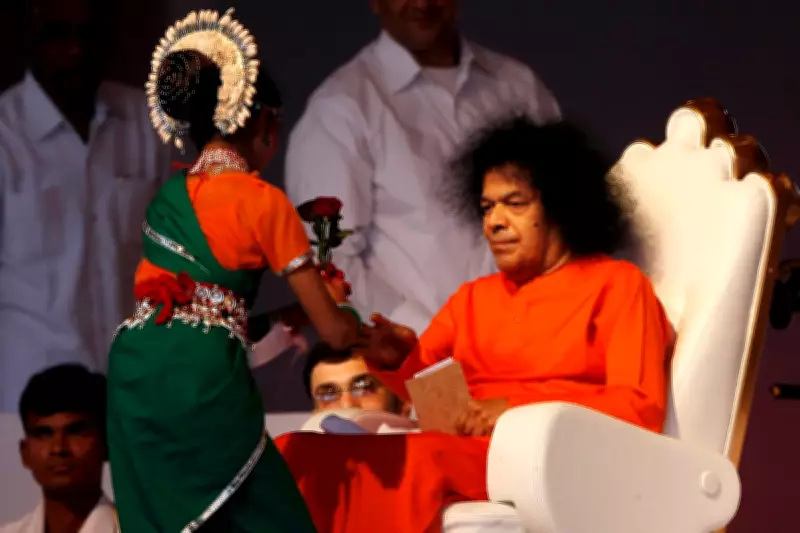
Sathya Sai Baba, who died in 2011, promoted a message of love and service that transcended religious boundaries, attracting millions of followers worldwide. In Venezuela, the organization established its first center in Caracas as early as 1974, founded by devotee Arlette Meyer. This was the first such center in Latin America, where members sang hymns and studied Sai Baba's teachings. Today, the organization is centered in Abejales, Táchira, where it operates a "Human Values School." Estimates suggest around 200,000 followers in Venezuela, with former lawmaker Walter Márquez, who served as ambassador to India, maintaining close ties to the group.
Religion in Venezuelan Politics: Symbolism Over Policy
According to Professor Andrew Chesnut of Virginia Commonwealth University, faith in Venezuela is not monolithic. Catholicism remains dominant but coexists with evangelical Protestantism, Afro-Indigenous traditions, and transnational figures like Sai Baba. This syncretic environment allows politicians like Maduro to embrace diverse spiritual influences without formal conversion. Chesnut notes that religion in Venezuelan politics is often invoked rhetorically for symbolic weight rather than to shape laws or ideology, explaining how leaders can blend devotion to Sai Baba with relationships to evangelical leaders.
Sathya Sai Baba: A Controversial yet Influential Figure
Sathya Sai Baba, born Ratnakaram Sathyanarayana Raju, claimed to be the reincarnation of Shirdi Sai Baba and gained fame for alleged miraculous abilities, such as materializing objects and performing healings. He encouraged followers to practice their own religions, emphasizing that all paths lead to the same truth. Despite facing criticism and allegations of fraud and abuse, which were never proven in court, he amassed a global following, including Bollywood stars, business leaders, and ordinary devotees. His organization now runs nearly 2,000 centers in 120 countries, promoting messages like "Love All, Serve All."
Devotees like Dr. Samuel Sandweiss, a retired psychiatrist, attest to Sai Baba's impact, noting his ability to attract people from all walks of life. Sandweiss is unsurprised by Maduro and Rodríguez's devotion, seeing it as a testament to the guru's universal appeal. In Venezuela's intricate religious landscape, the spiritual ties of its leaders to Sathya Sai Baba underscore a broader trend of blending faiths in pursuit of unity and peace.