Nationwide Demonstrations Condemn US Military Action Against Iran
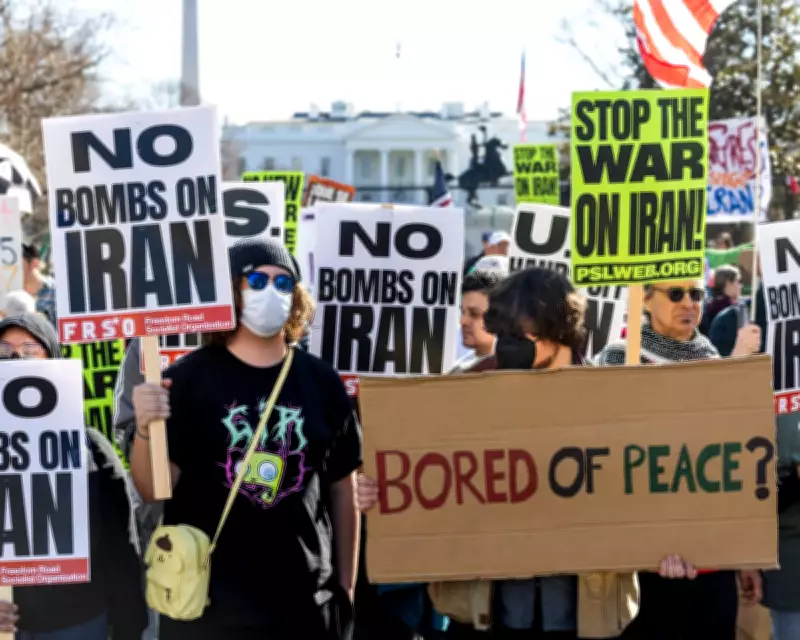
As reports emerged claiming Iran's Supreme Leader Ali Khamenei had been killed in coordinated US and Israeli airstrikes on Tehran, anti-war protesters mobilized across the United States on February 28, 2026. Crowds gathered outside the White House in Washington DC and in New York's Times Square, with additional demonstrations spreading to numerous other cities nationwide.
Protesters Decry Unilateral Military Action
Sue Johnson, a demonstrator at the White House rally, voiced widespread concerns about constitutional overreach. "It wasn't sanctioned by Congress, so what Trump is doing is on his own terms," she stated. "He bombed Iran for no specific reason. No president can attack or bomb another country without congressional permission, but this president does whatever he wants."
The protests were organized by a coalition of left-wing groups including the ANSWER Coalition, National Iranian American Council, CodePink, Black Alliance for Peace, and Democratic Socialists of America. Organizers issued a statement declaring: "Trump's unprovoked, illegal attack on Iran is an act of war that threatens unthinkable death and destruction. The people of this country reject another endless war."

Political Figures and Organizations Respond
New York Mayor Zohran Mamdani, aligned with the Democratic Socialists of America, condemned the military strikes as "a catastrophic escalation in an illegal war of aggression." He emphasized that "Americans do not want another war in pursuit of regime change."
The American Civil Liberties Union joined numerous Democratic lawmakers in demanding congressional action to halt what they termed Trump's unconstitutional use of military force. The civil rights organization referenced historical precedent, noting their consistent position that "decisions on whether to use military force require Congress's specific, advance authorization" from Vietnam through contemporary conflicts.
Protesters Voice Complex Perspectives
Willie Cotton, 48, from Brooklyn expressed nuanced views: "I don't believe it's in US interests for Iran to have nuclear weapons, but I oppose US bombing. The US doesn't intervene to help people or benefit the region—it acts for its own interests." He referenced Trump's address to Iranians during the strike announcement, where the president suggested this represented their "only chance for generations" to seize power.
Cotton, a Socialist Workers Party member, acknowledged supporting Israel's right to self-defense after Hamas's 2023 cross-border attack, but distinguished: "The US isn't defending itself here—it's advancing its goals worldwide."
Broader Concerns About Domestic Priorities
Healthcare worker Christina Perez, 44, connected foreign policy to domestic issues: "We're being distracted from things that really matter. Americans have legitimate grievances, but there's never money to solve those things and always money for war."
Jacqueline, distributing placards for the Party for Socialism and Liberation, emphasized symbolic resistance: "Even if protests don't stop the bombing, at least we can voice opposition to another endless Middle East war."
Security Measures and Nationwide Mobilization
Protests occurred as FBI counterterrorism and counterintelligence teams were placed on elevated alert nationwide. Homeland Security Secretary Kristi Noem confirmed coordination with federal intelligence and law enforcement partners to "monitor and thwart any potential threats to the homeland."
The coalition organized emergency protests in multiple cities including:
- Atlanta, Baltimore, Boston, Chicago
- Cincinnati, Denver, Las Vegas, Los Angeles
- Miami, Minneapolis, and others
Additional demonstrations were scheduled for Sunday in smaller municipalities including Albany, New York; Ellensburg, Virginia; Chattanooga, Tennessee; Decorah, Iowa; Gainesville, Florida; and Springfield, Missouri.
The protests reflect growing public apprehension about expanding military engagement and presidential authority, with demonstrators framing the conflict as both unconstitutional and counter to American interests during domestic challenges.