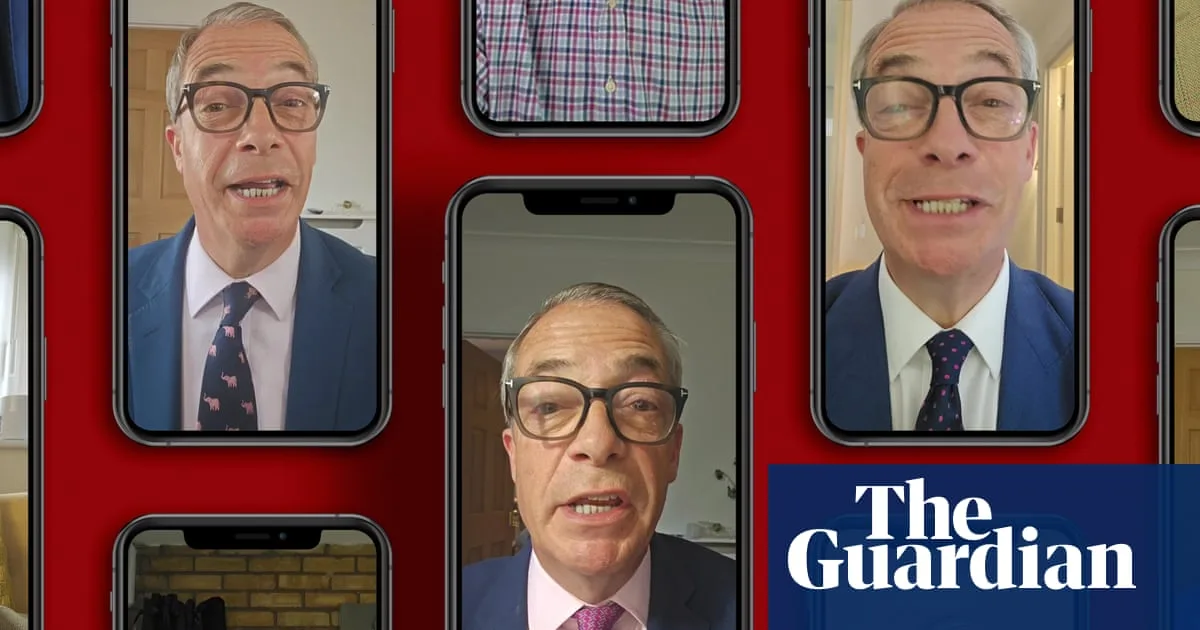
Undercover in the Far Right: Surprising Views on Farage Revealed
Undercover in Far Right: Surprising Views on Farage

Undercover in the Far Right: A Year of Fear and Discovery

Investigative journalist Harry Shukman spent an "immensely scary" year embedded within British far-right groups, uncovering their shadowy operations and surprising attitudes towards political figures like Nigel Farage. His award-winning book, Year of the Rat, documents this perilous journey, revealing the inner workings of extremist networks that continue to operate in plain sight across the United Kingdom.

The Rising Threat of Far-Right Extremism

Far-right ideology, centred on white supremacy and cultural nationalism, represents a growing threat globally. In Britain, police anti-terrorism watch lists monitor these groups closely, with the counter-radicalisation scheme Prevent reporting increased referrals for far-right extremism. The majority of cases adopted by multi-agency panels involve "Extreme Right-Wing concerns," highlighting the escalating danger.

Following the tragic Southport attacks in 2024, where three young girls were murdered by Axel Rudakubana, racist riots erupted nationwide. Social media circulated disturbing videos of far-right groups storming asylum seeker hotels, dragging men from vehicles, and attacking mosques. Despite public outrage and condemnation, these organisations persist in their activities, often gathering openly in pubs and restaurants.

Wide Pickt banner — collaborative shopping lists app for Telegram, phone mockup with grocery list

Infiltration and Identity Assumption

Shukman's investigation began when he approached Hope Not Hate, an organisation dedicated to exposing far-right extremism in the UK. What started as a conversation evolved into a long-term undercover operation. Adopting the alias "Chris," an ordinary office worker, Shukman infiltrated groups ranging from the secretive Basketweavers to Britain First.

"Going undercover was so nerve-wracking," Shukman admitted. The Basketweavers, who prefer in-person discussions over online communication, became his first target. Meeting them in a central London chain pub, Shukman approached their table with rehearsed answers about his identity and motives. "I might not 'smell right' to these people, or I might say the wrong thing," he recalled. "It was immensely scary."

Heart-Stopping Near Misses

Year of the Rat details numerous close calls where Shukman nearly exposed his true identity. In one particularly tense moment, a new member asked for his name, and he almost responded with his real name instead of "Chris." "It was a heart-stopping moment," Shukman described.

Another incident occurred in a Leicester Square eatery when a man dressed as his idol, Oswald Mosley, discussed a Channel 4 documentary on Patriotic Alternative. "All the journalists wear the same camera," the man declared, staring directly at Shukman while searching for hidden equipment. "In those situations, you want to leg it, but you also want to see if you can get away with it," Shukman explained. "There's a bit of a thrill to it, even if it's stressful."

The Psychology of Far-Right Recruitment

Shukman discovered that far-right members come from diverse backgrounds, including aristocrats and the unemployed, PhD holders and school dropouts. "The members join because they aren't fulfilled; something has gone wrong in their lives," he observed. This insight led to personal conflict, as Shukman befriended individuals only to ultimately betray them, hence the book's title referencing his "rat-like" feelings.

"I didn't feel guilty about the 'race science' leaders or the group trying to create a version of the Nazi SS," Shukman clarified. "But for the ordinary members who were just yearning for social relationships, I felt bad." He noted that the far right thrives during crises, such as the current cost-of-living situation, where government elitism and austerity measures fuel anger. "If material needs were met, it would suck a lot of force out of the far right," he suggested.

Surprising Distrust of Nigel Farage

With the rise of Reform UK, led by Nigel Farage, Hope Not Hate warns that "Britain faces a genuine far-right political threat for the first time in our history." When asked about the possibility of a Reform government, Shukman responded, "It's frightening that they might get into power. A Reform government would be a disaster."

Pickt after-article banner — collaborative shopping lists app with family illustration

However, Shukman revealed that extremists within the far right view Farage with suspicion. "On the extreme end, some activists think Farage is a 'deep state' containment strategy—a safety valve to keep people from going as far as they want," he explained. This surprising perspective highlights divisions within right-wing movements, where Reform UK's politics are seen as divisive and deserving of stronger government resistance.

A Call to Action and Reflection

Shukman's work with Hope Not Hate includes the "Million Acts of Hope" campaign, aiming to engage communities against extremism. His book serves as both a cautionary tale and a detailed examination of far-right operations, emphasising the importance of understanding and addressing the root causes of radicalisation.

Year of the Rat, winner of the Sunday Times Charlotte Aiken Young Writer of the Year for 2025, stands as a testament to Shukman's courage and the ongoing battle against hatred in British society.




