One distinct benefit of writing political commentary is the rare need to consult opinion polls. Readers consistently make their views on current affairs known, not merely through letters but in everyday encounters. I have been approached in supermarket queues, at taxi ranks, and in coffee shops by individuals eager to express their political frustrations.
Personal Encounters Highlight Public Concerns
A memorable instance involved a takeaway cafe owner who detained me for forty minutes to discuss NHS waiting times under Nicola Sturgeon's leadership. Thankfully, that conversation yielded a column, as my baked potato turned cold and my tea nearly iced by the time I returned home.
Over the past month, a recurring theme has emerged in these interactions, albeit in various forms. The struggle to manage household budgets, escalating food prices, and pain at petrol pumps dominate discussions. While the cost-of-living crisis is not new, it appears to be intensifying.

Election Campaign Focuses on Financial Strain
Consequently, the Scottish Parliament election campaign has centered on personal finances, small business challenges, and affordability. Political parties are competing to present solutions for alleviating economic hardship.
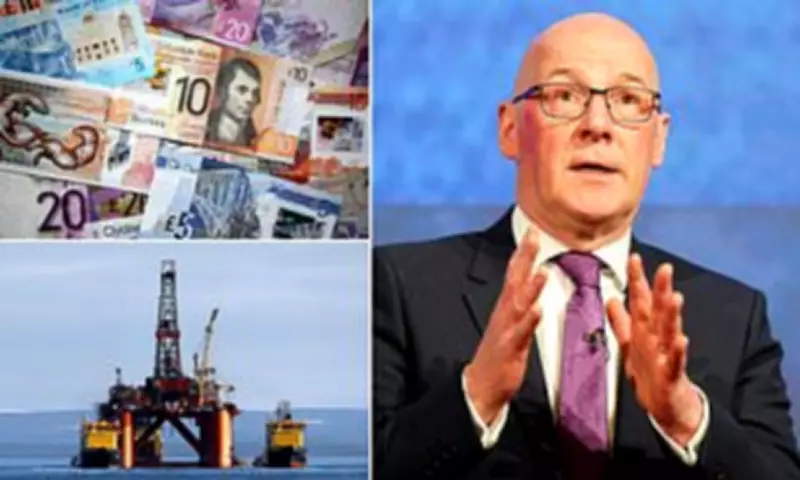
This brings us, with predictable inevitability, to First Minister John Swinney. He aims to claim the cost-of-living issue as his own, framing a vote for the SNP as the remedy for family budget woes across Scotland.
To this end, Swinney accuses the UK Government of sleepwalking into an unprecedented cost-of-living crisis. He declares that Scottish households must not keep paying the price for Westminster failures.
He asserts: I'm fed up with the Westminster system that means hard work delivers less and less, while people's energy and food costs just keep going up.
The Westminster System and Swinney's Career
The Westminster system. John Swinney has served as an MP and then an MSP for twenty-nine years. Since age thirty-three, he has known nothing else. For three decades, his salary has derived from the Westminster system, whether from the UK Parliament or the Scottish Parliament, which is itself a creation of that system.
Before his allies protest that he must work within the system, thirty years without a concrete independence plan suggests the system has learned to work him. Swinney is eager to blame Westminster for the cost-of-living crisis, while the SNP has chosen higher taxes over fostering economic growth.
Shared Blame for Economic Challenges
Indeed, Westminster deserves significant blame for the crisis. The previous government, which misleadingly packaged social democracy in Conservative wrapping, burdened the economy with rising taxes, increased spending, and the economic challenges of Net Zero policies.
Yet while Westminster constrained growth and productivity, the SNP consistently urged even greater restrictions. They advocated for higher taxes, more spending, and stricter Net Zero targets.
They did more than advocate. For at least the past decade, and likely since Alex Salmond left Bute House, the SNP has ceased prioritizing Scottish prosperity. While they desire a prosperous Scotland, they have abandoned serious analysis and difficult decisions necessary for economic growth.
Salmond's Economic Approach vs Current SNP Policies
During Alex Salmond's era, there was considerable magical thinking. The economic case for independence relied heavily on a robust oil market that collapsed shortly after Scotland voted against independence.
However, Salmond had an economics background and sought to balance egalitarian social programs—such as investments in health, education, and poverty reduction—with recognition that prosperity cannot be achieved through taxation and spending alone.
As first minister, he actively courted business leaders and reassured entrepreneurs that his administration supported them. His policy of non-domestic rates relief helped calm concerns about the first SNP government.
Salmond was a political romantic but also a fierce pragmatist. He understood that Scotland could not become fairer without becoming wealthier.

Swinney's Knowledge and Current Party Direction
John Swinney knows this too. I am convinced. He worked closely with Salmond for years, supporting the strategy of pro-business big-governmentism without leaks or briefings against it.
The SNP today is a different entity. Three years after Nicola Sturgeon's departure, the party remains influenced by her policies, which reflected indifference to entrepreneurship and limited economic understanding.
The Sturgeon strategy relied on vibes, and two leaders later, the SNP's economic program has barely become more substantial. North Sea drilling could significantly assist ordinary Scots, yet the party avoids this opportunity.
Campaign Rhetoric vs Government Action
Swinney's campaign rhetoric on the cost of living may resonate with some voters, but it will be hampered in government by the SNP's reluctance to undertake the hard work needed to boost growth.
Moving beyond vibes requires making choices, which inevitably create winners and losers. The party faithful, particularly Holyrood and council members, prefer to avoid such decisions to maintain popularity.
John Swinney insists we must tackle the cost-of-living crisis. For once, there is agreement. However, this is a material crisis requiring material solutions. Occasional speeches and vibes will not suffice.
Necessary Strategy for Economic Improvement
A comprehensive strategy must assess what the Scottish Government is doing, what it should be doing but is not, and what it is doing that it should stop.
Swinney leads a government that favors higher taxation over growth enhancement; maintains a bloated public sector and a subsidized third sector; neglects welfare system integrity; misunderstands entrepreneurial drive, losing confidence among those who do; and resists domestic oil and gas production due to ideological aversion.
This is a government where well-paid ministers and senior civil servants live lives disconnected from the experiences of average Scottish families.
A first minister who understands what stimulates economic activity, increases disposable income, and supports small businesses, yet fears the public-sector leftists dominating his party too much to pursue such an agenda.
Political Class Priorities and Economic Realities
A political class that would rather see financial hardship for Scottish families than confront economic realities.
Honestly addressing these facts would lead to a prosperity agenda featuring personal tax cuts, additional business relief, abandonment of Net Zero policies, and vigorous lobbying of Ed Miliband for new exploration licenses. This would allow the energy sector to extract oil and gas for use in vehicles and heating systems.
Such measures would help reduce costs for ordinary families. However, they require bold, potentially painful decisions, regardless of internal party repercussions. The first minister shows no signs of being willing to take such steps.
Despite campaign promises, a re-elected John Swinney will not rescue Scotland from the cost-of-living crisis. He embodies the crisis itself.