From Peace President to War Leader: Trump's Swift Turn to Operation Epic Fury
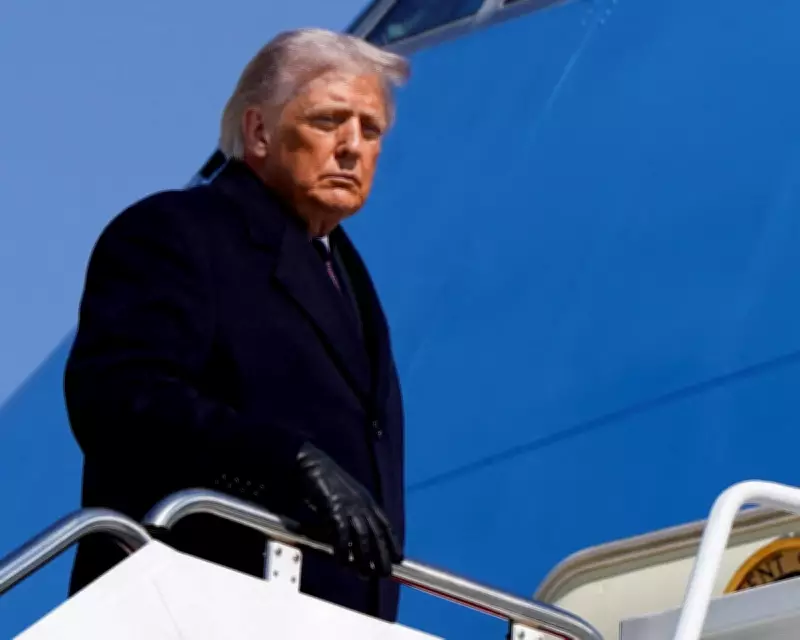
Donald Trump boarded Air Force One last Friday, shortly before authorising the launch of a major military assault on Iran. The order, given as the presidential plane descended towards Corpus Christi, Texas, signalled a stark departure from his long-professed opposition to foreign entanglements.
The Road to War: A Partial Opposition Unravels
In reality, Trump's stance against war had only ever been partial. While he campaigned on ending America's "forever wars" and sought a Nobel peace prize in 2025, his aversion was primarily to large-scale infantry conflicts. He has consistently demonstrated a willingness to leverage US air superiority, as seen in the assassination of Qassem Suleimani in 2020 and the bombing of Iranian nuclear sites in Operation Midnight Hammer last June.
During the flight to Texas, Trump engaged with Texas Republican senators John Cornyn and Ted Cruz, discussing options regarding Iran. Also present was actor Dennis Quaid, who reprised his role as Ronald Reagan at Cruz's urging, symbolically passing the torch to Trump in a staged moment. This ignored Quaid's prior portrayal of a manipulated George W. Bush, whose shadow looms over current events despite White House denials.

Key Catalysts: Maduro Kidnapping and Regional Pressures
A pivotal moment occurred on 3 January, when US special forces successfully abducted Venezuelan leader Nicolás Maduro without casualties. This televised success bolstered Trump's confidence in military operations, diverting attention from domestic scandals like the Jeffrey Epstein files, where Trump is mentioned extensively.
Israeli Prime Minister Benjamin Netanyahu played a crucial role, visiting Trump at Mar-a-Lago in late December to seek support for strikes on Iranian missile sites. This evolved into a joint commitment for regime change, fueled by CIA and Mossad assessments that Iran's regime was vulnerable amid widespread protests.
Diplomatic Charades and Military Buildup
Publicly, Trump maintained a preference for diplomacy, with negotiators Steve Witkoff and Jared Kushner meeting Iranian officials in February. However, the gaps were insurmountable; Iran offered concessions like giving up highly enriched uranium, but Trump demanded full capitulation. By late February, the US had assembled its largest Middle Eastern force since the Iraq invasion, making retreat appear weak.
Saudi Crown Prince Mohammed bin Salman privately urged Trump to attack Iran, while joint US-Israeli planning advanced, with AI tools from Gaza conflicts aiding targeting. The operation, initially set for 25 February, was delayed to target Iranian Supreme Leader Ayatollah Ali Khamenei at his compound.
The Order and Aftermath: A New Era of Conflict
At 3:38 pm on Air Force One, Trump approved Operation Epic Fury. Upon landing, he cryptically avoided confirming his decision. At Mar-a-Lago, dubbed "War-a-Lago," he joined officials in a situation room as the attack commenced at 1:15 am Florida time, killing Khamenei and dozens of leaders.
Over 100 US aircraft and missiles struck more than 1,000 targets in 24 hours. Trump framed it as an opportunity for Iranians to overthrow the regime, though his administration has since moderated such rhetoric. He now boasts of an "unlimited supply" of weapons, completing a full circle from opposing forever wars to embracing prolonged conflict.
This transformation underscores Trump's susceptibility to persuasion, his use of military spectacle for distraction, and the relentless momentum of war machinery, reshaping his legacy from peace advocate to wartime commander.