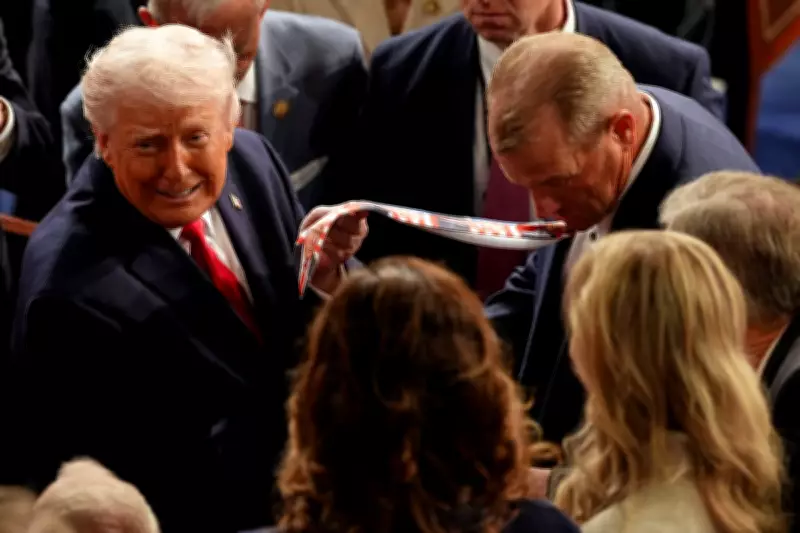
Trump's State of the Union Address Leaves Republicans Searching for Direction
President Donald Trump's recent State of the Union speech has created significant uncertainty within his own party, with Republican lawmakers struggling to find coherent messaging following an address that offered little substantive policy direction during a critical midterm election year.
A Speech Long on Rhetoric, Short on Substance
Despite Trump's declaration that "the golden age of America is upon us" and enthusiastic applause from Republican attendees, the lengthy address failed to address pressing economic concerns affecting ordinary Americans. The president's focus on familiar themes of American greatness and attacks on Democrats left many in his party wanting more concrete proposals.
Pre-speech polling by CNN revealed that Republican viewers hoped to hear about affordability issues, yet Trump largely avoided this topic. Instead, the address featured familiar attacks on Democrats as "crazy," warnings about Iran, and celebrations of military veterans and Olympic athletes.

Republican Anxiety Becomes Increasingly Visible
The muted Republican response to Trump's tariff discussion proved particularly telling. As Virginia Governor Abigail Spanberger noted in the Democratic response that tariffs essentially function as a tax on Americans, Republican lawmakers appeared uncomfortable with the president's enthusiastic endorsement of these policies.
This discomfort reflects broader concerns among Republicans facing re-election in November. Unlike Trump, these lawmakers must answer directly to constituents who are experiencing economic pressures including stagnant wages, rising living costs, and employment instability.
Boilerplate Responses Reveal Lack of Material
Post-speech reactions from Republican figures demonstrated how little substantive material Trump provided. Responses ranged from Kevin McCarthy's generic tweet about "America's greatness" to Chip Roy's characterization of the address as a "home run." These formulaic statements highlighted the absence of specific policy proposals or compelling attack lines against Democrats.
Anonymous Republican insiders acknowledged to various media outlets that while the speech appeared successful superficially, they had hoped for more details about how Trump plans to improve economic conditions for ordinary citizens.
Democratic Response Highlights Republican Vulnerabilities
Governor Abigail Spanberger's official Democratic response effectively targeted Republican weaknesses, focusing on affordability concerns, healthcare accessibility, and allegations of corruption within the Trump administration. Her simple questioning of whether the president is working to make life more affordable for American families struck at the heart of Republican anxieties.
The Democratic strategy of presenting themselves as plain-speaking alternatives to establishment politics gains traction when Trump offers little beyond familiar rhetoric and self-congratulation.
Declining Support and Strategic Concerns
Trump's national approval rating has fallen below 40%, with independent support dropping by 17 percentage points since he took office. Nearly 60% of Americans believe he has overreached his authority, particularly on immigration issues.
Despite these concerning numbers, Trump doubled down on unpopular immigration approaches during his speech, suggesting a strategic inflexibility that worries Republican strategists. His continued reliance on culture war talking points appears increasingly ineffective outside Washington DC political circles.
The Midterm Election Implications
As the confetti settled following Trump's one-hour-and-forty-seven-minute address, it became clear that Republicans had performed their ceremonial duty but gained little political advantage. The speech provided no unifying message for the party to rally around during the crucial midterm election season.
Trump's attempt to reignite supporter enthusiasm through familiar conflict-oriented rhetoric and claims of American dominance appears increasingly strained. With many Republicans quietly questioning the president's political usefulness and Democrats effectively highlighting affordability concerns, the stage is set for a challenging election cycle for the GOP.

The fundamental question remains how many Americans still identify with Trump's political narrative as economic pressures mount and his approval ratings decline. If current polling trends continue, Republicans could face significant difficulties in the November elections.